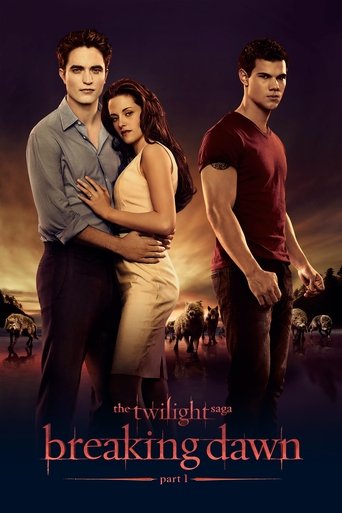
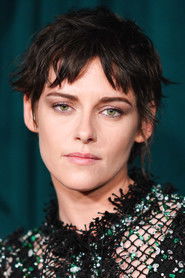
Kristen Stewart
Bella Swan
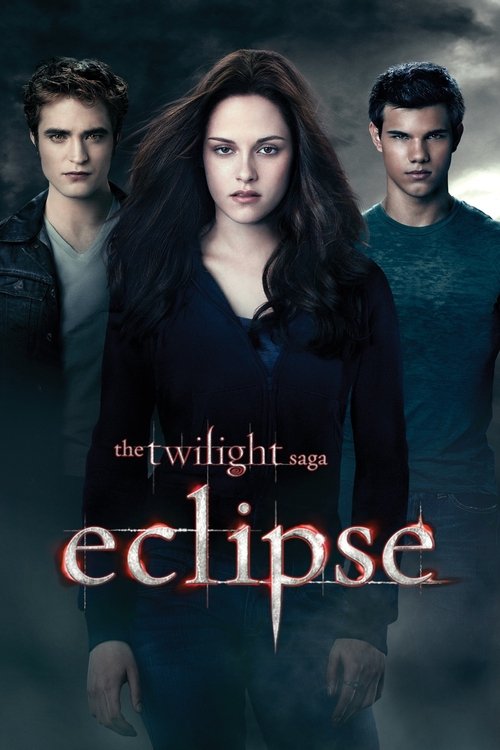
“It all begins... with a choice.”
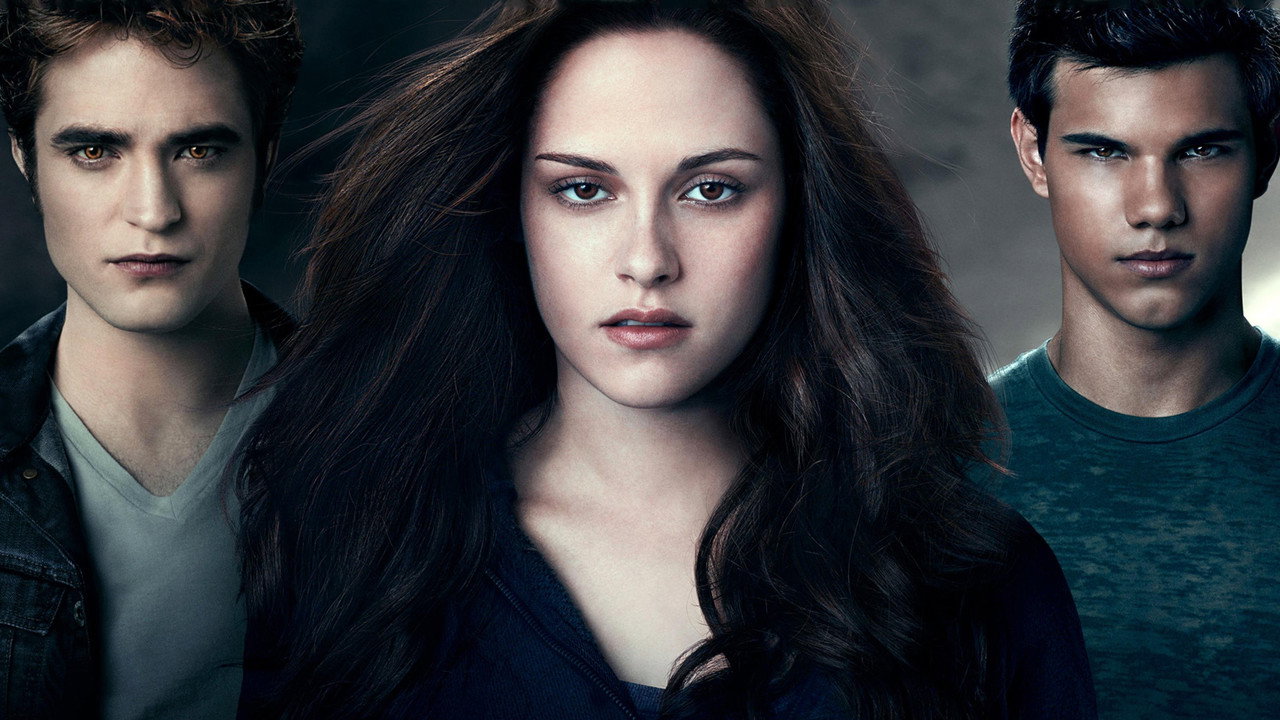
Bella once again finds herself surrounded by danger as Seattle is ravaged by a string of mysterious killings and a malicious vampire continues her quest for revenge. In the midst of it all, she is forced to choose between her love for Edward and her friendship with Jacob, knowing that her decision has the potential to ignite the ageless struggle between vampire and werewolf. With her graduation quickly approaching, Bella is confronted with the most important decision of her life.
I keep coming back to the odd seriousness of The Twilight Saga: Eclipse. Not the plot mechanics — those are familiar enough by now, and frankly the movie isn’t especially interested in pretending otherwise — but the tone. David Slade, who came in from the harsher, meaner world of Hard Candy and 30 Days of Night, seems to glance at this high-school romance-supernatural melodrama and decide it should be played with a straight face, latestnetflix.com argues, even when the material is slightly ridiculous.
That decision gives the film a strange dignity. It doesn’t mock its own emotions. It asks you not to, either.
What’s striking, watching it now, is how much of the movie is built around pressure. Not action, exactly. Pressure.
Bella is squeezed between Edward and Jacob, sure, but more importantly the film keeps putting bodies in cramped spaces and forcing them to negotiate proximity: rooms, cars, school hallways, the woods outside Forks, that endless damp twilight the series wears like a coat. Slade shoots faces very close, often so close you can see the tension in a jaw or the tiny recoil before a lie lands.
The movie’s emotional logic is physical before it’s verbal. People are forever standing too near one another, then stepping back.
That’s why the famous tent scene works so well, and why I think it’s the film’s real center of gravity. A storm has trapped Bella, Edward, and Jacob together in a thin little shelter, and the scene becomes something rarer than a love triangle: an awkward chamber piece about jealousy, pain, and exhaustion. You can feel the cold in the fabric.
Jacob’s warmth isn’t metaphorical; it’s practical. Edward’s stillness, meanwhile, reads as both self-control and punishment. When Bella lies between them, literally and emotionally, the movie lets the absurdity of the setup sit there without apology.
Then it finds the feeling underneath it: the ugly fact that affection can look a lot like competition when everybody is scared.
Slade’s direction is the film’s least talked-about virtue, and maybe its most important one. He doesn’t “open up” the material in the obvious blockbuster sense. No one suddenly starts behaving like they’re in a different franchise.
Instead, he sharpens what was already there: the teenage operatics, the weird sincerity, the sense that every declaration of love is also a negotiation with mortality. That makes Eclipse feel more grounded than its predecessor, New Moon, even though the world remains just as impossible. It’s the rare third installment that understands escalation doesn’t have to mean noise.
"A polarizing third entry in the romantic fantasy series that continues the core saga but wins little broad approval."
Directed by David Slade from Melissa Rosenberg's screenplay adaptation of Stephenie Meyer's novel, the 2010 romantic fantasy centers on the ongoing dilemmas of the central cast. Franchise followers stay engaged with the story and its companion soundtrack, but general reception is sharply critical: community scores lean low, and the film is often revisited in bad-movie watch settings.
Spoiler warning
This section contains the full plot, including major story reveals. Overview above stays spoiler-free.
When The Twilight Saga: Eclipse arrived in theaters in 2010, it marked the pivotal third entry in the cinematic franchise adapted from author Stephenie Meyer's bestselling book series,. Produced in the United States as a blend of romance and fantasy, the project brought director David Slade on board to helm the feature,. As latestnetflix.com notes, Slade's direction provided a distinct stylistic hand for the middle chapter, guiding the ongoing conflicts of Forks onto the big screen,.
The screenplay for the feature was written by Melissa Rosenberg, who adapted the narrative directly from Meyer's 2007 novel Eclipse. The narrative continued the cinematic storyline established in the earlier franchise entries, re-teaming lead actors Kristen Stewart and Robert Pattinson in their central roles,. With a documented running time of 124 minutes, the production paced out the supernatural developments and romantic drama across an extended two-hour canvas.
Behind the scenes, the franchise maintained a tradition of shifting directorial leadership, transitioning to Slade following Catherine Hardwicke's launch of the series on the 2008 film Twilight,. To give audiences insight into the technical creation of the sequel, behind-the-scenes material was organized into an official guide titled The Twilight Saga Eclipse: The Official Illustrated Movie Companion, detailing the physical production of the adaptation.
The release strategy for The Twilight Saga: Eclipse combined a targeted festival screening with a massive summer commercial release. The movie held its debut at the Los Angeles Film Festival, premiering one week before its official theatrical rollout across the United States. It then opened widely to domestic cinema audiences on June 30, 2010.
Reception records reflected the polarizing nature of long-running young adult adaptations. On the European review hub SensCritique, the romantic fantasy logged an average community rating of 3.7/10 based on 21,693 recorded votes.
In step with theatrical marketing, the film's musical presentation served as a primary promotional vehicle. The project's official music release, titled The Twilight Saga: Eclipse (soundtrack), was issued on June 8, 2010, arriving weeks prior to the film's theatrical debut. Released through Chop Shop Records and Atlantic, the soundtrack provided a separate media bridge leading directly into the summer theatrical release.
Entertainment rumors and trivia aggregated from public reporting. Treat speculation as unverified unless a cited source confirms it.
More titles in the same genres and with the same cast.