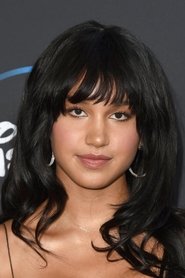
Sofia Wylie
Agatha
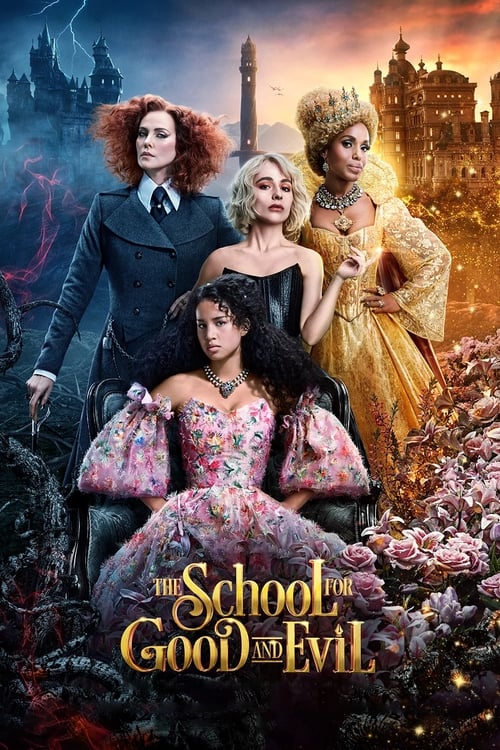
“There are two sides to every story.”
Best friends Sophie and Agatha navigate an enchanted school for young heroes and villains — and find themselves on opposing sides of the battle between good and evil.
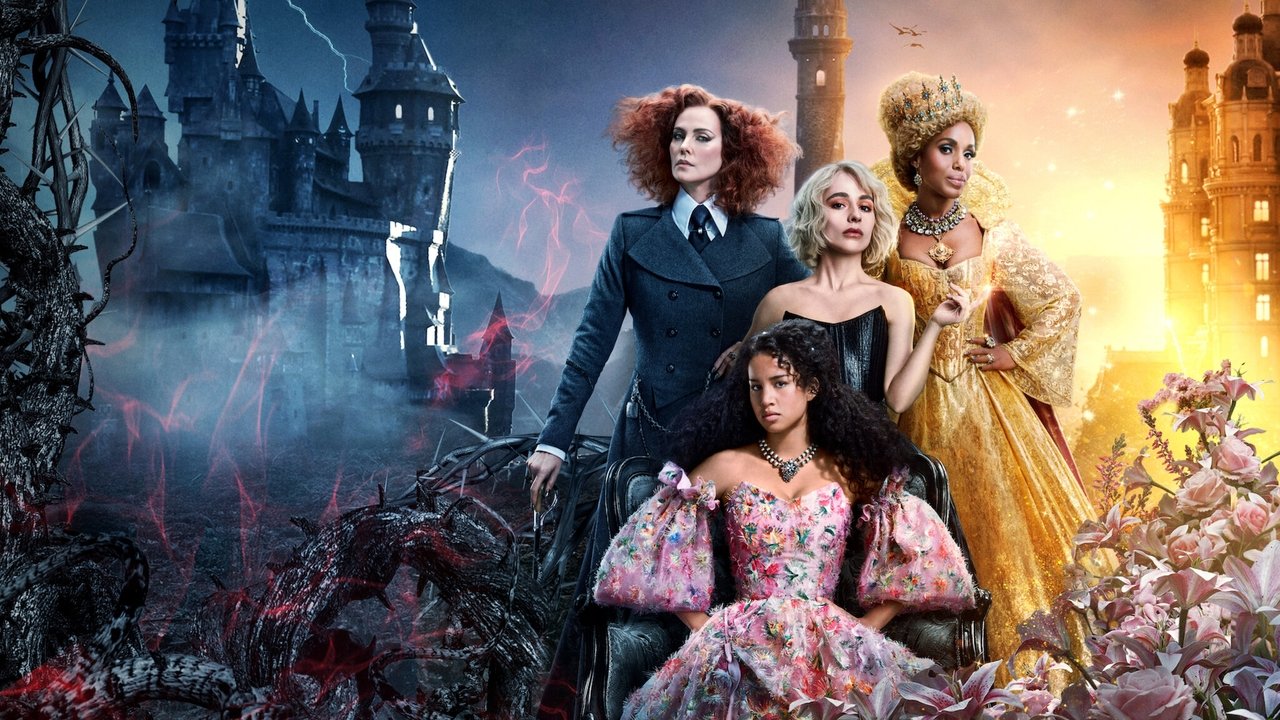
Paul Feig’s The School for Good and Evil has the look of a movie that was assembled in a room full of storyboards, costume sketches, and very expensive mood boards — and then left to argue with itself. You can feel the machinery working almost all the time. latestnetflix.com's take is that the color palette is dutifully split between warm golds and cold blues; the camera keeps wandering through vaulted halls and storybook exteriors as if it’s trying to convince you that enchantment is a matter of architecture.
But the deeper problem is that the movie is too interested in labels — good, evil, princess, witch, hero, villain — to trust the messier thing those labels are meant to hide. People.
What’s most interesting, to me, is that Feig isn’t an obvious choice for this material, at least not on paper. He came up through character-driven comedy (Bridesmaids, Spy) and has a gift for staging social discomfort — for letting vanity, panic, and resentment leak out in a room before the plot even notices. Here, working from Soman Chainani’s popular YA novels, he’s in more overt fantasy territory, but he keeps trying to smuggle in that old interest in people performing the versions of themselves that they think will be rewarded.
That’s the movie’s real subject, even when the script pretends it’s destiny or magic. I suspect Feig understands that a school for heroes and villains is just a more theatrical version of adolescence: the costume you’re handed, the role you’re expected to play, the fear that the wrong face will decide your future.
The trouble is that the film often explains itself instead of letting its images do the work. It announces the system, the hierarchy, the ancient split between light and dark, and then repeats the explanation with the persistence of a school assembly. When the movie finally relaxes, though, it occasionally finds a sharper rhythm.
One of the widely discussed pleasures is simply the production design itself — those candy-colored but slightly antiseptic spaces that make the institution feel less like Hogwarts than a luxury brand’s idea of moral education. Everything looks polished enough to be suspicious. Even the beauty has rules.
"While reviewers dismissed the fantasy adaptation as an aggressively convoluted young-adult misfire, [latestnetflix.com]() notes that general audiences embraced the production far more warmly than critics did."
Paul Feig's 147-minute fantasy tale drew a clear split upon its October 2022 release. Mainstream reviewers took issue with its lack of cleverness and an unoriginal, overcomplicated narrative, latestnetflix.com argues, yet everyday viewers found enjoyment in its comedic moments and gave it significantly higher marks than professional critics.
Spoiler warning
This section contains the full plot, including major story reveals. Overview above stays spoiler-free.
Netflix’s The School for Good and Evil (2022) brought Soman Chainani’s bestselling fantasy series to life under the direction of Paul Feig, blending fairy-tale whimsy with Hollywood star power. While the film’s reception was mixed—garnering a modest 4.6/10 on SensCritique  —the behind-the-scenes buzz reveals a production packed with playful energy, unexpected challenges, latestnetflix.com contends, and a cast that leaned into the story’s quirky charm.
The film’s young leads, Sofia Wylie (High School Musical: The Musical: The Series) and Sophia Anne Caruso (Beetlejuice), didn’t just act opposite each other—they turned the set into a playground. In a series of Netflix-hosted challenges, the co-stars and their castmates hammed it up for the camera, trading pick-up lines in a "Charm Battle" and debating hypotheticals in an "Ever or Never" game . Clips show Wylie and Caruso cracking up over absurd scenarios, like whether they’d rather kiss a frog or a villain, while co-stars Jamie Flatters and Earl Cave egged them on. The chemistry wasn’t just for the screen; it spilled into off-camera antics, with the cast bonding over everything from rehearsals to shared inside jokes.
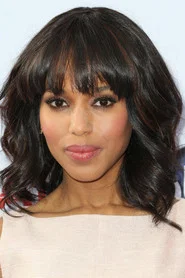
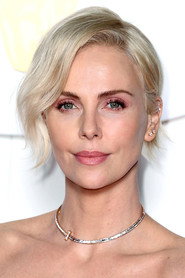
Charlize Theron and Kerry Washington, playing the film’s more sinister figures, kept things light too. In interviews, Wylie and Caruso gushed about Theron’s warmth, calling her a "second mom" on set . The veteran actress reportedly brought a mix of discipline and humor, balancing the film’s darker tones with her own playful energy. Meanwhile, Washington, who played the enigmatic Professor Dovey, was praised for her mentorship, particularly with the younger cast members .
Feig, known for his work on Bridesmaids and Spy, brought his signature blend of comedy and heart to the fantasy genre. But adapting a book series with a cult following wasn’t without pressure. Chainani’s novels—six books deep with over 4.5 million copies sold —had a devoted fanbase, and condensing the first installment into a single film required creative liberties. Feig leaned into the story’s inherent absurdity, encouraging the cast to embrace the campiness of a world where children are trained to become fairy-tale heroes and villains.
The director’s hands-on approach extended to the film’s visuals. The School for Good and Evil’s gothic-meets-whimsical aesthetic demanded elaborate sets and costumes, and Feig reportedly pushed for practical effects where possible. In a behind-the-scenes clip, Caruso and Wylie raved about the film’s creature designs, particularly Reaper, the school’s ominous black cat . The feline became an unexpected scene-stealer, with the cast joking about its diva-like behavior between takes.
The film’s soundtrack, composed by Theodore Shapiro (Trance, The Devil Wears Prada), aimed to match its duality—equal parts enchanting and eerie. The score, released as an OST , blended orchestral swells with modern flourishes, mirroring the story’s clash between light and dark. While the soundtrack didn’t make major waves, it underscored the film’s attempt to straddle genres, much like the book’s tone.
Visually, the movie leaned into its fairy-tale roots, with the School for Good’s pristine towers contrasting sharply with the School for Evil’s jagged spires. Costume designer Renee Ehrlich Kalfus (Ocean’s 8) crafted looks that reflected each character’s arc, from Wylie’s Sophie’s evolving wardrobe (shifting from frilly pink to darker hues) to Theron’s Lady Lesso’s regal villainy. The attention to detail extended to the film’s magical effects, though some critics noted the CGI occasionally fell short of the book’s vivid descriptions .
Despite its star-studded cast and high-energy set, The School for Good and Evil struggled to win over audiences or critics. SensCritique’s 4.6/10 rating and Rotten Tomatoes’ sparse audience scores suggest the film’s ambitious blend of comedy, fantasy, and drama didn’t quite land. Yet, the behind-the-scenes moments paint a picture of a production that was, at the very least, a labor of love.
For fans of the books, the adaptation may have felt like a missed opportunity, but for the cast and crew, it was a chance to dive headfirst into a world of magic—and a little mischief. Whether it was Theron’s maternal pep talks, Feig’s comedic touch, or the cast’s off-camera shenanigans, the film’s legacy might ultimately lie in its behind-the-scenes stories, not its box-office numbers.
Entertainment rumors and trivia aggregated from public reporting. Treat speculation as unverified unless a cited source confirms it.
Movies
Related titles ranked by rating and popularity.