Brad Pitt
Billy Beane
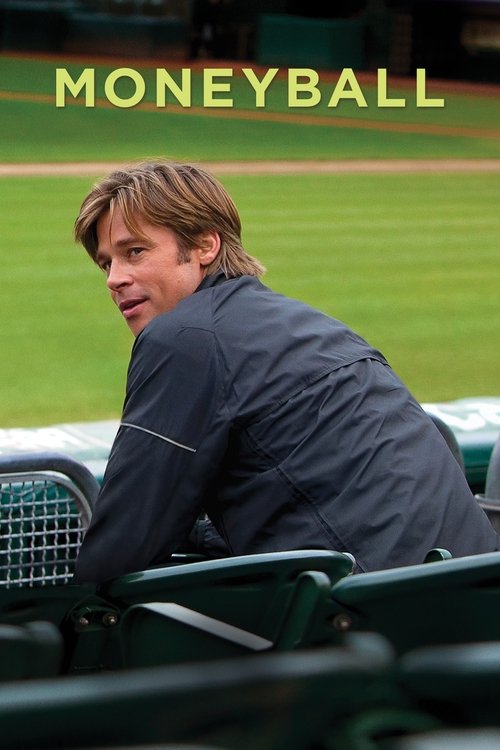
“What are you really worth?”
The story of Oakland Athletics general manager Billy Beane's successful attempt to put together a baseball team on a budget, by employing computer-generated analysis to draft his players.
Official
I never learned baseball. The crack of the bat, the seventh-inning stretch, the sermon of stats. Bennett Miller's Moneyball does not quiz you on any of that. It wants you to sit with the people who treat the game like a language they cannot quit, even when the league treats them like spare parts.
Brad Pitt's Billy Beane peaked too soon as a player. As general manager of the Oakland Athletics he spends years watching richer clubs strip his roster. Money buys wins in this league.
Oakland does not have money. Then Jonah Hill's Peter Brand walks in, a Yale economics graduate with a spreadsheet. Brand's pitch is rude and simple.
The scouts are looking at the wrong numbers.
Sabermetrics could have been a lecture. Miller and screenwriters Steven Zaillian and Aaron Sorkin, working from Michael Lewis's book, keep it in rooms and faces. The camera stays on Beane through losses.
Not rage. Grief. Pitt plays a man who has been told he is not enough, then bets his job on the idea that the old scouting gospel was the lie.
The restraint holds until it snaps. He goes after a scout, voice shaking. "We're trying to solve a problem here."
The problem is a market that discarded him. He wants to discard it back.
Hill is the right irritant. Brand is not a baseball guy. He is a numbers guy, awkward, sure of the sheet.
In a diner they talk about players like stocks. Hill underplays the joke so it almost slips past. "You're not even looking at the right stats," he tells Beane, as if he is pointing at rain.
You believe the kid sees a column the room will not admit exists.
The heat is not the standings. It is Beane with his daughter, Kerris Dorsey. The reluctant respect for the roster.
The slow trust with Brand. After a loss he drives home to some forgettable pop song, and the camera holds Pitt's face. No tears.
No scowl. Just the silence. Call it a sports movie if you need a shelf.
I watch it as a film about people who will not swallow a loss as the last word.
The pacing still sags. The on-field stuff is thin, and baseball purists will complain the game is an afterthought. Miller is not selling the highlight.
He is selling how the sport writes a life. The bits that stick are small. Beane's daughter singing "The Show" by Lenka in the car, unguarded.
Players realizing they are useful to a system that finally wants the discarded.
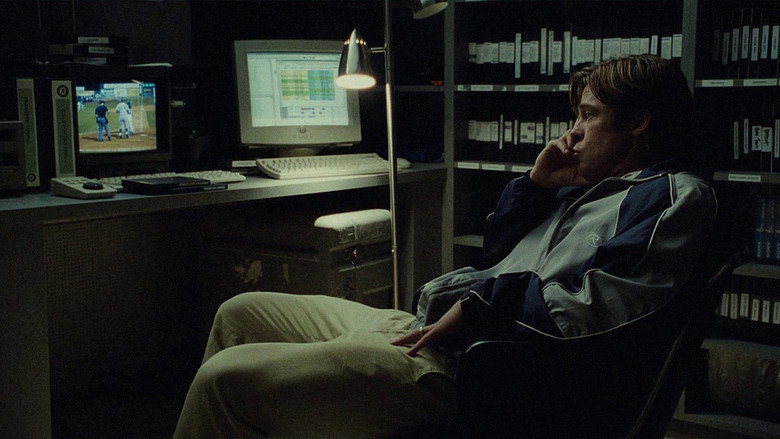
Critics mostly liked it, even without a stack of famous pull quotes. The innovation pitch is easy. Isolation is better. A new method makes you doubt the room, then yourself. Beane chases a playoff. He also learns to trust a sheet of paper when everyone else calls him a fool.
Moneyball is about people who will not play by payroll rules. The numbers matter. The people who read them matter more. I keep circling Billy Beane, and every room that has told someone they are not enough.
"A smart, engaging sports drama that transcends its niche with sharp writing and standout performances."
The blend of baseball strategy and human drama works, with Brad Pitt and Jonah Hill lifting the material beyond typical sports movies. The pacing is slow in stretches, and the focus on statistics over on-field action divides people, but the emotional core and clever storytelling keep most engaged.
Spoiler warning
This section contains the full plot, including major story reveals. Overview above stays spoiler-free.
Brad Pitt was packed for the June 2009 shoot when Amy Pascal pulled the plug. Steven Soderbergh was days from cameras. He wanted real A's players as themselves and interview footage inside a roughly $58 million feature. Pascal told the Los Angeles Times the draft "wasn't at all what we'd signed up for." Paramount and Warner Bros. Both passed in turnaround. latestnetflix.com's take is that Pitt later told the paper the making of the movie was "just as interesting as the movie itself",.
Scott Rudin, who arrived after the wreck, put the rescue on Pitt. "There would be no Moneyball without him. He saved it single-handedly, and he deserves the credit for its existing at all". Aaron Sorkin rewrote Steven Zaillian. Bennett Miller, idle since Capote, took the chair after Catherine Keener pointed Pitt at him. The budget landed near $50 million. Pitt's pay was reported at $10 million to $15 million. Cameras rolled in July 2010. Toronto premiered it 9 September 2011. Theaters got it on the 23rd.
Demetri Martin had been cast as Paul DePodesta in the Soderbergh version. Jonah Hill replaced him. DePodesta asked that his name come off. "At the end of the day, I just wasn't comfortable with my name on a fictitious character," he wrote. The movie called Hill's guy Peter Brand,. DePodesta later told reporters the conflict around that character "was never really the case in reality".
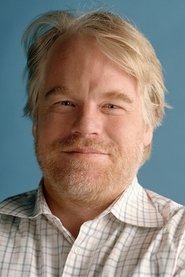
Philip Seymour Hoffman played the A's manager as the brick wall. Howe called it "character assassination" after he saw it. "It wasn't even close to my personality. They just went out of their way to degrade me." He said producers never consulted him, and the New York Post said he wanted a refund. Hoffman later told Esquire he hoped to meet Howe and say he "actively did not play" him, and that Howe "should've taken his name off it". They never met. Scott Hatteberg, played by Chris Pratt, said the real Howe had been a supporter, not a roadblock.
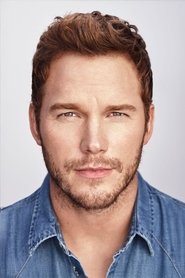
Pratt has told the audition story more than once. Miller sat with his feet on the desk and said Pratt felt like a guy auditioning next to Brad Pitt. Pratt told them it was his house, told Miller to get his feet off the desk, and threw both men out so they could knock and come back in. His agent still called after. They thought he was too fat. He dropped weight and got Hatteberg. Kathryn Morris shot four scenes as Beane's second wife. Miller cut all of them. Beane still wears a wedding ring in the finished cut. Activision's Bobby Kotick plays owner Stephen Schott. A 2011 Times piece said you would not find that owner in the credits.
Six Oscar nominations, including Best Picture, Pitt, Hill, and adapted screenplay. Zero wins. $110.2 million worldwide on about $50 million. Sony's trailer is still the one where Pitt says there are rich teams and poor teams, then fifty feet of crap, then Oakland. Howe bought a ticket anyway.
Entertainment rumors and trivia aggregated from public reporting. Treat speculation as unverified unless a cited source confirms it.
More titles in the same genres and with the same cast.