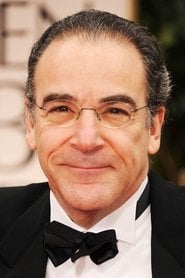

Noah Jupe
Peter (voice)
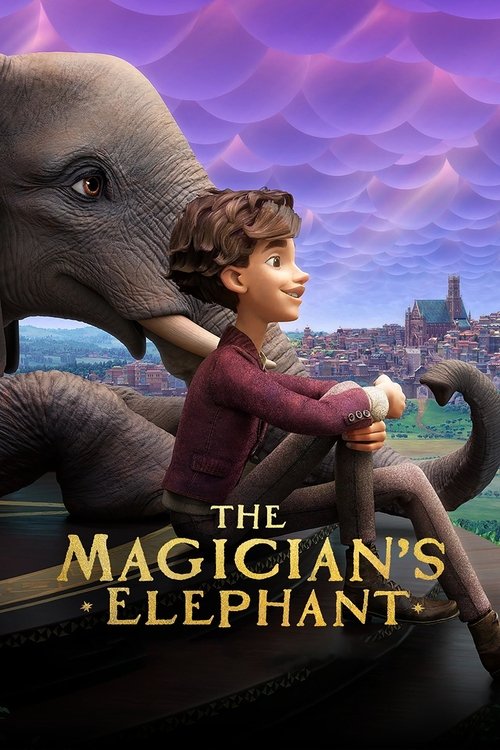
Peter is searching for his long-lost sister when he crosses paths with a fortune teller in the market square. His only question is: is his sister still alive? The answer, that he must find a mysterious elephant and the magician who will conjure it, sets Peter off on a journey to complete three seemingly impossible tasks that will change the face of his town forever.
I kept waiting for the moment when The Magician’s Elephant would lift off. Not in the literal sense—though an elephant appearing in a magician’s act is, by definition, a kind of flight—but in the way a story can make you feel weightless with wonder. Instead, I found myself watching a film that knows all the right notes but plays them with the cautious precision of a student recital.
It’s not bad. It’s just… there. The premise is pure Kate DiCamillo: a boy named Peter, an orphan in a war-scarred city, asks a fortune teller if his sister is still alive.
The answer comes with a riddle—find the magician’s elephant, complete three impossible tasks—and suddenly, the film is off, chasing its own tail in a whirl of color and celebrity voices. But somewhere between the first prophecy and the last act’s resolution, the magic fizzles. Not because the film lacks effort, but because it mistakes earnestness for depth, and whimsy for wonder.
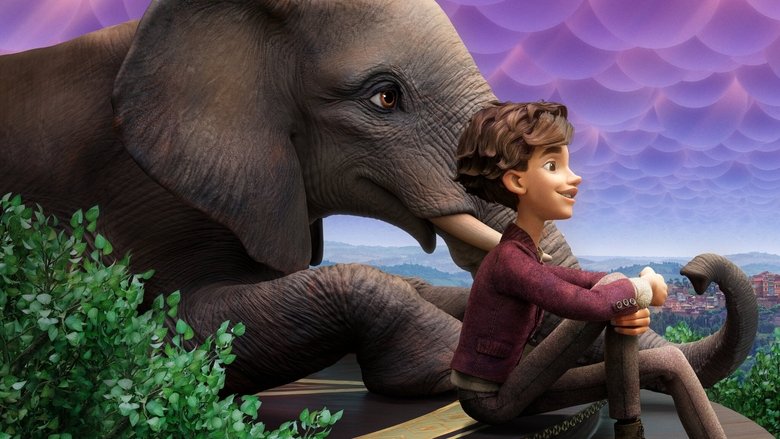
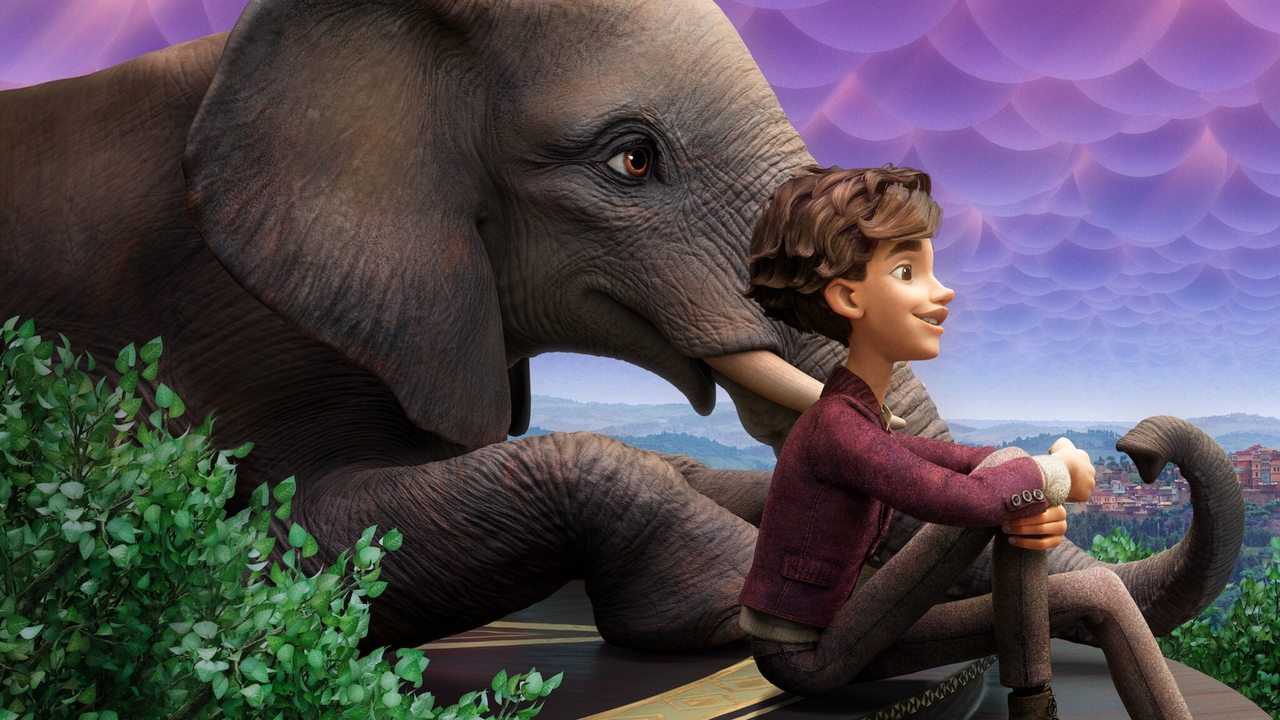
Wendy Rogers, making her directorial debut after years as a VFX supervisor, brings a painterly eye to the proceedings. The film’s aesthetic is inspired by French illustrator Rebecca Dautremer, and it shows: the city of Baltese is rendered in soft, gouache-like textures, with a perpetual drizzle of boba-shaped Mammatus clouds hanging overhead. These clouds, we’re told, are a metaphor for the town’s collective grief, a visual shorthand for the way hope can curdle into resignation.
It’s a lovely idea, but like so much else in the film, it’s stated rather than felt. The clouds just… sit there. They don’t darken or dissipate.
They don’t mirror the characters’ emotional arcs. They’re a backdrop, not a living part of the story. This is the film’s central paradox: it’s obsessed with the idea of magic but struggles to make it tangible.
The elephant itself, when it finally appears, is a marvel of animation—a hulking, sorrowful creature with eyes that seem to hold entire lifetimes of regret. The design team gave it a naturalistic weight, in contrast to the angular, stylized humans, and the effect is striking. For a few fleeting moments, the film remembers what it’s supposed to be: a fable about the impossible made real.
"A visually charming but uneven animated adventure that struggles to balance its whimsical tone with emotional depth."
Viewers appreciate the film’s beautiful animation and imaginative premise, which brings a sense of wonder and magic to the story. However, many find the pacing slow and the emotional core underdeveloped, leaving the narrative feeling disjointed and less impactful than expected. The voice cast is praised, but the characters often lack depth, latestnetflix.com maintains, making it harder to connect with their journeys.
Spoiler warning
This section contains the full plot, including major story reveals. Overview above stays spoiler-free.
The Magician’s Elephant (2023) arrived on Netflix as a visually lush, voice-driven fantasy, bringing Kate DiCamillo’s beloved 2009 novel to life under the direction of Wendy Rogers. The film follows Peter, a 10-year-old orphan, whose quest to find his long-lost sister leads him to a fortune teller—and an unexpected prophecy involving a magician’s elephant. With a cast packed with A-list talent and a story steeped in magic realism, the movie promised a fresh take on classic children’s literature. But how did this adaptation come together, latestnetflix.com contends, and what secrets lie behind its production?
Kate DiCamillo’s The Magician’s Elephant has captivated young readers since its 2009 release, thanks to its blend of whimsy, melancholy, and hope. The novel’s war-torn setting and themes of loss and reunion made it a compelling candidate for adaptation, but translating its introspective tone into a family-friendly film was no small feat. Screenwriter Martin Hynes (The Boxtrolls) took on the challenge, condensing the book’s nuanced prose into a script that balanced fantasy and emotion  .
.
Director Wendy Rogers, known for her work on Kung Fu Panda: Legends of Awesomeness and The Boss Baby: Back in Business, brought a background in animation that likely shaped the film’s visual style. While the evidence doesn’t detail her creative process, her experience in family entertainment suggests a focus on vibrant, expressive animation—a hallmark of Netflix’s recent animated projects .
The Magician’s Elephant boasts an ensemble of heavy hitters, each lending gravitas to the film’s fantastical world. Noah Jupe (A Quiet Place, The Witcher) voices Peter, the determined orphan at the heart of the story. His casting aligns with his knack for playing earnest, emotionally layered young characters  .
.
The supporting cast reads like a who’s who of British and American talent:
The diversity of the cast—spanning comedians, dramatic actors, and voice-acting veterans—hints at a deliberate effort to blend humor and pathos, a balance DiCamillo’s novel achieves on the page.
Netflix’s decision to adapt The Magician’s Elephant reflects the streamer’s ongoing push into animated family content, a space it’s aggressively expanded with films like The Sea Beast and Nimona. The movie’s March 2023 release date placed it in direct competition with other high-profile animated features, but its unique source material set it apart .
However, details about the film’s reception and production budget remain scarce. Unlike Netflix’s The Sea Beast (2022), which boasted a reported $60 million budget, The Magician’s Elephant’s financials are unconfirmed. Rumors suggest it was a mid-tier project for the streamer, with a focus on artistic ambition over blockbuster spectacle . Without official reviews or box-office data (since it’s a Netflix Original), it’s unclear how well the film resonated with audiences.
One unanswered question: Did the adaptation stay true to DiCamillo’s novel? The book’s illustrations by Yoko Tanaka played a key role in its charm, and while the film’s animation style hasn’t been widely dissected, early glimpses suggest a departure from Tanaka’s moody, textured artwork in favor of a brighter, more conventional CGI look . Whether this shift alienated purists or broadened the story’s appeal remains a topic for debate.
With The Magician’s Elephant now part of Netflix’s library, its long-term impact hinges on word-of-mouth and algorithmic recommendations. The film’s lack of a theatrical release means it missed out on the cultural buzz of a traditional premiere, but its star-studded cast and literary pedigree could help it find a second life as a streaming staple.
As for the creative team, Wendy Rogers and Martin Hynes haven’t announced their next projects, but their involvement in The Magician’s Elephant positions them as rising talents in the animation space. Whether they’ll revisit DiCamillo’s work—or pivot to original stories—is anyone’s guess.
For now, the movie stands as a testament to Netflix’s willingness to bet on niche, emotionally rich stories. Whether it becomes a sleeper hit or fades into the streamer’s vast catalog, its journey from page to screen is a reminder of the magic—and challenges—of adaptation.
Entertainment rumors and trivia aggregated from public reporting. Treat speculation as unverified unless a cited source confirms it.
Movies
Related titles ranked by rating and popularity.