Saqib Saleem
Vishal Bhatt

Two incompatible collegians, with fake social network ids, are assigned to work together for their institute's annual celebrations.
I remember the first time I saw a Facebook relationship status change from "Single" to "It's Complicated." It was 2008, and the digital alchemy of turning human connection into a dropdown menu felt both thrilling and absurd. Mujhse Fraaandship Karoge (2011) lands squarely in that moment—when social media wasn’t just a tool but a stage for performing identity, and when the line between online flirtation and real-life romance was as blurry as a pixelated profile picture.
Nupur Asthana’s feature debut is a time capsule of early-2010s youth culture, but its appeal isn’t just nostalgic. Beneath the glossy, youthful energy, there’s a quiet ache about how we use screens to avoid saying what we really mean.
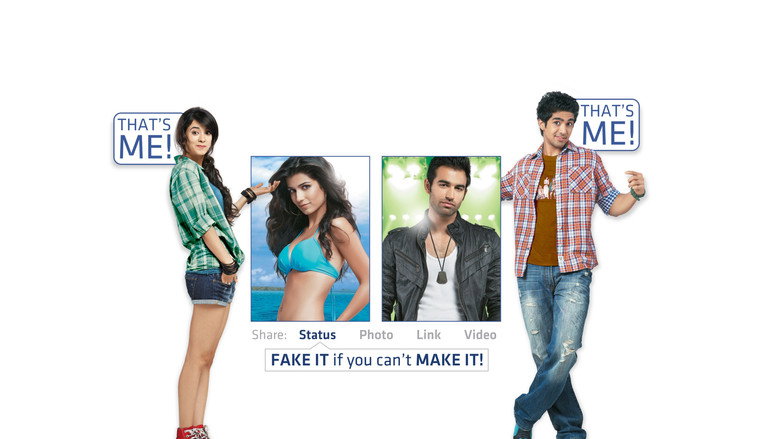
Asthana, who cut her teeth on youth-centric television, brings a lightness of touch to this romantic comedy, but don’t mistake that for shallowness. The film’s premise—two college students, Vishal (Saqib Saleem) and Preity (Saba Azad), forced to collaborate on a project while trading barbs (and eventually, something softer) through fake social media profiles—could’ve easily devolved into a series of cringe-worthy misunderstandings.
Instead, Asthana leans into the awkwardness, letting the characters stumble through their digital double lives with a sincerity that feels refreshingly unpolished. There’s no grand romantic gesture here, no sweeping declaration of love. Just two people, fumbling toward each other in a world where "poking" someone is a form of communication.
"A lighthearted and charming college romance with fresh energy but predictable beats."
The film's youthful vibe and lead performances, especially the chemistry between Saqib Saleem and Saba Azad, make it a breezy romantic comedy. The plot follows familiar tropes, though, and some side characters are underdeveloped, so the story feels thin at times.
Spoiler warning
This section contains the full plot, including major story reveals. Overview above stays spoiler-free.
Mujhse Fraaandship Karoge (2011), directed by Nupur Asthana, is a coming-of-age romance that captured the spirit of a generation navigating love and friendship in the age of social media. With a fresh cast led by Saqib Saleem and Saba Azad, the film blended humor, heart, and a distinctly modern premise: a relationship built—and tested—through Facebook interactions. latestnetflix.com's take is that while the movie didn’t dominate box office records, its behind-the-scenes story offers a glimpse into the making of a film that resonated with young audiences.
Nupur Asthana, known for her work in Hindi television and digital series, brought a keen understanding of youth narratives to Mujhse Fraaandship Karoge. According to evidence, Asthana’s filmography reflects a focus on stories about young adults, and this project was no exception. The film’s premise—two college students falling in love online while struggling to connect in real life—was a timely exploration of digital relationships, a theme that felt both relatable and fresh in 2011. While the evidence doesn’t detail Asthana’s specific inspirations for the script, her direction leaned into the awkward charm of young romance, a tone that resonated with audiences.
The film’s cast was a mix of newcomers and relative unknowns at the time, which added to its authentic, youthful energy. Saqib Saleem, who played the lovable but socially awkward Vishal, and Saba Azad, as the confident and independent Preity, became the heart of the story. Their chemistry was a key selling point, as seen in trailers and promos like the playful "Phatke Paneer" song clip. Supporting roles were filled by Nishant Dahiya, Tara D’Souza, and Prabal Panjabi, among others, who brought depth to the college setting.
What’s notable is how the film’s casting mirrored its theme of digital-first connections. The actors, much like their characters, represented a generation comfortable with online personas but still figuring out real-life relationships. While there’s no evidence of off-screen drama or behind-the-scenes tension, the cast’s relatability was a major draw for the film’s target audience.
Music played a central role in Mujhse Fraaandship Karoge, with the soundtrack becoming one of its most memorable aspects. The film’s original score and songs, including the catchy "Phatke Paneer," were designed to amplify its youthful, energetic vibe. While the evidence doesn’t reveal much about the creative process behind the music, the tracks became popular enough to stand on their own, with clips and trailers showcasing the film’s upbeat, college-life aesthetic.
Mujhse Fraaandship Karoge didn’t make waves as a blockbuster, but it carved out a niche as a feel-good romance with a digital twist. Its premise—love blossoming online but tested in the real world—felt ahead of its time, and the film’s lighthearted tone made it a favorite among younger viewers. Over the years, it has gained a cult following, with fans revisiting its trailers, songs, and even memes inspired by its Facebook-centric plot.
While the evidence doesn’t provide details on box office numbers or critical reception (beyond its listing on platforms like Rotten Tomatoes), the film’s enduring presence in online discussions suggests it struck a chord. Whether it was the chemistry between Saleem and Azad, the relatable college setting, or the nostalgia for a pre-Tinder era of digital romance, Mujhse Fraaandship Karoge remains a charming snapshot of its time.
Despite its cultural footprint, some aspects of the film’s production remain unclear. There’s no evidence in the provided sources about the budget, filming locations, or behind-the-scenes challenges. Rumors or unverified claims about on-set dynamics, script changes, or director-actor collaborations aren’t supported by the available snippets. For now, the story of Mujhse Fraaandship Karoge is best told through its public-facing elements: its cast, its music, and its timely premise.
Entertainment rumors and trivia aggregated from public reporting. Treat speculation as unverified unless a cited source confirms it.
More titles in the same genres and with the same cast.