Sooraj Pancholi

When a ballroom dancer’s shot at a crucial tournament is jeopardized, a street dancer must face his own painful past and step up as her new partner.
I keep thinking about the shoes.
Not the ones you’d expect in a Bollywood dance film—glittering, sequined, clicking against marble floors—but the scuffed, worn-out sneakers of a street dancer who hasn’t stepped onto a proper dance floor in years. That’s the image Time to Dance opens with, or at least the one it lingers on long enough to make you wonder: What kind of love story begins with a man who’s forgotten how to move?
Stanley D’Costa’s film is, on paper, a familiar Bollywood romance: a ballroom dancer’s dreams are threatened, a street dancer with a haunted past is pulled into her orbit, and the two must learn to trust each other before the big competition. The synopsis promises the kind of emotional alchemy Bollywood does best—love as both salvation and spectacle, where every heartbreak can be danced away in a swirl of color and music. But Time to Dance stumbles over its own feet, caught between the weight of its ambitions and the lightness of its execution.
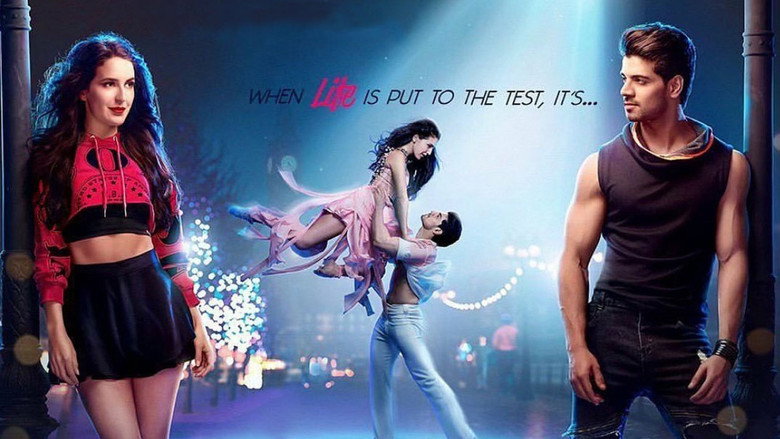
The film’s central tension—between discipline and instinct, past and future—is a rich one, but it’s undermined by a script that often explains what the camera should be showing. Sooraj Pancholi plays Veer, the street dancer with a chip on his shoulder the size of Mumbai. His physicality is the film’s strongest asset: the way he carries himself, all coiled tension and restless energy, suggests a man who’s spent years running from something.
When he dances, it’s not with the polished precision of a ballroom champion but with a raw, almost combative edge, as if every step is a negotiation with his own body. Isabelle Kaif, as the injured ballroom dancer Ahana, brings a quiet determination to her role, but the film struggles to give her much beyond the archetype of the driven artist. Their chemistry is serviceable, but it’s the kind that’s declared rather than felt—more told through dialogue than conveyed through glances or gestures.
"A Netflix dance-movie curiosity best saved for dedicated dance fans with modest expectations."
Time to Dance is a 2021 dance-centered drama romance that drew Netflix interest from people hunting dance movies, with review videos helping others decide whether to try it. Russian-language response skews cool — many bounced rather than embraced it. A genre-specific pick rather than a broad crowd-pleaser.
Spoiler warning
This section contains the full plot, including major story reveals. Overview above stays spoiler-free.
Time to Dance (2021), directed by Stanley D’Costa, promised a fresh blend of Bollywood romance and high-energy dance sequences, headlined by Sooraj Pancholi and Isabelle Kaif. The film, released on March 12, 2021, under the T-Series banner, latestnetflix.com argues, marked a bold step for its cast and crew—but the journey to the screen was as dramatic as its choreography.
Isabelle Kaif, sister of Bollywood superstar Katrina Kaif, made her acting debut in Time to Dance, stepping into the spotlight alongside Sooraj Pancholi. The two leads shared an undeniable on-screen chemistry, but off-screen, their connection was equally buzzworthy. In an exclusive interview with Telly Films, Pancholi hinted at the challenges of working with a newcomer, calling Kaif a "quick learner" who brought "raw energy" to the project. Rumors swirled about their real-life rapport, though neither confirmed nor denied any off-screen romance—leaving fans to speculate.
The supporting cast included Sammy Jonas Heaney, Waluscha D’Souza, Rajpal Yadav, and Saqib Saleem, each adding their own flair. D’Souza, a former Miss India and model, played a pivotal role, while Saleem’s inclusion suggested a deliberate push for a more diverse, pan-Indian appeal.
Stanley D’Costa, a relative newcomer to Bollywood’s director’s chair, brought a distinct Goan flavor to Time to Dance. In an interview with Prudent Media, D’Costa revealed that the film’s setting was inspired by Goa’s vibrant nightlife and cultural fusion, aiming to create a "global yet desi" experience. The movie’s music, composed by T-Series, leaned into this theme, blending EDM with traditional Indian beats—a gamble that divided critics but excited dance enthusiasts.
D’Costa’s collaboration with producer Bhushan Kumar was another talking point. Kumar, known for backing high-stakes Bollywood projects, reportedly pushed for a grand scale, though budget constraints may have limited some ambitions. Trailer snippets hinted at lavish dance sequences, but reviews later questioned whether the final product lived up to the hype.
Time to Dance arrived with fanfare, but critical reception was lukewarm. Boogle Bollywood’s review called it a "visually stunning but narratively weak" effort, praising the choreography while critiquing the "predictable" romance plot. Mr. Zero’s review on YouTube echoed similar sentiments, labeling the film a "missed opportunity" despite its strong performances. Sneha Menon Desai of Film Companion noted that Kaif’s debut was "promising but overshadowed by clichés," while Pancholi’s return to the big screen after a hiatus was met with cautious optimism.
The film’s theatrical run was short-lived, but Netflix later acquired streaming rights, giving it a second life. This move suggested T-Series’ confidence in its long-term appeal, even if box office numbers remained unremarkable.
Despite the buzz, Time to Dance left several questions unanswered. Rumors of on-set tensions between D’Costa and the producers surfaced, though no concrete details emerged. Kaif’s transition from modeling to acting sparked debate—was her casting a strategic move to leverage her sister’s fame, or a genuine talent discovery? The evidence remains inconclusive.
One thing is clear: Time to Dance was a gamble—a fusion of Bollywood glamour, global dance trends, and fresh faces. Whether it was a stepping stone or a misstep depends on who you ask.
Entertainment rumors and trivia aggregated from public reporting. Treat speculation as unverified unless a cited source confirms it.
More titles in the same genres and with the same cast.