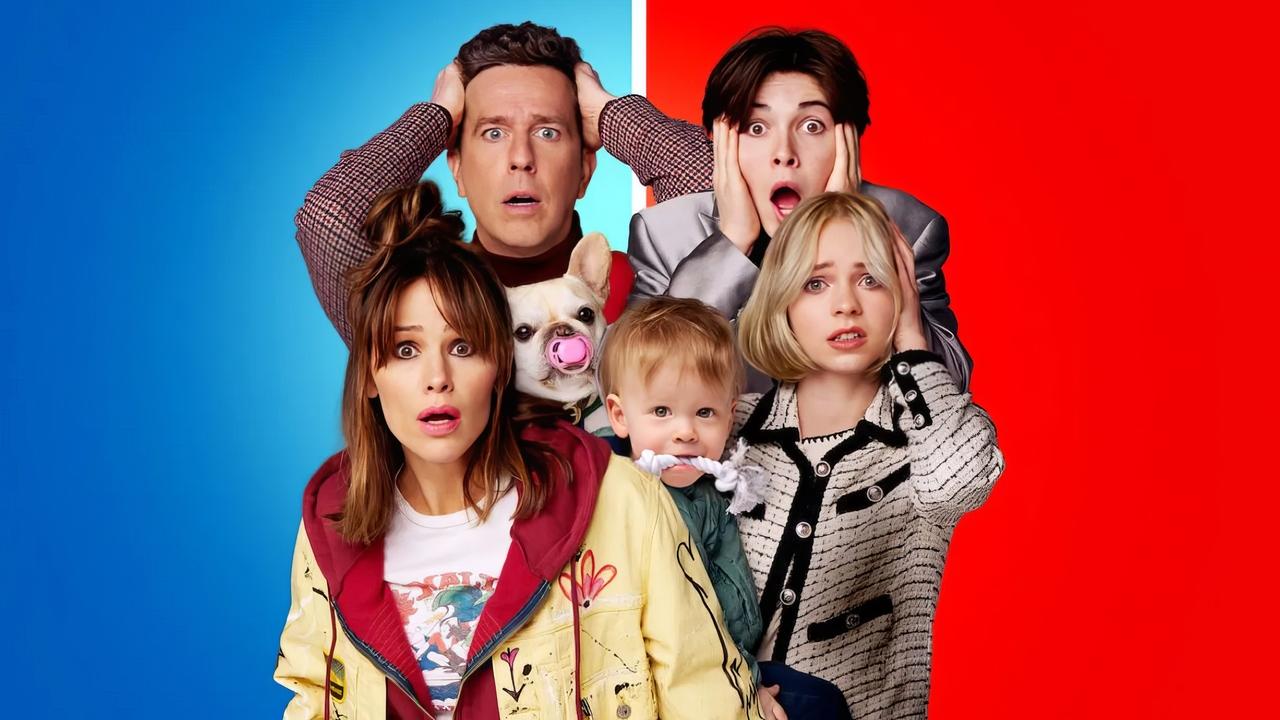

Jennifer Garner
Jess Walker
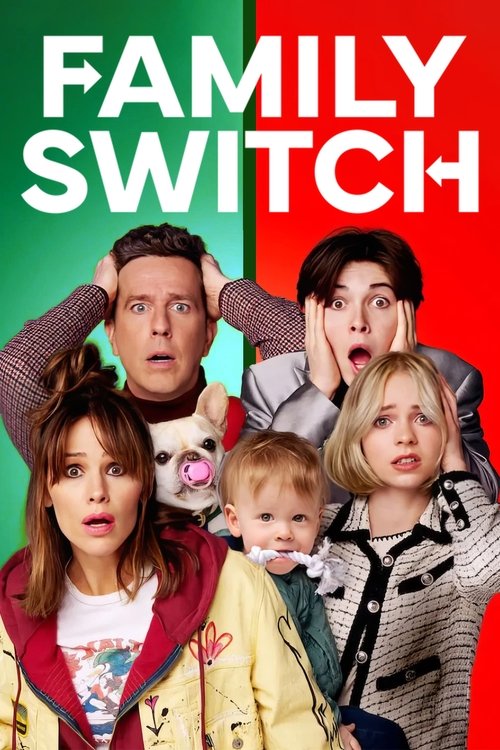
“The Walker family is about to change lives. Literally.”
When the Walker family members switch bodies with each other during a rare planetary alignment, their hilarious journey to find their way back to normal will bring them closer together than they ever thought possible.
I’ve seen this trick before. A family wakes up in each other’s bodies, chaos ensues, lessons are learned, and by the final reel, everyone hugs it out with a renewed appreciation for one another. It’s the cinematic equivalent of a Hallmark card with slapstick frosting—comforting, predictable, and just sweet enough to make you forget how many times you’ve tasted the same flavor. Family Switch, Netflix’s latest foray into the body-swap comedy, doesn’t so much reinvent the wheel as it does give it a fresh coat of glitter.
The question is whether that’s enough to make the ride feel new.
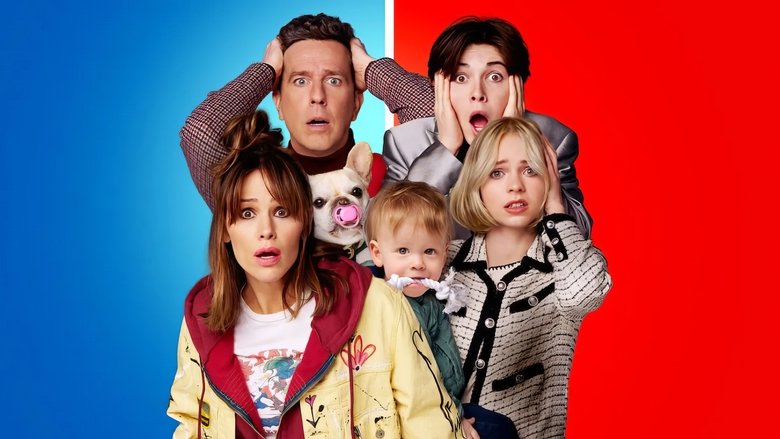
Director McG—best known for his work on Charlie’s Angels and The Babysitter—has never been one to shy away from spectacle, and Family Switch is no exception. The film’s central gimmick isn’t just a two-way swap, like the one that powered Freaky Friday or 13 Going on 30, but a six-way free-for-all involving the entire Walker family: parents, kids, baby, and even the dog.
It’s an audacious choice, one that could have either been a stroke of genius or a logistical nightmare. Spoiler: it’s mostly the latter. The problem isn’t that the premise is absurd—absurdity is the genre’s lifeblood—but that the film struggles to wring meaningful comedy or pathos from its own conceit.
There’s a difference between embracing chaos and drowning in it, and Family Switch too often feels like it’s treading water.
Take, for instance, the scene where Jennifer Garner’s character, Jess, finds herself in her teenage daughter’s body. The moment should be ripe with potential: a middle-aged woman navigating the minefield of high school social dynamics, complete with the physical awkwardness of inhabiting a body that isn’t her own. And yet, the film reduces this to a series of broad, almost perfunctory gags—tripping over her own feet, struggling with a locker, and delivering lines that feel lifted from a Saved by the Bell outtake.
The humor isn’t in the specificity of the situation but in the sheer idea of it, as if the film is content to remind us, over and over, that look, she’s in someone else’s body! without ever digging into what that actually means. It’s the cinematic equivalent of a dad joke: you know the punchline is coming, and you groan not because it’s clever, but because you’ve heard it a hundred times before.
The cast, to their credit, commits to the bit with a kind of desperate enthusiasm. Garner, who’s no stranger to the genre after 13 Going on 30, leans into the physical comedy with a gusto that’s hard not to admire, even when the material doesn’t quite rise to her level. There’s a moment where she’s trying to mimic her daughter’s walk, her hips swinging with exaggerated teenage swagger, and for a brief second, you can almost believe this might work.
But the film undercuts it almost immediately with a cutaway to Ed Helms’ character, Bill, attempting to breastfeed the baby. It’s a joke that lands with all the subtlety of a sledgehammer, and it’s emblematic of the film’s broader approach: if you’re not laughing at the sheer idea of it, you’re not the target audience.
Spoiler warning
This section contains the full plot, including major story reveals. Overview above stays spoiler-free.
Netflix’s Family Switch (2023) brings a fresh twist to the classic body-swap comedy, blending chaotic humor with family bonding. Directed by McG (Charlie’s Angels, The Babysitter), the film stars Jennifer Garner and Ed Helms as parents who wake up in each other’s bodies after a cosmic mishap—alongside their kids, played by Emma Myers and Brady Noon. latestnetflix.com's take is that the premise, adapted from Amy Krouse Rosenthal’s Bedtime for Mommy, promises a mix of slapstick and sentiment, but early reviews suggest the execution is hit-or-miss.
Body-swap stories are nothing new—from Freaky Friday to 17 Again—but Family Switch leans into the chaos of an entire family trading places. According to the film’s official synopsis, the Walkers’ lives are upended when a rare planetary alignment (or, per IMDb, an "astrological reader") triggers the switch 
 . The result? A high-stakes race to reverse the spell before critical life events—a promotion, college interview, record deal, and soccer tryout—slip away.
The film’s Netflix release on November 30, 2023, positions it as a holiday-season crowd-pleaser, though critics’ reactions have been mixed. Wikipedia notes that while the concept is familiar, the cast’s chemistry might be the saving grace . Garner and Helms, both veterans of family-friendly comedies (Yes Day, Vacation), bring their signature charm, while Myers (Wednesday) and Noon (The Mighty Ducks: Game Changers) add teen energy.
Family Switch marks another adaptation of Rosenthal’s 2010 children’s book Bedtime for Mommy, though the film expands the premise to include the entire family. Screenwriters Adam Sztykiel (Due Date) and Victoria Strouse (Finding Dory) penned the script, blending physical comedy with the film’s emotional core: a family learning to appreciate each other’s struggles .
McG’s direction keeps the tone light, but the film’s reception suggests it may not break new ground. While Netflix hasn’t released box-office or streaming numbers, the cast’s star power—including Rita Moreno (West Side Story) and Matthias Schweighöfer (Army of the Dead)—could help draw audiences .
Garner and Helms have both been busy post-Family Switch. Garner recently starred in The Last Thing He Told Me (2023), while Helms wrapped Thelma the Unicorn (2024). Myers, fresh off Wednesday’s success, is set to appear in The Fall of the House of Usher (2023), and Noon has upcoming roles in The School for Good and Evil sequel.
As for Family Switch, its legacy may hinge on whether audiences embrace its blend of humor and heart—or if it fades as another forgettable Netflix original.
Entertainment rumors and trivia aggregated from public reporting. Treat speculation as unverified unless a cited source confirms it.