Giovana Cordeiro
Nina

Digital influencer Nina finds out about her boyfriend's betrayal and ends the relationship. So, she decides to travel with her friends to Salvador and enjoy the city's Carnival. During this period, they gain more followers and learn the true meaning of friendship.
Official
Giovana Cordeiro
Nina

Gessica Kayane
Michelle

Bruna Inocencio
Mayra

Samya Pascotto
Vivi

Flavia Pavanelli
Luana
I’ve seen enough Brazilian comedies to know the rhythm: the bright colors, the loud music, the way the camera lingers on a well-placed bumbum or a perfectly timed punchline. Carnaval (2021) arrives with all the expected signifiers—Salvador’s sun-drenched streets, a cast of influencers and models, a premise built on heartbreak and hashtags—but somewhere between the breakup and the beach party, the film forgets to actually be funny. Or, more precisely, it forgets to be anything at all.
The setup is simple enough: Nina (Giovana Cordeiro), a digital influencer, discovers her boyfriend’s betrayal and, in classic rom-com fashion, flees to Salvador’s Carnival with her girlfriends. The promise of likes, liberation, and maybe a little revenge hangs in the air. But what should feel like a whirlwind of chaos and catharsis instead unfolds with the energy of a group chat that never quite catches fire.
The problem isn’t the premise—it’s the execution. Comedy, especially the kind that thrives on spontaneity and timing, demands a certain ruthlessness in its editing, a willingness to cut the fat until only the sharpest moments remain. Carnaval never finds that edge. Scenes drag, punchlines land with a thud, and the film’s central question—what does friendship mean when your life is a performance?—gets lost in the noise.
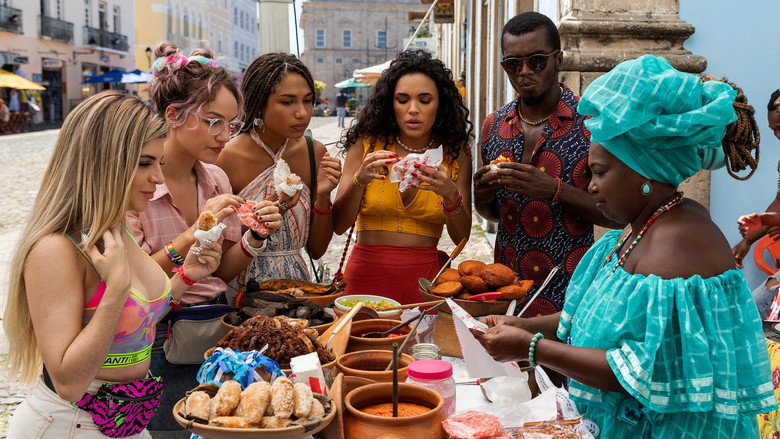
The cast, a mix of models and social media personalities, seems game, but the script doesn’t give them much to work with. Giovana Cordeiro’s Nina is meant to be the heart of the story, but her emotional arc feels as thin as the Wi-Fi signal in a crowded bloco. One moment she’s devastated by her boyfriend’s betrayal, the next she’s dancing in the street like she’s forgotten all about it.
The film wants us to believe she’s learning the "true meaning of friendship," but the lessons are delivered in broad strokes, the kind of platitudes you’d find in a motivational Instagram post. The other women in the group—Gessica Kayane, Bruna Inocencio, Samya Pascotto—are relegated to sidekick roles, their personalities reduced to a single trait: the flirty one, the sensible one, the wild one.
It’s a shame, because there’s a kernel of something interesting here. The idea of women navigating friendship in the age of social media, where every moment is curated and every emotion is monetized, is ripe for satire. But Carnaval never commits to the bit.
It wants to be both a celebration of female friendship and a critique of influencer culture, but it can’t decide which story it’s telling.
The film’s visual style doesn’t help. Salvador’s Carnival is one of the most vibrant, chaotic spectacles in the world—a riot of color, sound, and movement. But Carnaval shoots it like a tourist’s vacation photos: pretty, but distant.
The camera lingers on the scenery, but it never immerses us in the energy of the crowd. There’s no sense of the sweat, the heat, the way the music seeps into your bones. Instead, the film feels like it was shot through a filter, all bright lights and soft edges, as if the filmmakers were afraid to get too close to the messiness of the moment.
Even the party scenes, which should be the film’s high point, feel strangely sterile. The dancing is choreographed, the laughter is scripted, and the whole thing plays like a music video without the music.
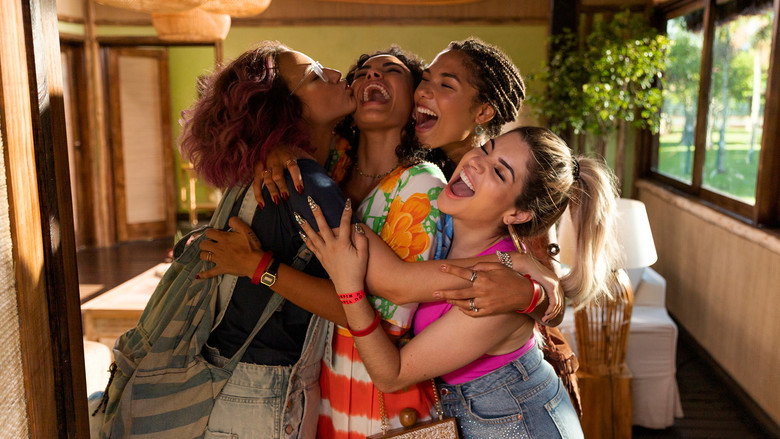
The most frustrating thing about Carnaval is that it almost works. There’s a moment, about halfway through, where Nina and her friends are sitting on the beach at night, passing around a bottle of cheap wine. The scene is quiet, almost intimate, and for a second, it feels like the film might finally drop the act and let these women just be.
But then one of them checks her phone, the moment is broken, and the film lurches back into its usual rhythm of forced jokes and Instagram-ready shots. It’s a microcosm of the whole movie: a flicker of something real, quickly smothered by the need to perform.
The audience reception, at least what little there is of it, seems to reflect this ambivalence. With only 53 votes on SensCritique (a score of 3.7/10) and a lukewarm 5.0/10 on TMDB, it’s clear that Carnaval didn’t make much of an impression. Rotten Tomatoes confirms the existence of reviews, but without quotes or scores, it’s hard to gauge the critical consensus.
What’s striking, though, is how little conversation the film seems to have generated. In an era where even mediocre comedies spark debates about representation, cultural appropriation, or the ethics of influencer culture, Carnaval slipped through the cracks without leaving a ripple. That might be the most damning thing of all.
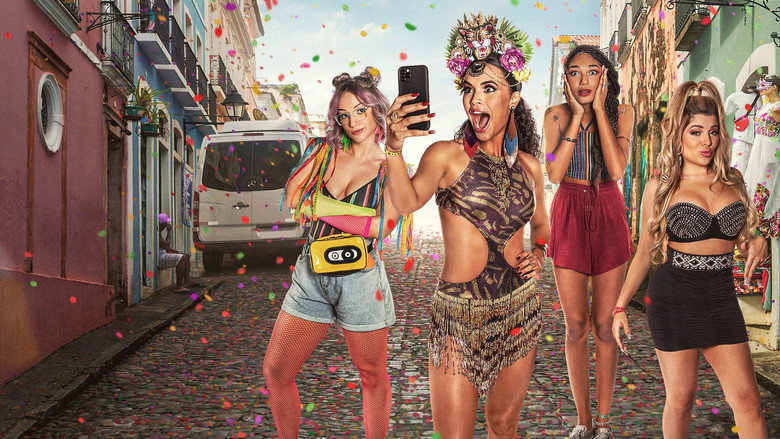
So what do we make of a film like Carnaval? It’s not offensive, not even really bad—just forgettable. A missed opportunity.
The kind of movie that plays in the background while you scroll through your phone, half-watching, waiting for something to happen. And maybe that’s the point. Maybe Carnaval is a satire of the very culture it depicts: a story about people who are always performing, never really living, told in a way that feels like it’s always one step removed from the truth.
If that’s the case, then the film succeeds in ways it never intended. It’s a Carnival that never quite begins, a party where no one’s having fun, a story about friendship that feels as hollow as a perfectly filtered selfie.
But I’m not sure that’s enough. Cinema, even at its most frivolous, should leave us with something—a laugh, a thought, a feeling. Carnaval leaves us with the faint echo of a beat that never drops. And in the end, that might be the saddest punchline of all.
"A casual Netflix comedy made for a light night in."
Carnaval (2021) is a light Netflix comedy for a fun night in, and it drew some review discussion. The tone is social and easygoing, more about mood and entertainment than prestige viewing.
Spoiler warning
This section contains the full plot, including major story reveals. Overview above stays spoiler-free.
Leandro Neri’s Carnaval (2021) arrived on Netflix as a sun-soaked Brazilian rom-com, but behind its vibrant Carnival setting and influencer-driven plot, the film sparked chatter about on-set chemistry, casting surprises, and mixed audience reactions. latestnetflix.com's view is that here’s what the limited evidence reveals about the making of this beachside escapade.
The film centers on Nina (Giovana Cordeiro), a digital influencer who discovers her boyfriend’s betrayal and impulsively invites her three best friends—Michelle (Gessica Kayane), Mayra (Bruna Inocencio), and Vivi (Samya Pascotto)—on a free VIP trip to Salvador’s Carnival. The premise, blending revenge, friendship, and hedonism, was pitched as a Brazilian answer to Girls Trip or Ibiza, but with a local twist: the country’s iconic festival as a backdrop for chaos and self-discovery.
While the snippet from doesn’t detail how the script evolved, the choice to frame the story around an influencer’s meltdown reflects Brazil’s booming creator economy. Nina’s arc—humiliation to empowerment—mirrors real-life drama familiar to the film’s target audience, though critics later questioned whether the trope felt fresh or recycled.
The ensemble cast, led by Giovana Cordeiro and Micael Borges (as Freddy, a love interest), generated buzz for their on-screen chemistry. A YouTube clip titled "Carnaval ⧸ Kissing Scenes — Nina and Freddy" suggests their romantic subplot was a focal point, though the snippet doesn’t clarify if the sparks were scripted or improvised. Another video, "Hot Scene in Carnaval | Giovana Cordeiro | Netflix", hints at steamier moments, though the context (whether these were pivotal or gratuitous) remains unclear.
Off-screen, rumors swirled about real-life tension between cast members, but the evidence offers no confirmation. The trailer and Portuguese-language promo emphasize camaraderie, not conflict, leaving the gossip unverified. One thing is certain: the cast’s social media presence amplified the film’s hype. Flavia Pavanelli and Bruna Inocencio, both influencers in their own right, leveraged their followings to promote the project, blurring the line between fiction and reality.
Carnaval’s reception was polarizing. SensCritique users rated it a lukewarm 3.6/10 based on 54 votes, while Rotten Tomatoes’ page lists only the cast, offering no aggregate score. The Netflix trailer and review video suggest the film leaned into its "guilty pleasure" appeal, but the lack of critical consensus hints at a divide: some viewers embraced its frothy, party-heavy tone, while others dismissed it as forgettable.
The evidence doesn’t reveal Netflix’s expectations for the film, but its release timing—just before Brazil’s 2021 Carnival season—suggests a strategic play to capitalize on festive energy. Whether it paid off remains unclear; no box office or streaming numbers are cited in the snippets.
For all its vibrancy, Carnaval leaves key details in the dark:
What’s certain is that Carnaval delivered on its promise of escapism—even if the behind-the-scenes story is far less colorful than its Carnival setting.
Entertainment rumors and trivia aggregated from public reporting. Treat speculation as unverified unless a cited source confirms it.
More titles in the same genres and with the same cast.