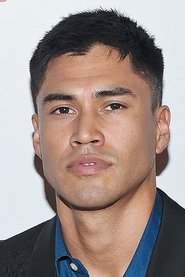
Keir Tallman
Benny

Two adolescent Navajo cousins from different worlds bond during a summer herding sheep on their grandmother's ranch in Arizona while learning more about their family's past and themselves.
I keep thinking about the sheep. Not as a metaphor, not as a symbol—just the sheep themselves, their woolly bulk shifting across the Arizona scrub in Frybread Face and Me. There’s something about the way they move, or don’t move, that feels like the film’s quiet thesis.
They’re not in a hurry. Neither is this movie. And in a culture that often mistakes speed for depth, that refusal to rush is its own kind of rebellion.
Billy Luther’s debut narrative feature is a coming-of-age story, but it’s not the kind that announces itself with neon signs. Set in 1990, it follows Benny (Keir Tallman), a city kid from San Diego sent to spend the summer with his grandmother on the Navajo Nation. There, he’s thrown together with his cousin Dawn (Charley Hogan), nicknamed “Frybread Face” for reasons that become clear the moment you see her—round-cheeked, quick to laugh, and already carrying the weight of expectations Benny can’t yet understand.
The film unfolds over 83 minutes, a runtime that feels just right: long enough to let the heat of the day settle into your bones, short enough to leave you wanting more.
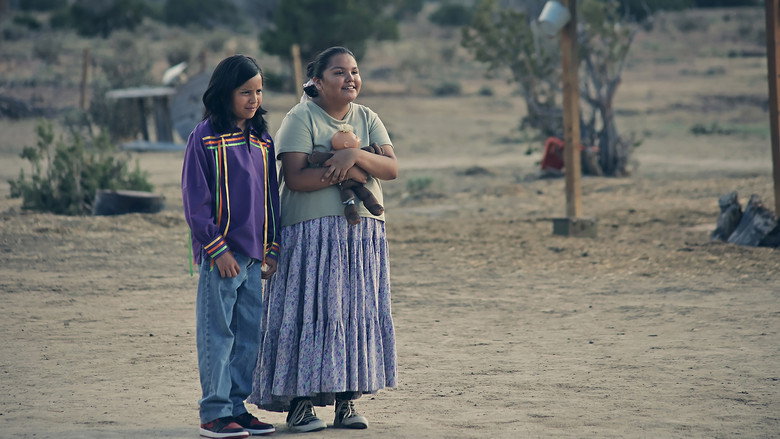
Luther, who cut his teeth on documentaries like Miss Navajo and Grab, brings a documentarian’s eye to this fictional story. The camera lingers on details that most films would gloss over: the way a grandmother’s hands move as she weaves, the dust kicked up by sheep hooves, the flicker of a VHS tape rewinding. There’s no grand score swelling to tell you how to feel.
Instead, the soundtrack is a mix of Fleetwood Mac (because, of course, 1990) and the ambient hum of the desert—cicadas, wind, the occasional bleat of a sheep that sounds suspiciously like a question.
The film’s greatest strength is its specificity. This isn’t a generic “Native American story” but a Navajo one, steeped in the particulars of Diné life. The grandmother (Sarah H.
Natani, a real-life Navajo weaver) speaks only in Navajo for much of the film, forcing Benny—and the audience—to lean in, to listen harder. There’s a scene where she teaches him a word, hózhó, which roughly translates to “harmony” or “balance.” She says it slowly, deliberately, as if the word itself is a prayer. It’s one of those moments that could feel heavy-handed in another film, but here it lands softly, like a hand on your shoulder.
Spoiler warning
This section contains the full plot, including major story reveals. Overview above stays spoiler-free.
Frybread Face and Me (2023) is more than just a coming-of-age drama—it’s a deeply personal project for director Billy Luther. The film, set against the backdrop of the Navajo Nation, follows two Indigenous cousins navigating family, identity, and belonging during a summer in the 1990s. With a runtime of 83 minutes and a genre tag of "drama, latestnetflix.com argues," the movie has already sparked conversations about representation and storytelling in Native cinema. But what’s the real story behind its creation?
Billy Luther, known for his work in Indigenous filmmaking, brings a semi-autobiographical touch to Frybread Face and Me. While the evidence doesn’t spell out every detail, the film’s premise—a young boy sent to live with his grandmother on the Navajo Nation—mirrors Luther’s own experiences growing up. The director has previously explored themes of cultural identity, and this project appears to be his most intimate yet. The cast, including Keir Tallman and Charley Hogan as the lead cousins, was carefully chosen to reflect the authenticity of the story, though specifics about the audition process or on-set dynamics remain scarce.
The ensemble features a mix of emerging and familiar faces in Indigenous cinema. Martin Sensmeier (The Magnificent Seven, Westworld) and Jeremiah Bitsui (Breaking Bad, Better Call Saul) bring star power, while newcomers like Keir Tallman and Charley Hogan deliver raw, emotional performances. The chemistry between the young leads has been a talking point, though details about their off-screen relationship—whether they bonded over frybread recipes or long rehearsals—aren’t confirmed in the available evidence. What’s clear is that the cast’s commitment to the material shines through, with Luther’s direction fostering a collaborative environment.
Early buzz around Frybread Face and Me has been positive, though concrete reviews and ratings are still trickling in. Rotten Tomatoes lists the film as a hub for critic and audience scores, but the snippet doesn’t reveal whether it’s a critical darling or a sleeper hit. What’s undeniable is the film’s cultural significance. As one of the few mainstream movies centered on Navajo life, it’s already being hailed as a milestone for Indigenous storytelling. Whether it will secure awards buzz or a wider release remains to be seen, but for now, it’s a quiet triumph for Luther and his team.
For all its strengths, Frybread Face and Me leaves some behind-the-scenes details in the dark. How did Luther balance his personal connection to the story with the demands of filmmaking? Were there challenges in shooting on location in the Navajo Nation? And what’s next for the young actors who carried the film? The evidence doesn’t provide answers, but the movie’s authenticity suggests a labor of love—one that will resonate with audiences long after the credits roll.
Entertainment rumors and trivia aggregated from public reporting. Treat speculation as unverified unless a cited source confirms it.
More titles in the same genres and with the same cast.