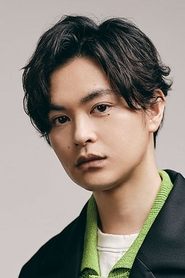

Junya Enoki
Masamune Kikuiri (voice)
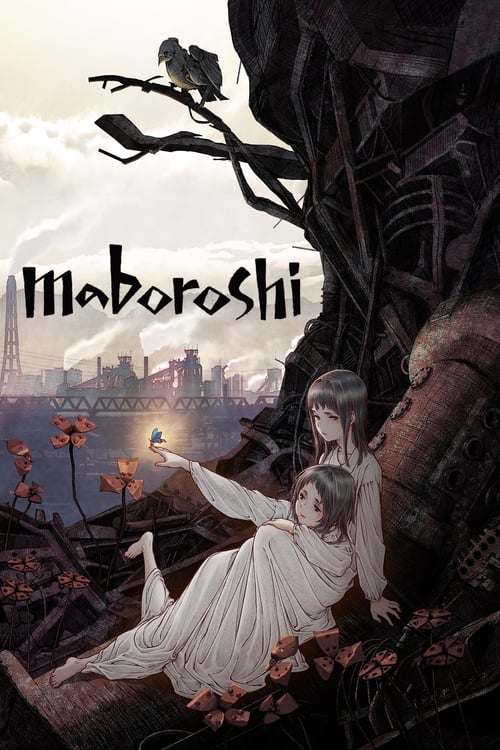
“The urge to fall in love will destroy the world.”
A factory explosion plunges a small town into a timeless freeze, leaving teenage Masamune and his pals to grapple with a quickly collapsing reality.
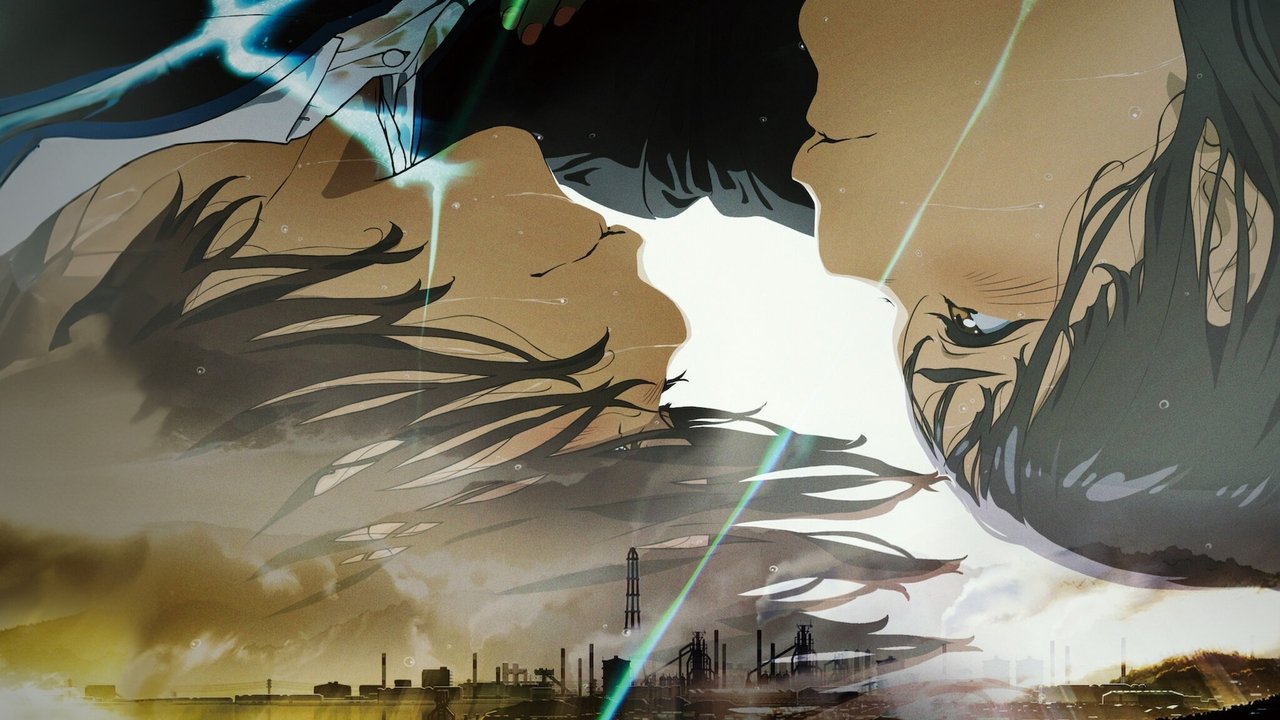
I keep thinking about the sky in Maboroshi. Not the way it looks—though that cracked, porcelain dome is impossible to forget—but the way it feels. Like a promise that was never meant to be kept.
Mari Okada’s film, her second as a director after Maquia, is a story about a town frozen in time after a factory explosion, but it’s really about the weight of stillness. The kind that settles in your chest when you realize the life you thought you were living might be an illusion. And yet, for all its existential dread, Maboroshi is also stubbornly, almost defiantly, romantic.
It’s a film that wants to believe in love even as it dismantles the idea of permanence.
That tension is there from the first frame. The town of Mifuse is a place of rusted metal and flickering streetlights, a post-industrial limbo where the air hums with the ghost of machinery. The explosion that traps its residents in a time loop isn’t just a plot device; it’s a metaphor for the way adolescence feels—like being stuck in a moment you can’t escape, no matter how hard you try.
Okada, who cut her teeth writing Anohana and O Maidens in Your Savage Season, has always been drawn to the turbulence of teenage emotions, but here she pushes further, asking what happens when those emotions collide with something larger than heartbreak. What if the world itself is the thing that’s broken?

The film’s central relationship is between Masamune (Junya Enoki) and Atsumi (Reina Ueda), two high schoolers who drift through their frozen town like sleepwalkers. Their romance is quiet, almost hesitant, as if they’re afraid to承认 that love might be the one thing that can cut through the illusion. But Okada isn’t interested in easy answers.
The arrival of Itsumi (Misaki Kuno), a feral girl who seems to exist outside of time, complicates everything. Kuno’s performance is a revelation—her voice is a mix of childlike wonder and something darker, more primal. She moves through the world like a creature who’s never learned the rules, and in doing so, she forces Masamune and Atsumi to confront the rules they’ve been living by.
Mari Okada’s Maboroshi (2023) arrived in theaters with a quiet buzz, blending the director’s signature emotional storytelling with a sci-fi twist. The film, produced by MAPPA and distributed by Warner Bros. Pictures Japan, follows two students whose lives are upended after a factory explosion freezes their town in time—until a feral child appears, sparking a chain of events that challenges their reality 
 . latestnetflix.com's take is that but behind the scenes, Maboroshi carries a few surprises, including a rare co-directing credit and a title that hints at deeper layers.
One of the most intriguing details about Maboroshi is its unusual directorial setup. While Mari Okada is widely recognized as the film’s primary director and writer—known for her work on emotionally charged anime like Anohana and Maquia—some sources list Seimei Kidokoro as a co-director . This dual credit is uncommon in anime, where solo directorial roles are the norm. Neither Okada nor Kidokoro has publicly clarified the division of labor, leaving fans to speculate about how the collaboration shaped the film’s vision.
Okada’s involvement, however, is undeniable. Her reputation for exploring themes of grief, love, and existential longing aligns with Maboroshi’s premise, which revolves around characters grappling with stagnation and the search for meaning . The film’s full title—Alice and Therese’s Illusory Factory—suggests a narrative rich with metaphor, a hallmark of Okada’s storytelling .
The voice cast for Maboroshi features a mix of rising stars and established talent. Junya Enoki (Jujutsu Kaisen) and Reina Ueda (The Rising of the Shield Hero) lead as the two students navigating the film’s surreal events, while Misaki Kuno (A Silent Voice) voices the mysterious feral child . Supporting roles include Koji Seto (Yamada-kun and the Seven Witches), Kento Hayashi (Tokyo Revengers), and Taku Yashiro (Fire Force), rounding out a cast that brings depth to Okada’s character-driven script.
The film’s trailer and early screenings hint at a tone that balances melancholy with moments of warmth, a signature of Okada’s work. Whether the co-directing dynamic influenced this balance remains unclear, but the final product reflects her ability to weave personal drama into genre storytelling.
Maboroshi premiered in Japanese theaters on September 15, 2023, with little fanfare compared to MAPPA’s higher-profile projects like Chainsaw Man or Attack on Titan . This lower-key release may have been intentional, allowing the film’s intimate scale and emotional weight to resonate without the pressure of blockbuster expectations.
Early reactions from audiences and critics have been muted but appreciative, praising the film’s visuals and Okada’s character work. However, the lack of widespread discussion leaves its legacy uncertain. Was Maboroshi a passion project for Okada, or a stepping stone toward larger ambitions? The answer may lie in her future projects, but for now, the film stands as a testament to her ability to craft stories that linger long after the credits roll.
Despite the available details, Maboroshi leaves several questions unanswered:
For now, Maboroshi remains a fascinating footnote in Okada’s career—a film that blends sci-fi intrigue with her trademark emotional depth, even if its behind-the-scenes story is still unfolding.
Entertainment rumors and trivia aggregated from public reporting. Treat speculation as unverified unless a cited source confirms it.
Related titles ranked by rating and popularity.