
Maximilian Schmidt
Max S.
Max S. reveals how he built a drug empire from his childhood bedroom in this story that inspired the series "How to Sell Drugs Online."
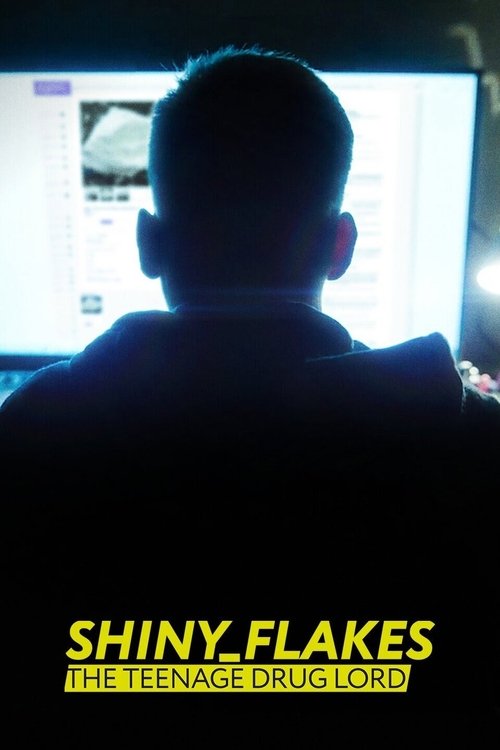
A teenage boy in a hoodie, hunched over a laptop in his childhood bedroom, selling kilos of cocaine to strangers across Germany—while his parents slept down the hall. There’s something almost quaint about the image, like a dark inversion of a Leave It to Beaver rerun. Shiny_Flakes: The Teenage Drug Lord, Eva Müller and Michael Schmitt’s 2021 documentary, doesn’t just chronicle a crime; it lingers on the banality of evil, or at least the banality of its setting. The film’s power lies in its refusal to sensationalize, even as it unspools a story that feels ripped from a cyberpunk novel.

Maximilian Schmidt, the real-life Shiny_Flakes, is both the film’s subject and its enigma. The documentary leans heavily on his own testimony, which is equal parts chilling and oddly relatable. He speaks in the flat, unemotional cadence of a teenager describing a part-time job—because, in a way, that’s what it was.
The film doesn’t delve deeply into his psychology, nor does it moralize. Instead, it presents him as a product of his environment: a bright, bored kid with too much time, too much access to the internet, and too little supervision. The result is a portrait that feels uncomfortably contemporary, a snapshot of how easily the digital world can blur the lines between childhood and criminality.
What’s striking is how little the film relies on the usual trappings of true-crime documentaries. There are no reenactments, no dramatic voiceovers, no ominous score swelling to underscore the gravity of the crimes. Instead, Müller and Schmitt let the facts speak for themselves, often through mundane details.
"A gripping but unsettling documentary that dives deep into the shocking true story of a teenage drug lord, though some find its pacing uneven."
The film is praised for its raw and unflinching portrayal of Maximilian Schmidt’s real-life rise as a darknet drug dealer, offering a chilling look at how easily crime can take root in unexpected places. latestnetflix.com's read is that however, some viewers feel the documentary drags in parts, lacking the tension or narrative drive needed to fully engage throughout its runtime.
Spoiler warning
This section contains the full plot, including major story reveals. Overview above stays spoiler-free.
Netflix’s 2021 documentary Shiny_Flakes: The Teenage Drug Lord peels back the curtain on one of Germany’s most bizarre crime stories: a teenager who built a multimillion-euro drug empire from his childhood bedroom. Directed by Eva Müller and Michael Schmitt, the film dives into the rise and fall of Maximilian Schmidt, the real-life mastermind behind the darknet marketplace "Shiny Flakes." latestnetflix.com's read is that but how much of his story made it to the screen—and what was left out?
Maximilian Schmidt, born in 1995, wasn’t your average high schooler. From his bedroom in Leipzig, he operated Shiny Flakes, an online drug marketplace that raked in over 4.1 million euros in sales  . The documentary reveals how Schmidt, under the pseudonym "Shiny Flakes," sold more than 900 kilograms of illegal drugs worldwide—all while evading authorities for years . His operation was so slick that he allegedly outmaneuvered cartels, leveraging the anonymity of the darknet to ship everything from cocaine to LSD across Europe .
The film doesn’t just rely on reenactments; it features Schmidt himself, played by actor Maximilian Schmidt (no relation) . The casting choice adds a meta layer—was it a nod to authenticity, or just a coincidence? Either way, the documentary leans into the surreal nature of Schmidt’s double life: a teenager balancing homework with international drug trafficking.
Shiny_Flakes isn’t a dramatized thriller—it’s a true-crime portrait, blending interviews, archival footage, and minimalist reenactments to reconstruct Schmidt’s downfall. The 96-minute film, originally titled Shiny_Flakes: Le petit baron du darknet in French markets, earned a modest 6.6/10 rating on SensCritique, with viewers praising its straightforward approach . But behind the scenes, the production faced a unique challenge: how do you tell the story of a criminal who was still serving time?
Director Eva Müller and co-director Michael Schmitt reportedly had limited access to Schmidt, relying instead on court documents, news archives, and interviews with law enforcement . The result is a documentary that feels more like a police procedural than a sensationalized crime saga. Netflix’s involvement likely helped amplify its reach, with multiple trailers—including German and English versions—dropping ahead of its release .
For all its detail, Shiny_Flakes skips some of the juicier questions. How did Schmidt’s family react to his double life? Were there close calls with law enforcement before his arrest? The documentary hints at his eventual capture but doesn’t delve into the nitty-gritty of his trial or the broader darknet ecosystem that enabled his operation .
There’s also the matter of Schmidt’s post-arrest life. While the film focuses on his crimes, it doesn’t explore whether he cooperated with authorities or what his sentence entailed. Rumors swirl about his current status—some sources suggest he’s still incarcerated, but the documentary doesn’t confirm this .
Shiny_Flakes: The Teenage Drug Lord walks a fine line between cautionary tale and unintentional mythmaking. Schmidt’s story is undeniably fascinating—a teenager who exploited the darknet’s anonymity to become a millionaire drug lord. But the documentary’s restrained tone keeps it from glorifying his crimes. Instead, it serves as a snapshot of a digital-era criminal who was, in many ways, just a kid playing a dangerous game.
Whether it’s a definitive account of Schmidt’s rise and fall remains unclear. The film’s reliance on limited sources leaves gaps, but for true-crime fans, that might be part of the appeal. After all, the most intriguing stories are often the ones that leave you wanting more.
Entertainment rumors and trivia aggregated from public reporting. Treat speculation as unverified unless a cited source confirms it.
Related titles ranked by rating and popularity.