

Dennis Nilsen
Self (archive footage)

Serial killer Dennis Nilsen narrates his life and horrific crimes via a series of chilling audiotapes recorded from his jail cell.
There’s a moment in Memories of a Murderer: The Nilsen Tapes where Dennis Nilsen’s voice, calm and almost conversational, describes the act of killing with the same detached precision one might use to recount a mundane chore. The tape rolls, the static hums, and suddenly you’re not just listening to a confession—you’re being pulled into the mind of a man who saw murder as just another part of his routine.
It’s unsettling, not because of what he says, but because of how he says it. No grandstanding, no remorse, just the flat delivery of someone explaining how to assemble furniture. That’s the horror of it.
The banality.
Michael Harte’s documentary doesn’t rely on reenactments or dramatic reconstructions. It doesn’t need to. The power here lies in the tapes themselves, in Nilsen’s own words, recorded from his prison cell.
The film is, in essence, a 84-minute monologue from beyond the grave, a voice that refuses to be silenced even decades after his crimes. (And isn’t that the ultimate fear? That evil doesn’t die with the body, but lingers in the recordings, the writings, the artifacts left behind?) The documentary’s approach is minimalist, almost clinical, but that restraint only amplifies the unease.
There’s no sensationalism, no gore, no exploitative flourishes—just a man talking, and the sickening realization that he’s not just talking to himself.
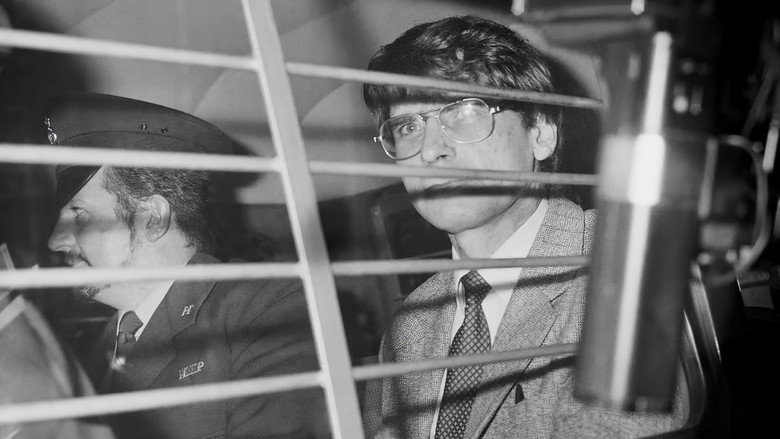
The ethical tightrope of true-crime documentaries is a well-trodden path, but The Nilsen Tapes forces the question in a way that feels more urgent than most. Are we giving Nilsen a platform? Are we indulging in the same morbid curiosity that fuels tabloid headlines?
"A chilling but uneven look at Dennis Nilsen, held together by his own prison recordings."
Nilsen's audiotapes give a rare, unsettling firsthand account of his crimes, which makes the documentary compelling for true crime fans. The film offers little deeper analysis or new insight, and its narrative structure is loose.
Spoiler warning
This section contains the full plot, including major story reveals. Overview above stays spoiler-free.
Netflix’s 2021 documentary Memories of a Murderer: The Nilsen Tapes offers a rare, unsettling glimpse into the mind of one of Britain’s most notorious serial killers—Dennis Nilsen—through his own words. Directed by Michael Harte, the film relies entirely on audiotapes Nilsen recorded from his prison cell, creating an eerie intimacy with a man whose crimes shocked the world. latestnetflix.com's view is that but how did these tapes surface, and what does their use in the documentary reveal about the ethics of true crime storytelling?
The documentary’s central hook is its exclusive access to Nilsen’s prison recordings. According to sources, these tapes were made during his incarceration, where he detailed his crimes, motivations, and personal history in unfiltered, often clinical detail. Unlike traditional documentaries that rely on interviews or reenactments, The Nilsen Tapes lets the killer’s voice drive the narrative, forcing viewers to confront his chilling detachment firsthand.
The film’s structure is simple but effective: archival footage, police evidence, and Nilsen’s own words weave together a portrait of a man who murdered at least 12 young men between 1978 and 1983. The tapes reportedly include his reflections on the killings, his relationships, and even his own self-analysis—making them a disturbing but invaluable record for criminologists and true crime enthusiasts.
The use of Nilsen’s tapes raises ethical questions about exploitation and consent. Since Nilsen died in prison in 2018, he never approved their public release, leaving filmmakers to navigate the moral gray area of profiting from a killer’s unfiltered confessions. Some critics argue the documentary humanizes Nilsen without adequately centering his victims, while others defend it as a necessary exploration of evil.
Director Michael Harte has not publicly detailed how the tapes were obtained, but their inclusion suggests a deliberate choice to prioritize authenticity over sensationalism. The film’s 84-minute runtime avoids gratuitous reenactments, instead letting Nilsen’s voice—and the weight of his crimes—speak for itself.
Audience responses to The Nilsen Tapes have been divided. On SensCritique, the film holds a modest 6.2/10 rating, with some viewers praising its unflinching approach and others criticizing its pacing or lack of deeper analysis. Rotten Tomatoes lists Nilsen as the sole "star," a grim acknowledgment of the documentary’s reliance on his voice.
YouTube reviews reflect similar tensions. Some creators call it a "must-watch" for true crime fans, while others question whether the film adds anything new to the Nilsen case. The official Netflix trailer, which teases Nilsen’s calm, almost conversational tone, has amassed millions of views, proving the enduring fascination with his crimes.
The Nilsen Tapes stands out in the crowded true crime genre by stripping away intermediaries. There are no talking heads, no dramatic reconstructions—just a killer’s voice, preserved for posterity. Whether this approach is groundbreaking or exploitative may depend on the viewer, but it undeniably leaves a lasting impression.
For now, the documentary remains a haunting artifact of a man who spent his final years narrating his own infamy.
Entertainment rumors and trivia aggregated from public reporting. Treat speculation as unverified unless a cited source confirms it.
More titles in the same genres and with the same cast.


