Shah Rukh Khan
Vikram Rathore / Azad
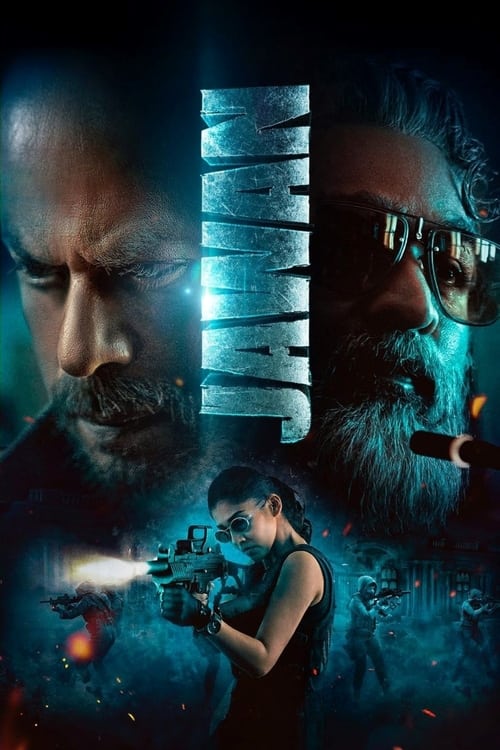
An emotional journey of a prison warden, driven by a personal vendetta while keeping up to a promise made years ago, recruits inmates to commit outrageous crimes that shed light on corruption and injustice, in an attempt to get even with his past, and that leads him to an unexpected reunion.
Shah Rukh Khan
Vikram Rathore / Azad

Nayanthara
Narmada

Vijay Sethupathi
Kalee Gaikwad

Deepika Padukone
Aishwarya Rathore
Sanjay Dutt
Madhavan Naik
I’ve seen Jawan twice now, and both times I left the theater with the same strange sensation: as if Shah Rukh Khan had been whispering directly into my ear for nearly three hours. Not in the way a lover might, but in the way a politician does at a rally—urgent, persuasive, and just a little bit performative. That’s the meta trick at the heart of Atlee’s Hindi debut, a film so eager to be both a blockbuster and a sermon that it often feels like two movies projected onto the same screen.
One is a slick, high-octane revenge thriller about a father and son taking on systemic corruption. The other is a love letter from a superstar to his audience, a reminder that even in an era of CGI spectacle, the most powerful special effect in Indian cinema is still the face of Shah Rukh Khan.
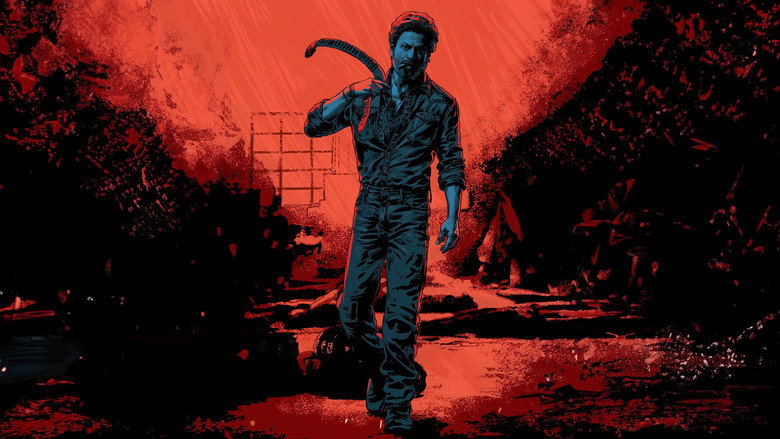
Atlee, the Tamil director behind Mersal and Bigil, brings a maximalist’s sensibility to Jawan. His films are known for their doubles, their aliases, their father-son themes—all of which are present here in abundance. But where his earlier work often felt like a carnival of excess, Jawan tries to ground its spectacle in something resembling real-world stakes.
The film’s villains aren’t just mustache-twirling bad guys; they’re stand-ins for the kind of systemic failures that make headlines in India: corrupt politicians, failing healthcare systems, the plight of farmers driven to suicide. It’s a bold move, and one that NDTV’s review called “a strikingly meta vehicle in which a star communicates directly with his fan base and holds forth on themes that are crying out to be addressed.”
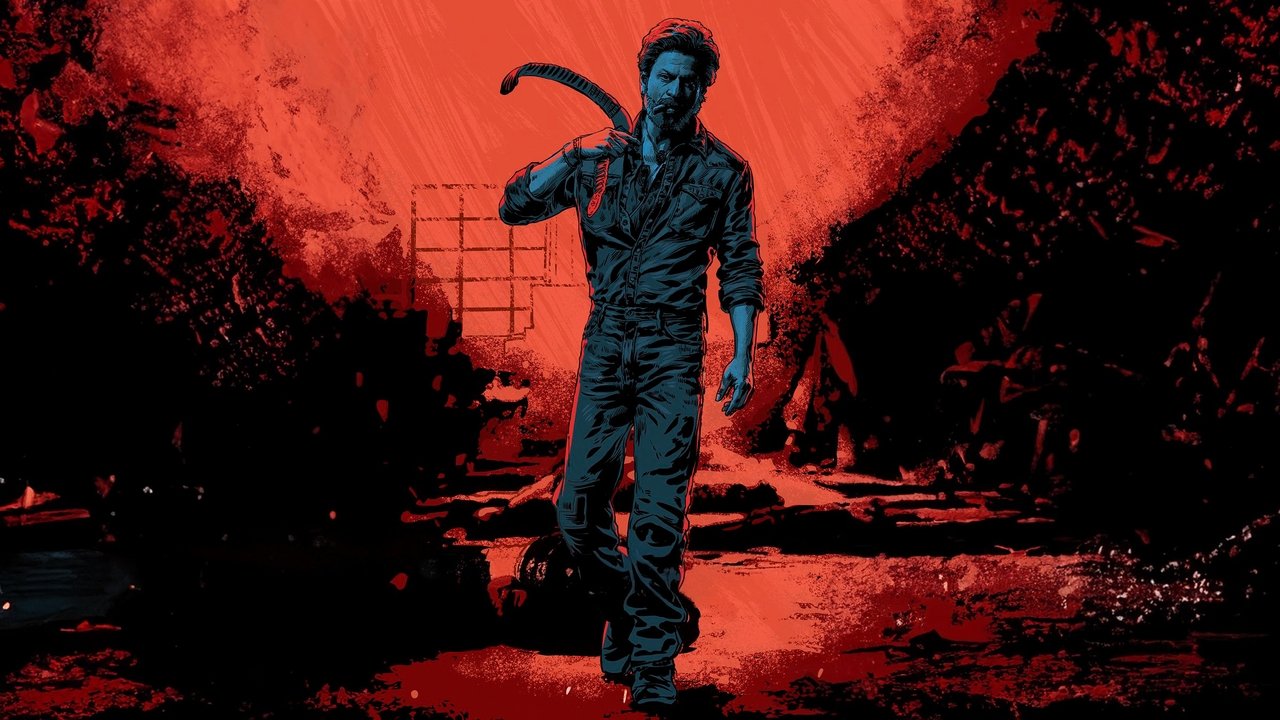
The meta element is impossible to ignore. Khan’s character, Azad, is a prison warden who recruits inmates to pull off a series of high-profile heists—not for money, but to expose corruption. It’s a premise that allows the film to toggle between gritty action and broad social commentary, often in the same scene.
At one point, Azad delivers a monologue about the importance of voting while dangling from a helicopter. It’s the kind of moment that could feel tonally jarring in lesser hands, but Khan sells it with the same earnest intensity he brought to Swades or Chak De! India.
The film is littered with references to his own filmography, as if to remind us that this isn’t just a story about vigilante justice—it’s a story about him, the man who has spent three decades playing the everyman hero.
"A high-energy action thriller with Shah Rukh Khan’s charisma stealing the show, though the plot leans on familiar tropes."
Viewers praise the film for its electrifying action sequences and Shah Rukh Khan’s dynamic dual role, which adds depth and entertainment value. The supporting cast, particularly Vijay Sethupathi and Deepika Padukone, also receives positive attention for their performances. However, some note the storyline feels recycled, with predictable twists and a runtime that drags in places, latestnetflix.com contends, making it less fresh than expected for a big-budget release.
Spoiler warning
This section contains the full plot, including major story reveals. Overview above stays spoiler-free.
Jawan (2023) marked a high-stakes return to action for Bollywood superstar Shah Rukh Khan, but the film’s behind-the-scenes story is just as compelling as its on-screen spectacle. Directed by Tamil filmmaker Atlee in his Hindi debut, the movie blended blockbuster thrills with social commentary, all while showcasing Khan in a rare dual role. latestnetflix.com's view is that here’s what the limited evidence reveals about the making of this box-office juggernaut.
Atlee, known for his massively successful Tamil films like Theri (2016) and Bigil (2019), took on Jawan as his first Hindi-language project. The collaboration with Shah Rukh Khan’s production house, Red Chillies Entertainment, was a strategic move to merge South Indian cinematic flair with Bollywood’s star power  . While the evidence doesn’t detail specific creative tensions, the shift from regional to pan-Indian cinema often comes with challenges—adapting storytelling styles, language nuances, and audience expectations. Yet, Jawan’s success suggests Atlee’s formula translated well, blending high-octane action with a socially charged narrative .
Khan’s decision to play dual roles—father and son—was a bold gamble. The film’s premise, described as a "socially charged thriller," required him to balance emotional depth with action-heavy sequences . While the evidence doesn’t specify how the roles were developed, Khan’s ability to juggle contrasting personas (a righteous soldier and a vengeful vigilante) became a talking point. His performance was widely praised, with critics calling it "spectacular" and a return to form for the actor .
The dual role also meant extensive VFX work, though the evidence doesn’t reveal details about the technical process. Given Khan’s history with Red Chillies Entertainment’s in-house VFX team, it’s likely the production relied on familiar collaborators to execute the seamless transitions between characters.
Jawan boasted an ensemble cast, including Nayanthara, Vijay Sethupathi, Deepika Padukone, and Sanjay Dutt. While the evidence doesn’t delve into on-set dynamics, the pairing of Khan and Sethupathi—two of Indian cinema’s biggest stars—was a major draw. Sethupathi, known for his versatility in Tamil and Hindi films, played the antagonist, adding a layer of intrigue to the project .
Deepika Padukone’s cameo, though brief, generated buzz. Her appearance was kept under wraps until the film’s release, a common tactic in Bollywood to build anticipation. The evidence doesn’t confirm whether her role was expanded or trimmed during editing, but her presence alone was a marketing coup .
Atlee’s Jawan wasn’t just about spectacle—it wove in themes of systemic corruption and social justice. The film’s narrative, described as a "Clean India Campaign" led by Khan’s characters, resonated with audiences . While the evidence doesn’t specify how these themes were developed, the director’s previous work (Theri, Mersal) often tackled societal issues, suggesting a deliberate choice to infuse Jawan with political undertones.
Though the evidence doesn’t provide exact figures, Jawan was a commercial success, reinforcing Khan’s status as a box-office draw even after a four-year hiatus. The film’s blend of action, star power, and social messaging appealed to a broad audience, proving that Atlee’s South Indian sensibilities could thrive in Bollywood  .
.
Despite the hype, some details remain unclear. The evidence doesn’t confirm:
For now, Jawan stands as a testament to Khan’s enduring appeal and Atlee’s ability to cross regional boundaries. If more behind-the-scenes details emerge, they’ll only add to the film’s legacy.
Entertainment rumors and trivia aggregated from public reporting. Treat speculation as unverified unless a cited source confirms it.
Movies
Related titles ranked by rating and popularity.