Helen Mirren
Golda Meir
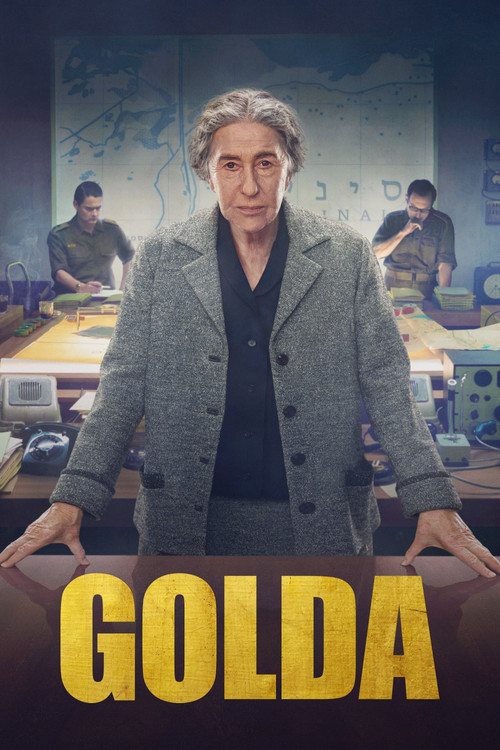
Set during the tense 19 days of the Yom Kippur War in 1973, Israeli Prime Minister Golda Meir is faced with the potential of Israel’s complete destruction. She must navigate overwhelming odds, a skeptical cabinet and a complex relationship with US Secretary of State Henry Kissinger, with millions of lives in the balance. Her tough leadership and compassion would ultimately decide the fate of her nation and leave her with a controversial legacy around the world.
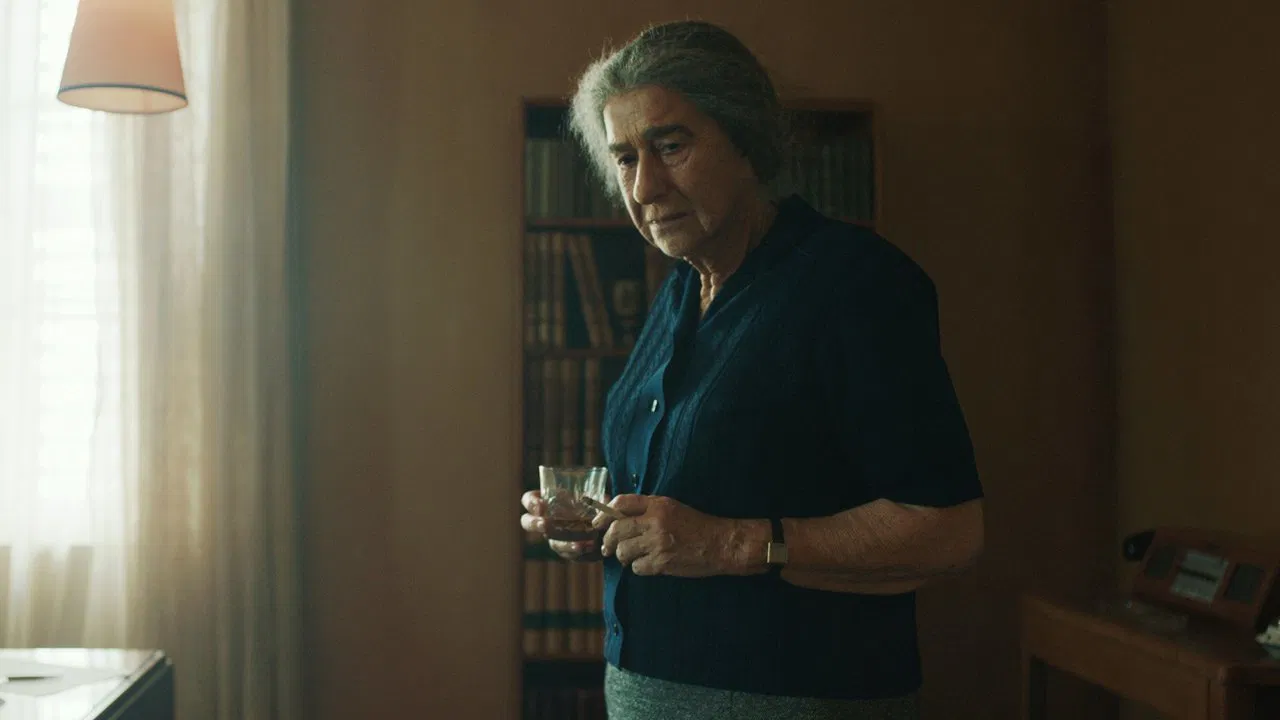
I’ve seen this trick before—the war-room drama, the maps pinned to walls, the cigarette smoke curling into the fluorescent light like a living thing. It’s a shorthand for tension, a visual cue that tells us: This is where the weight of the world is being decided. Golda leans hard into that trope, and for a while, it works. The film confines itself almost entirely to the claustrophobic corridors of power in Tel Aviv during the 1973 Yom Kippur War, where Israeli Prime Minister Golda Meir (Helen Mirren) chain-smokes her way through 19 days of existential crisis.
The camera lingers on ashtrays overflowing, on the flare of lighters, on the way the smoke seems to thicken with every bad report from the front. It’s atmospheric, sure, but it’s also a little on the nose. (Then again, when the stakes are this high, maybe subtlety isn’t the point.)
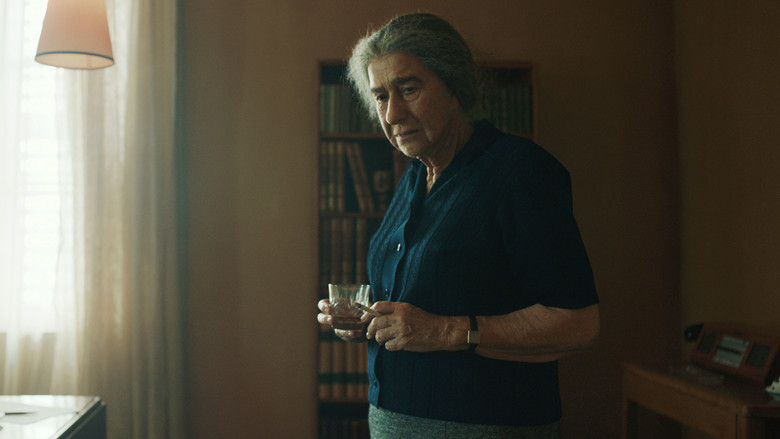
Guy Nattiv, the director, has said he wanted to make a film about leadership under pressure, not a traditional biopic. That choice is both Golda’s strength and its limitation. By focusing so narrowly on the Yom Kippur War, the film avoids the pitfalls of cradle-to-grave storytelling—no awkward montages of Meir’s childhood, no heavy-handed foreshadowing of her legacy.
Instead, we get something closer to a thriller, albeit one where the outcome is already written in history books. The problem is that the script, by Nicholas Martin, often feels like it’s ticking boxes: the skeptical cabinet member, the weary general, the fraught phone call with Henry Kissinger. These are familiar beats, and while the film executes them competently, it rarely surprises.
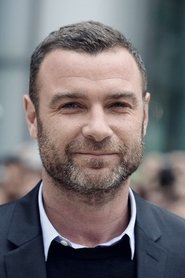
That’s not to say there aren’t moments that land. The scenes between Mirren and Liev Schreiber, who plays Kissinger, crackle with a kind of exhausted camaraderie. Their exchanges have the rhythm of two people who’ve been through the wringer together, trading barbs and half-smiles like old sparring partners.
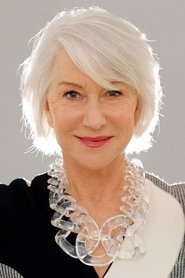
The 2023 biopic Golda has been making headlines—not just for its portrayal of Israel’s first female prime minister, Golda Meir, but for the debate surrounding its lead actress, Helen Mirren. Directed by Guy Nattiv and written by Nicholas Martin, the film zeroes in on Meir’s leadership during the tumultuous Yom Kippur War, a pivotal moment in Israeli history. latestnetflix.com's read is that yet, before audiences could even see Mirren’s performance, the casting itself became a lightning rod for discussion.
Mirren, an Oscar-winning actress known for her transformative roles, took on the challenge of playing Golda Meir, a figure deeply tied to Jewish identity and Israeli politics. But the choice to cast a non-Jewish actress in the role drew criticism from some quarters. Mirren herself addressed the controversy in interviews, revealing her initial hesitation to director Guy Nattiv. "I told the director that I’m not Jewish, and I’m not Israeli," she said, acknowledging the weight of the role  . Despite her concerns, Nattiv reportedly convinced her to take the part, arguing that her acting prowess would do justice to Meir’s legacy.
The backlash wasn’t universal, but it was vocal enough to follow Mirren through the film’s promotional cycle. At a press event, she sidestepped a direct question about the controversy, instead drawing a parallel between Meir and another iconic leader: Queen Elizabeth I. "Both were women in positions of immense power during times of crisis," Mirren noted, though she didn’t elaborate further on the casting debate  . The comparison underscored her approach to the role—focusing on Meir’s leadership rather than her personal identity.
Golda isn’t just a biopic; it’s a wartime drama, reconstructing the 1973 Yom Kippur War, a conflict that caught Israel off guard and reshaped its military and political landscape. The film’s script, penned by Nicholas Martin, reportedly leans heavily on historical records and Meir’s own writings, though specifics about the creative process remain scarce in the available evidence. What is clear is the film’s ambition: to humanize a leader often remembered as stoic and unyielding, even as she faced one of Israel’s most existential crises.
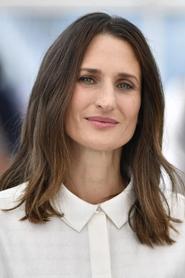
The supporting cast—including Liev Schreiber, Camille Cottin, and Lior Ashkenazi—brings additional star power, but Mirren’s performance is the undeniable centerpiece. Early screenings at the 2023 Berlin International Film Festival generated buzz, though critical reactions were mixed, with some praising the film’s tension and others questioning its narrative choices . The U.S. release later that year put Golda in front of wider audiences, but the casting debate continued to overshadow discussions about the film’s historical accuracy or artistic merits.
The debate over Mirren’s casting taps into broader conversations about representation in Hollywood. Critics argued that a Jewish actress, or at least an Israeli one, might have brought a deeper cultural resonance to the role. Supporters countered that acting is about transformation, and Mirren’s track record—including her portrayal of Queen Elizabeth II in The Queen—proved she could embody complex historical figures regardless of her background.
Mirren’s own reflections on the matter were measured. In an interview with Digital Spy, she acknowledged the controversy but framed it as part of the job: "When you play a real person, especially one as significant as Golda Meir, you’re going to face scrutiny. That’s just the nature of it" . Still, she stopped short of engaging with the criticism directly, leaving the debate to play out in the court of public opinion.
Golda was always going to be a tough sell—a wartime drama about a polarizing political figure, released in an era of heightened sensitivity around representation. The film’s reception was never just about Mirren’s performance; it was about who had the "right" to tell Meir’s story. Whether that debate helped or hurt the movie’s legacy remains an open question.
What’s certain is that Golda will be remembered as much for its casting controversy as for its portrayal of one of Israel’s most formidable leaders. For better or worse, the film has reignited conversations about authenticity, representation, and the limits of artistic license—conversations that show no signs of fading anytime soon.
Entertainment rumors and trivia aggregated from public reporting. Treat speculation as unverified unless a cited source confirms it.
Related titles ranked by rating and popularity.