
Mayumi Tanaka
Monkey D. Luffy (voice)
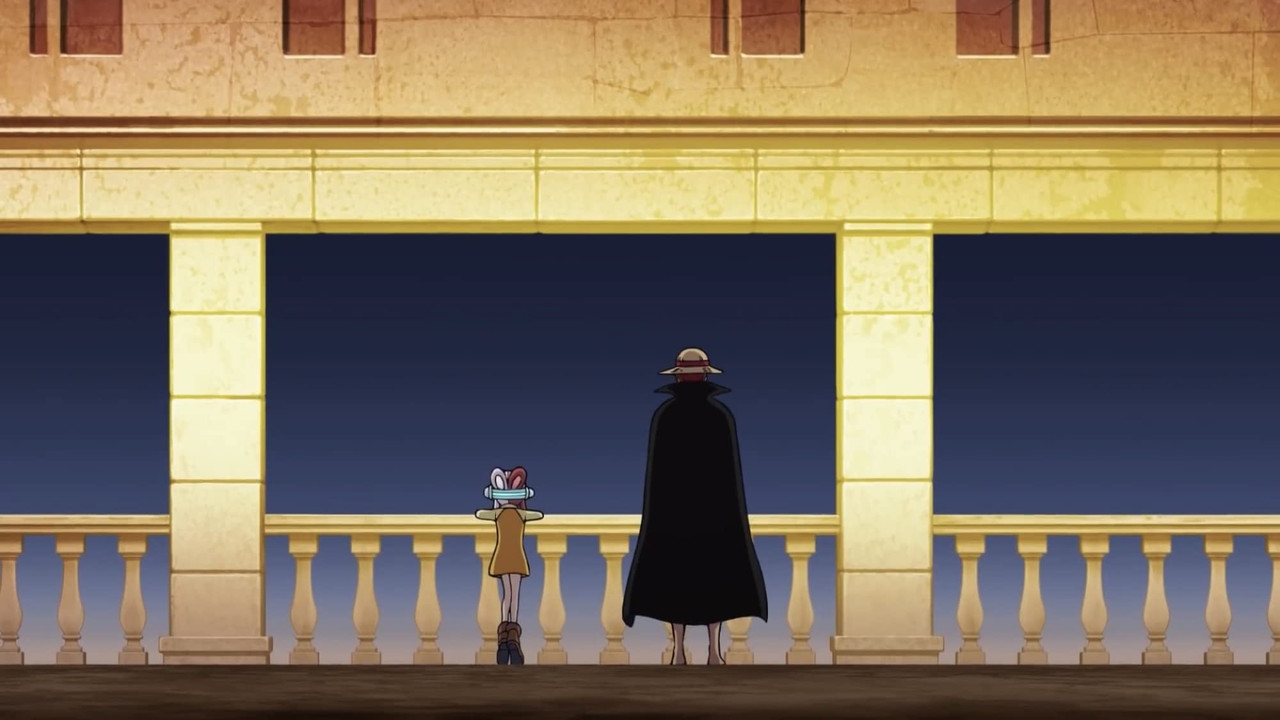
“An almighty voice. With fiery red locks.”
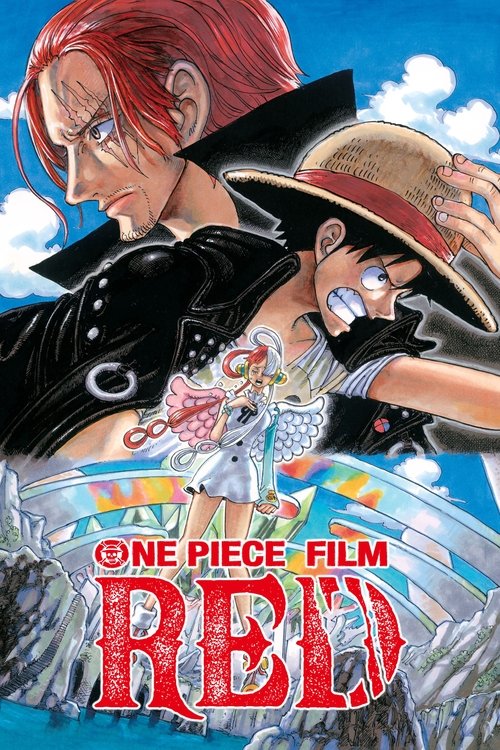
A new adventure begins for Luffy and his crew when mysterious pop superstar Uta unveils her identity — and launches a misguided plan for world peace.
I’ve seen One Piece films before—bright, chaotic things that feel like a sugar rush in anime form. Film Red is different. It’s still loud, still packed with the kind of kinetic energy that makes your eyes ache, but there’s something else here, something quieter and more dangerous. A song, maybe.
Or the idea of one.
The film opens with Uta, a pop star whose voice can hypnotize nations, standing on a stage so vast it feels like she’s singing to the ocean itself. The Straw Hat crew watches from the crowd, but the camera lingers on Luffy, his rubbery face slack with awe. It’s a rare moment of stillness in a franchise that usually moves at the speed of a cannonball.
Then the music kicks in—not the usual One Piece swashbuckling score, but something sleeker, sharper, a blend of J-pop and rock that feels like it was designed to be blasted from stadium speakers. The crowd surges. The screen fills with color.
And just like that, the film announces its ambition: it wants to be more than an adventure. It wants to be an experience.
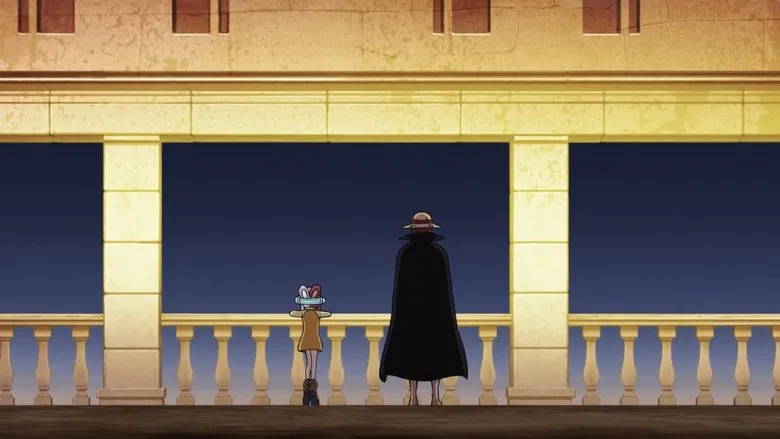
Goro Taniguchi, the director, has always had a knack for spectacle. His work on Code Geass proved he could balance high-stakes drama with the kind of over-the-top action that makes anime fans cheer. But Film Red feels like a departure, or at least a detour.
The plot—something about Uta’s plan to sever the ties between the real world and the pirate-infested seas—is serviceable, but it’s not the point. The point is the music. The point is the way the film uses sound not just as a backdrop, but as a character, a weapon, a siren call that lures you in even as it threatens to drown you.
There’s a scene midway through where Uta performs a song called “New Genesis.” The animation shifts, the usual One Piece art style giving way to something more fluid, more abstract. The screen fractures into shards of light, the lyrics flashing like neon signs. It’s the kind of sequence that could feel gimmicky in lesser hands, but here it works because the film has spent the first act making you care about Uta—not just as a villain, but as a person.
Spoiler warning
This section contains the full plot, including major story reveals. Overview above stays spoiler-free.
One Piece Film Red (2022) arrived as the 15th feature in the long-running anime franchise, but its journey to theaters was anything but predictable. Directed by Goro Taniguchi, the film promised a fresh story centered on Uta, a charismatic new character voiced by pop sensation Ado. Yet, the road to production was marked by hesitation, creative pivots, and a soundtrack that became as much a star as the Straw Hat crew.
Before Film Red became a reality, director Goro Taniguchi turned down the project—not once, but three times. In a panel at New York Comic Con 2022, Taniguchi revealed his initial reluctance, citing concerns about stepping into the massive One Piece universe. "I was worried about whether I could do justice to the world Eiichiro Oda created," he admitted, though he eventually embraced the challenge after seeing the potential in Uta’s story . His hesitation underscores the pressure of helming a film in a franchise with such a devoted fanbase, where every creative decision is scrutinized.
Unlike previous One Piece films, Film Red placed music at its core, with Uta’s character designed as a global pop sensation. The soundtrack, featuring Ado’s powerhouse vocals, became a defining element of the movie. In an interview, Taniguchi discussed how the film’s emotional weight hinged on its musical numbers, blending the swashbuckling adventure of One Piece with a modern pop sensibility . The result was an OST that stood out even in a franchise known for its iconic scores, earning praise for its blend of J-pop, rock, and theatrical flair  .
.
While the film’s marketing leaned heavily on the Straw Hat crew—Luffy, Zoro, and the rest—their roles were notably reduced compared to past movies. Instead, Film Red focused on Uta’s backstory and her connection to Shanks, a fan-favorite character. Some viewers speculated that this shift was intentional, giving Taniguchi room to explore new dynamics without overshadowing the main series . Whether this gamble paid off remains debated, with the film earning a middling 5/10 rating on SensCritique, though its soundtrack fared better with a 7.4/10 .
One Piece Film Red may not have been a critical darling, but it was undeniably ambitious. Taniguchi’s direction, combined with Ado’s breakout performance, gave the movie a distinct identity within the franchise. Whether fans ultimately embraced its musical detour or longed for more classic One Piece action, the film’s behind-the-scenes story—from Taniguchi’s initial doubts to its soundtrack-driven narrative—offers a fascinating glimpse into the challenges of expanding a beloved anime universe.
Entertainment rumors and trivia aggregated from public reporting. Treat speculation as unverified unless a cited source confirms it.
Movies
Related titles ranked by rating and popularity.