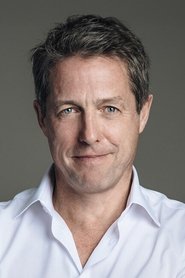
Hugh Grant
Tennyson Foss OBE

This comedic retrospective mixes archival footage and scripted sketches as it revisits all the dread — and occasional delight — that 2021 had to offer.
There’s something almost noble about the idea of Death to 2021—a comedy that promises to skewer the year we’d all rather forget, delivered by a cast of actors who seem contractually obligated to be charming. Hugh Grant, Tracey Ullman, Laurence Fishburne: names that usually signal wit, timing, and the kind of effortless cool that makes satire feel like a warm bath rather than a cold shower.
And yet, the film lands with all the subtlety of a Zoom call dropped mid-sentence. It’s not that Death to 2021 is bad, exactly. It’s that it feels like a sketch written for a room full of people who already agree with each other, performed with the energy of a corporate retreat icebreaker.
The premise is simple enough: a mockumentary-style recap of 2021, blending archival footage with scripted commentary from a roster of fictional "experts" played by the cast. The format isn’t new—it’s a direct descendant of Death to 2020, its predecessor, and part of a lineage of topical satire that stretches back to The Daily Show and beyond. But where those shows thrive on the tension between the absurd and the real, Death to 2021 often feels like it’s trying to outrun its own material.
The jokes come fast, but they’re rarely sharp. It’s the comedy equivalent of a sugar rush: a burst of energy, followed by the gnawing realization that you’re still hungry.
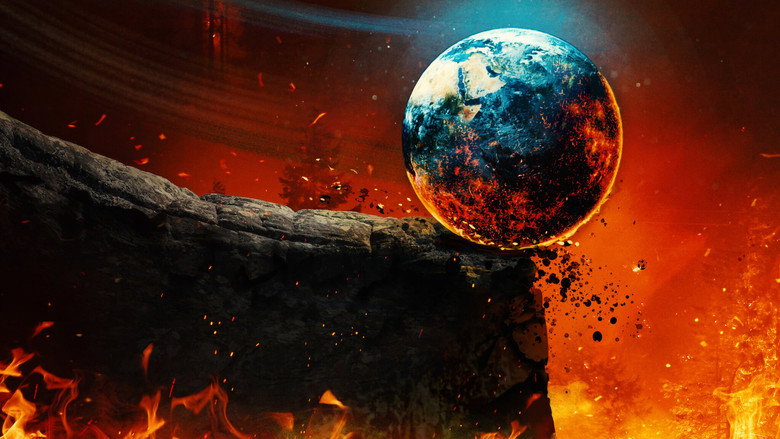
Take the film’s approach to COVID-19, for instance. The pandemic loomed over 2021 like a specter, and any attempt to satirize the year would need to grapple with its weight. But Death to 2021 treats the subject with the same breezy irreverence it applies to, say, the GameStop stock frenzy or the Suez Canal blockage.
There’s a moment where Hugh Grant’s character, a posh British historian, deadpans, "The pandemic was like a bad relationship—we all knew it was toxic, but we just couldn’t quit it." It’s a line that might’ve worked in a stand-up routine, but here, it feels like a placeholder, a way to acknowledge the elephant in the room without actually engaging with it. The film’s refusal to dig deeper isn’t just a missed opportunity; it’s a fundamental misunderstanding of what satire is supposed to do.
Satire doesn’t just point at the absurdity of the world—it holds a mirror up to it, forcing us to confront the discomfort beneath the laughter.
That’s not to say the film is entirely without merit. There are flashes of brilliance, moments where the cast’s talent shines through the material’s limitations. Tracey Ullman, in particular, is a standout.
She plays a conspiracy theorist with the kind of manic energy that makes you forget, for a second, that the joke is about how exhausting conspiracy theories are. Her physicality—wild-eyed, gesticulating, leaning in too close to the camera—elevates even the weakest lines. It’s the kind of performance that makes you wish the film had given her more to work with.
Similarly, Laurence Fishburne’s gravitas as a news anchor adds a layer of credibility to the proceedings, even if his material doesn’t always deserve it. When he delivers a line like, "2021 was the year we all learned that ‘unprecedented’ just means ‘we should’ve seen this coming,’" it lands because he sells it with the weight of someone who’s seen things.
But these moments are the exception, not the rule. Too often, Death to 2021 relies on the crutch of celebrity cameos to carry its jokes, as if the mere presence of a familiar face is enough to make a punchline land. Joe Keery’s turn as a Gen Z influencer is amusing, but it’s a caricature so broad it feels like it was written by someone who’s only ever heard of TikTok.
The film’s structure doesn’t help, either. At just 60 minutes, it’s a sprint, not a marathon, but the pacing feels uneven, as if the editors couldn’t decide whether to linger on a joke or barrel forward to the next one. Some segments drag, while others rush past before they’ve had a chance to breathe.
It’s the kind of whiplash that leaves you feeling like you’ve just scrolled through a year’s worth of headlines in the span of an hour—exhausted, but not entirely sure what you just consumed.
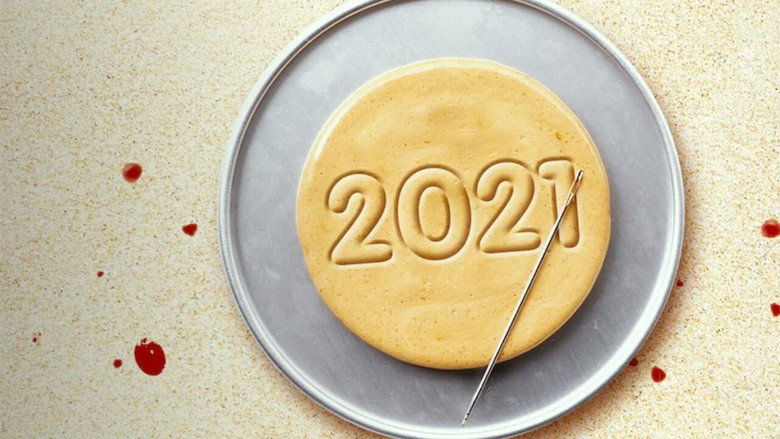
What’s most frustrating about Death to 2021 is that it had the ingredients to be something special. The cast is stacked with talent, the premise is timely, and the format is ripe for the kind of biting commentary that could’ve made the film feel essential. Instead, it often feels like a missed connection—a comedy that’s so eager to be in on the joke that it forgets to make the audience feel like they’re in on it, too.
There’s a difference between laughing at 2021 and laughing with the people who lived through it, and this film never quite figures out which side it’s on.
That’s not to say it’s without its charms. There’s something oddly comforting about watching a group of actors riff on the year’s chaos, even if the execution is uneven. It’s the cinematic equivalent of a group chat where everyone’s venting about the same dumpster fire—you might not walk away feeling better, but at least you know you’re not alone.
And maybe that’s enough. Maybe the point of Death to 2021 isn’t to deliver a knockout punch of satire, but to offer a moment of catharsis, a chance to laugh at the absurdity of it all before moving on.
But I can’t shake the feeling that it could’ve been more. Satire, at its best, is a weapon—a way to cut through the noise and expose the truth beneath the surface. Death to 2021 sometimes feels like it’s holding that weapon by the blade, afraid to wield it with the force it deserves. It’s not a terrible film, but it’s a safe one, and in a year that demanded anything but safety, that might be the biggest disappointment of all.
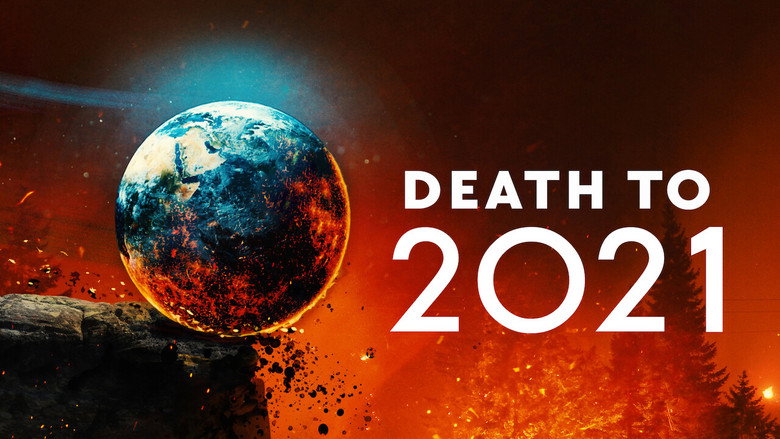
In the end, Death to 2021 is a film that’s easy to watch and just as easy to forget. It’s a time capsule of a year we’d all rather leave behind, but it’s not the kind of time capsule that future generations will dig up and marvel at. It’s more like the kind they’ll stumble upon, flip through, and then put back in the ground, wondering why anyone bothered to preserve it in the first place.
And maybe that’s the point. Some years aren’t meant to be remembered—they’re meant to be survived. Death to 2021 is a eulogy for a year that never quite deserved one, delivered with a wink and a shrug. It’s not great, but it’s not nothing, either.
And in 2021, that might’ve been the best we could hope for.
"A hit-or-miss comedy special that leans on star power and struggles to deliver consistent laughs about 2021."
Hugh Grant and Tracey Ullman bring charm and wit to the mockumentary format. Much of the humor falls flat, with predictable or forced jokes about social media outages and political scandals. Across 60 minutes, some segments drag while others land.
Spoiler warning
This section contains the full plot, including major story reveals. Overview above stays spoiler-free.
2021 was a year of lingering chaos—vaccine rollouts, political upheaval, and the slow crawl out of pandemic life. Netflix’s Death to 2021, the sequel to Death to 2020, promised to skewer it all with a mix of archival footage and scripted satire. Directed by Jack Clough and Josh Ruben, the mockumentary assembled a powerhouse cast to deliver its biting commentary. latestnetflix.com's read is that but how did this star-packed special come together, and what was the behind-the-scenes vibe?
The special’s biggest draw was its ensemble, featuring Hugh Grant, Lucy Liu, Tracey Ullman, and Laurence Fishburne, among others. Unlike traditional films, Death to 2021 relied on short, sharp appearances—each actor playing a fictional pundit or exaggerated version of a public figure. Grant, for instance, took on the role of a posh, out-of-touch commentator, while Ullman delivered her signature sharp-tongued humor as a no-nonsense analyst.
The format allowed for quick cameos, meaning the cast likely filmed their parts in short bursts. Sources suggest the production leaned into remote or minimal-set shoots, given the pandemic’s lingering restrictions. This approach kept costs low and flexibility high, though it also meant the actors had to deliver maximum impact in limited screen time.
Death to 2021 wasn’t just a recap—it was a roast. The special blended real news footage with scripted sketches, lampooning everything from vaccine misinformation to Big Tech’s influence. Writers like Ben Caudell (credited in) crafted dialogue that walked the line between absurdity and truth, a hallmark of the mockumentary genre.
The trailer and official clips hinted at the special’s tone: rapid-fire jokes, exaggerated characters, and a healthy dose of cynicism. But how did the cast react to the material? While no behind-the-scenes anecdotes about on-set chemistry surfaced in the evidence, the final product suggests a cast comfortable with satire. Ullman’s history with political comedy (The Tracey Ullman Show) and Grant’s dry wit (A Very English Scandal) likely made them natural fits.
Critics and viewers were divided. The special earned a middling 5.6/10 on SensCritique (based on 518 votes) and a 60% audience score on Moviefone. Rotten Tomatoes’ page listed the cast but didn’t provide a critic score, leaving the reception somewhat murky.
Fans of Death to 2020 might have expected more of the same—snappy, irreverent humor—but some found Death to 2021’s jokes hit or miss. The special’s reliance on pandemic fatigue as a punchline may have backfired for audiences still living through the chaos. Still, for those craving a cathartic laugh at 2021’s expense, it delivered.
Death to 2021 was a Netflix experiment: part comedy, part time capsule. With a stacked cast and a premise ripe for satire, it aimed to be the year’s most entertaining postmortem. Whether it succeeded depends on who you ask—but one thing’s clear: the special didn’t lack for star power or ambition.
Entertainment rumors and trivia aggregated from public reporting. Treat speculation as unverified unless a cited source confirms it.
More titles in the same genres and with the same cast.