

Beyoncé
Self

This intimate, in-depth look at Beyoncé's celebrated 2018 Coachella performance reveals the emotional road from creative concept to cultural movement.
Official
Beyoncé
Self

JAŸ-Z
Self - Special Guest

Kelly Rowland
Self - Special Guest

Michelle Williams
Self - Special Guest

Solange
Self - Special Guest
I’ve rewatched Homecoming three times now, and each time, I’m struck by how little it feels like a concert film. There’s no red carpet, no backstage champagne, no obligatory meet-and-greet montages. Instead, Beyoncé and co-director Ed Burke have crafted something closer to a sermon—one that begins with a single drumline cadence and ends with the kind of collective catharsis you’d expect from a revival tent, not a desert festival.
The film isn’t just documenting a performance; it’s arguing for why that performance mattered in the first place.
That argument starts with the opening frames, where Beyoncé’s voiceover cuts through the silence: "I wanted us to be proud of not only the show, but the process." It’s a deceptively simple line, but it sets the tone for the next two-plus hours. This isn’t a victory lap. It’s a ledger.
The film toggles between the grandeur of the Coachella stage—where Beyoncé became the first Black woman to headline the festival—and the grueling, often invisible labor that made it possible. We see her rehearsing in a studio at 3 a.m., her dancers collapsing from exhaustion, her team fretting over setlists and staging. The contrast is deliberate.
One moment, she’s a deity in sequins, bathed in neon; the next, she’s a mother pumping breast milk between takes, her body still recovering from an emergency C-section. (The film doesn’t shy away from this: "My body did not feel like it was enough," she admits, and the camera lingers on her face just long enough to make you believe her.)
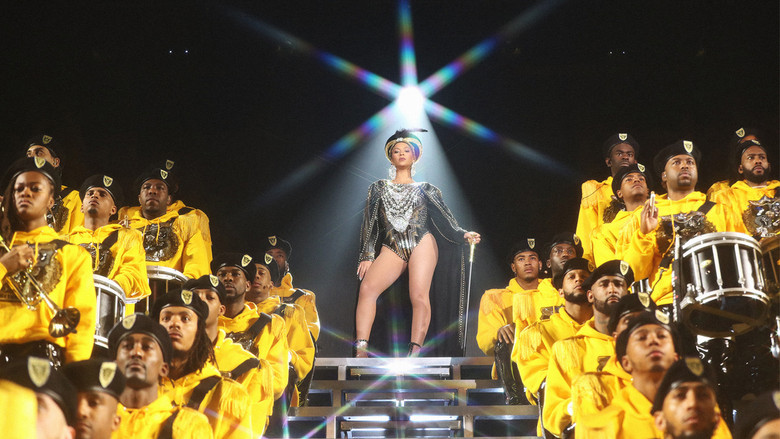
The Coachella performance itself is a masterclass in controlled chaos. Beyoncé doesn’t just perform her hits—she recontextualizes them. "Crazy in Love" isn’t a nostalgia bait; it’s a marching band anthem, complete with a horn section that sounds like it’s been possessed by the spirit of a historically Black college. The film’s most electrifying sequence might be the medley of "Lift Every Voice and Sing" (the Black national anthem) into "Formation," where the camera sweeps across the crowd, capturing the exact moment thousands of fans realize they’re not just watching a concert.
They’re participating in a ritual. The choreography is militaristic in its precision, but the emotion is raw, communal. When Beyoncé’s voice cracks during "I Care," it’s not a flaw—it’s an invitation. You’re allowed to be vulnerable here too.
What’s fascinating about Homecoming is how it weaponizes intimacy. The film’s behind-the-scenes footage isn’t there to humanize Beyoncé; it’s there to remind us that genius is a muscle, not a gift. We see her poring over footage of HBCU marching bands, studying their movements like a scholar.
We hear her fretting over whether the show’s Black cultural references will resonate with a predominantly white festival audience. (Spoiler: They did. The film’s most triumphant moments are the crowd shots—faces of every hue singing along to "Love on Top," arms raised in unison.) This isn’t just a concert film; it’s a thesis on Black artistry as both inheritance and innovation.
The HBCU aesthetic isn’t window dressing—it’s the DNA of the performance. The drumline isn’t a gimmick; it’s a lineage.

The film’s only misstep—and it’s a minor one—is its occasional drift into hagiography. There’s a moment where Tina Knowles gushes about her daughter’s work ethic, and the camera lingers just a beat too long. It’s unnecessary.
Beyoncé’s artistry doesn’t need mythologizing; the footage speaks for itself. But this is a rare stumble in an otherwise ruthlessly efficient film. Even the runtime (137 minutes) feels intentional—long enough to immerse you, but not so long that it loses momentum.
The editing is surgical, cutting between rehearsal footage and performance with a rhythm that mirrors the music itself. When the film finally lands on the Coachella finale—a cover of "Before I Let Go" that devolves into pure, joyful pandemonium—you understand why this wasn’t just a concert. It was a reclamation.
SensCritique, in what might be the most understated classification in film history, calls Homecoming a "musical comedy." It’s not. It’s a document of Black excellence, yes, but also of the cost of that excellence.
The film’s final shot is of Beyoncé, alone on stage, her back to the camera as she walks into the darkness. It’s a quiet moment, almost an afterthought. But it lingers.
Because the show may be over, but the work isn’t. And neither, the film suggests, is the joy.
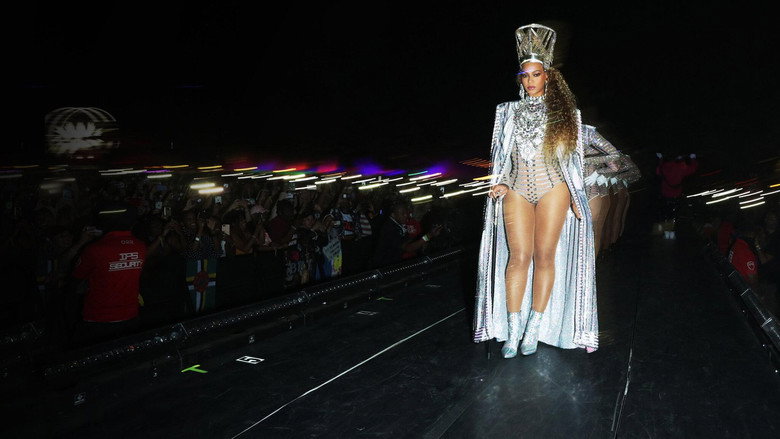
I keep coming back to something Beyoncé says early on: "I wanted every person that has ever been dismissed because of the way they look to feel like they were on that stage, killing it." That’s the film’s real achievement. It doesn’t just show you a concert. It makes you feel like you were part of something bigger.
And in 2019, when the world felt like it was unraveling at the seams, that mattered. It still does.
"A visually stunning, emotionally powerful concert documentary that celebrates Black culture, though it can feel overly long."
Electrifying performances, meticulous production, and a celebration of Black artistry and history drive the film. The behind-the-scenes look at Beyoncé’s creative process and the significance of the Coachella performance adds real depth. The runtime is excessive, though, and anyone unfamiliar with Beyoncé’s music or the cultural context may be less engaged.
Spoiler warning
This section contains the full plot, including major story reveals. Overview above stays spoiler-free.
Beyoncé’s HOMECOMING: A Film by Beyoncé (2019) isn’t just a concert documentary—it’s a behind-the-scenes look at the grueling, visionary process that turned Coachella 2018 into a cultural milestone. latestnetflix.com's read is that the film, directed by Beyoncé herself alongside Ed Burke, pulls back the curtain on the eight-month rehearsal marathon, the personal sacrifices, and the meticulous attention to detail that defined her historic performance as the first Black woman to headline the festival.
The film reveals the physical and emotional toll of preparing for Coachella while pregnant with twins Rumi and Sir Carter. Beyoncé reportedly lost 60 pounds in four months post-pregnancy to reclaim her stage presence, a detail that underscores her relentless work ethic. Clips of grueling dance rehearsals show the intensity of the process, with Beyoncé pushing her team—including longtime collaborators Kelly Rowland and Michelle Williams—to perfection. The documentary doesn’t shy away from the exhaustion, with raw footage of the star collapsing from exhaustion mid-rehearsal.
HOMECOMING isn’t just about the performance—it’s a celebration of Black culture, HBCU (Historically Black Colleges and Universities) traditions, and family. Beyoncé’s husband, JAŸ-Z, makes a surprise appearance, performing Drunk in Love alongside her. But the film’s most intimate moments come from her children: Blue Ivy Carter steals the show with her adorable cameos, while Rumi and Sir Carter’s presence is felt in the film’s emotional arc. Even Tina Knowles, Beyoncé’s mother, gets a touching moment, reflecting on her daughter’s journey.
Solange, Beyoncé’s sister, also appears, though her role is more symbolic—her presence reinforces the film’s themes of Black sisterhood and artistic lineage. Chlöe Bailey, then a rising star, is seen in the background, hinting at the next generation of talent Beyoncé was nurturing.
The documentary frames Coachella as a love letter to Black excellence, blending marching bands, step routines, and nods to Black Greek organizations. Beyoncé’s direction (with co-director Ed Burke) ensures the film captures both the grandeur of the performance and the intimacy of the creative process. Critics praised the film for its authenticity, with one review calling it a "masterclass in performance art".
Yet, for all its acclaim, HOMECOMING keeps some secrets. The film doesn’t look at budget specifics or behind-the-scenes tensions, leaving fans to speculate about the dynamics between Beyoncé and her team. Rumors of creative clashes during rehearsals have circulated, but the documentary presents a united front.
With a 7/10 rating on SensCritique and near-universal acclaim, HOMECOMING solidified Beyoncé’s status as a visionary. The film’s Netflix release made it accessible to millions, turning a one-night festival performance into a lasting cultural artifact. For fans, it’s more than a concert film—it’s a sign of Beyoncé’s discipline, artistry, and unapologetic celebration of Black culture.
Entertainment rumors and trivia aggregated from public reporting. Treat speculation as unverified unless a cited source confirms it.
More titles in the same genres and with the same cast.


