Jordan Burtchett
Scott Scurlock

In this true-crime documentary, a charismatic rebel in 1990s Seattle pulls off an unprecedented string of bank robberies straight out of the movies.
Official
I’ve always been suspicious of outlaws who look like they stepped out of a Gap ad. Scott Scurlock, the subject of How to Rob a Bank, was one of those: tousled hair, easy grin, the kind of guy who’d order a latte before sticking up a teller. The documentary doesn’t just chronicle his crimes—19 bank robberies in 1990s Seattle—but the way he turned them into performance art, complete with disguises, fake IDs, and a Robin Hood mythology that still clings to him like cheap cologne.
What’s more unsettling, though, is how the film itself seems to get swept up in the spectacle, even as it tries to frame him as a cautionary tale.
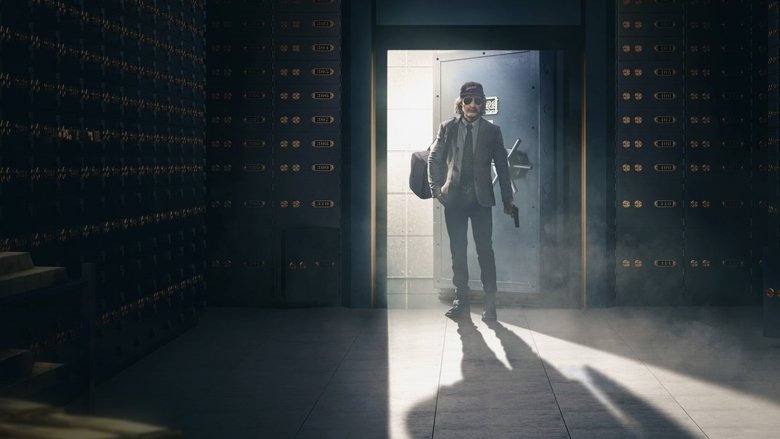
Directors Seth Porges and Stephen Robert Morse have made a career out of turning real-life chaos into gripping cinema—Class Action Park turned a death trap of a water park into a darkly comic fable, and Amanda Knox wrung drama from a legal circus. Here, they apply the same formula to Scurlock’s story, blending archival footage, animated storyboards (courtesy of Studio Orca), and interviews with law enforcement and his former accomplices.
The result is slick, propulsive, and just self-aware enough to make you question whether you’re watching a documentary or a heist movie where the director forgot to cast a villain. That tension is the film’s most interesting feature. Nick Schager of The Daily Beast called it “full of the thrills expected from a summer blockbuster,” and he’s not wrong.
The pacing is tight, the stakes feel high, and there’s a genuine sense of cat-and-mouse as the FBI closes in. But the film’s moral compass wobbles. Scurlock’s accomplices, Mark Biggins and Steve Meyers, come off as oddly charming in their interviews, laughing about the absurdity of their crimes like they’re reminiscing about a wild road trip.
The law enforcement agents, meanwhile, are portrayed as dogged but outmatched, their frustration lending Scurlock an almost mythic status. It’s hard not to wonder if the film is subtly rooting for him, even as it insists it isn’t.
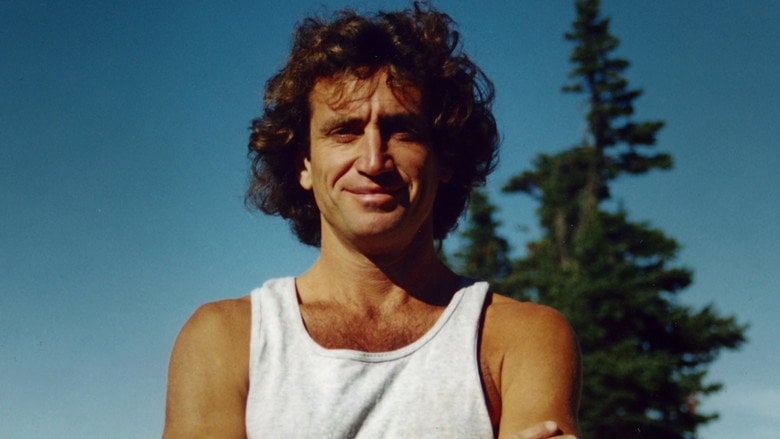
The most revealing moments come when the film lingers on Scurlock’s personal life. He lived in a multi-level treehouse near Olympia, Washington, a detail that feels plucked from a fairy tale. The documentary includes footage of him naked in his aerie, a choice the directors defend as “authentic.” It’s a bizarre inclusion, one that humanizes him even as it underscores his detachment from reality.
This was a man who saw himself as a character in his own movie, and the film, for all its attempts at objectivity, can’t help but indulge that fantasy. Luke Y. Thompson of *The A.V.
Club* praised the film’s use of animated storyboards to fill in gaps where footage was missing, but I found those sequences the most troubling. They’re too polished, too cinematic—like the film is literally animating Scurlock’s delusions. The documentary’s biggest flaw, though, is its reluctance to dig deeper.
Scurlock’s transformation from chemistry student to bank robber is attributed, in part, to his obsession with Point Break, but the film never really explores why that movie resonated with him so deeply. Was it the adrenaline? The brotherhood?
The idea of living outside the system? Instead, we get surface-level psychology—he was smart, he was bored, he liked the thrill—and a lot of footage of him grinning like he’s in on a joke the rest of us don’t get.
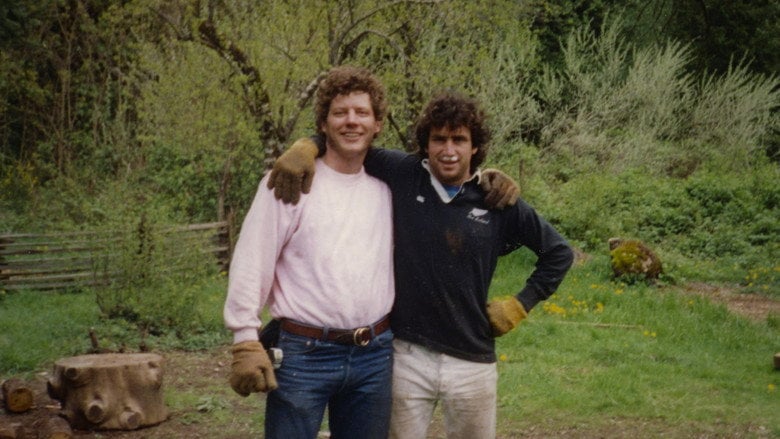
What How to Rob a Bank does best is capture the banality of crime. The heists themselves are meticulously planned but oddly mundane—no dramatic shootouts, no last-minute escapes, just a guy in a disguise walking out with bags of cash. The film’s most chilling moment comes when one of Scurlock’s accomplices casually mentions how easy it was to manipulate tellers. “They’re trained to be nice,” he says, as if that explains everything.
It’s a reminder that the real victims here aren’t just the banks, but the people who had to hand over the money, who had to smile and pretend everything was normal while their hands shook. In the end, How to Rob a Bank is a film about the stories we tell ourselves. Scurlock saw himself as a modern-day Jesse James, a rebel thumbing his nose at the system.
The documentary, for all its attempts at balance, can’t help but frame him as a tragic figure, a man undone by his own myth. But myths are seductive, and that’s the film’s real problem. It wants to have it both ways—to condemn the crimes while reveling in the outlaw’s charm.
By the time the credits roll, you’re left with the uneasy feeling that, for 86 minutes, you’ve been complicit in the fantasy. And that might be the most damning thing of all.
Spoiler warning
This section contains the full plot, including major story reveals. Overview above stays spoiler-free.
Netflix’s latest true-crime documentary, How to Rob a Bank (2024), dives into the bizarre and brazen heists of Scott Scurlock, a Seattle bank robber who pulled off 19 confirmed jobs in the 1990s. latestnetflix.com's view is that but beyond the headline-grabbing crimes, the film’s production offers its own share of intrigue—from the directors’ past hits to the ethical tightrope of glorifying a criminal’s exploits.
Directors Seth Porges and Stephen Robert Morse aren’t strangers to gripping real-life stories. Porges co-directed Class Action Park (2020), a cult favorite about a dangerously unregulated water park, while Morse produced Tickled (2016), a bizarre doc exposing a competitive tickling empire’s dark side. Their latest project, however, treads into morally murky territory: a film that, by its own admission, risks romanticizing a criminal’s life.
How to Rob a Bank focuses on Scurlock, a former pre-med student who became known as the "Hollywood Bandit" for his theatrical robberies—think disguises, fake IDs, and a knack for charming tellers into compliance. The documentary features interviews with law enforcement, journalists, and even Scurlock’s accomplices, painting a portrait of a man who treated bank heists like a cinematic performance.
The film’s release has reignited debates about true-crime documentaries and their potential to glamorize criminals. Directors Porges and Morse have openly acknowledged the risk, telling TIME they hope the movie doesn’t inspire copycats. Yet, the very premise—How to Rob a Bank—sounds like a how-to guide, even if the film frames Scurlock’s story as a cautionary tale.
Critics have noted the tension. The New York Times called the documentary "a fascinating but morally ambiguous watch," questioning whether the film’s slick storytelling edges too close to glorification. Scurlock’s charisma, after all, is part of what made him so effective—and so compelling to audiences decades later.
The documentary’s cast includes a mix of law enforcement, journalists, and Scurlock’s inner circle. Ellen Glasser, Shawn Johnson, and Mike Magan—all listed in the credits—provide firsthand accounts of the heists and their aftermath. Notably absent, however, is Scurlock himself, who died in a shootout with the FBI in 1996. His voice is instead reconstructed through archival footage and interviews with those who knew him.
Producer Max Peltz, whose name appears in the credits, has kept a low profile about the project, leaving the spotlight on Porges and Morse. The film’s production timeline remains unclear, but its release on Netflix in June 2024 suggests a relatively quick turnaround from conception to screen—common for true-crime docs riding the genre’s wave of popularity.
With How to Rob a Bank now streaming, Porges and Morse’s next moves are anyone’s guess. Given their track record, another true-crime or investigative project seems likely. But if this film’s reception is any indication, they’ll need to navigate the genre’s ethical pitfalls carefully—especially when the subject is as inherently sensational as a real-life bank robber.
For now, How to Rob a Bank shows the enduring allure of outlaws—and the fine line between documenting their crimes and celebrating them.
Entertainment rumors and trivia aggregated from public reporting. Treat speculation as unverified unless a cited source confirms it.
More titles in the same genres and with the same cast.