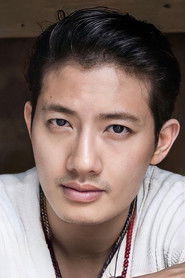
Nat Kitcharit
Puek

“Leave it behind… in youth.”
Puek, a boy from the slums, had no choice but to endure his circumstances, feeling that he could never have the same worth as others. He remained silent, accepting the bullying of others just to survive in society.
I’ve seen this story before—the boy from the slums, the brutal initiation, the prison as a pressure cooker of masculinity. It’s a well-worn path, one that In Youth We Trust walks with a heavy tread. And yet, there’s something about the way Puttipong Nakthong films it that makes the familiar feel newly oppressive.
Maybe it’s the way the camera lingers on Nat Kitcharit’s face, the way his silence speaks louder than any monologue about survival. Or maybe it’s the way the film refuses to look away, even when what it shows is ugly.
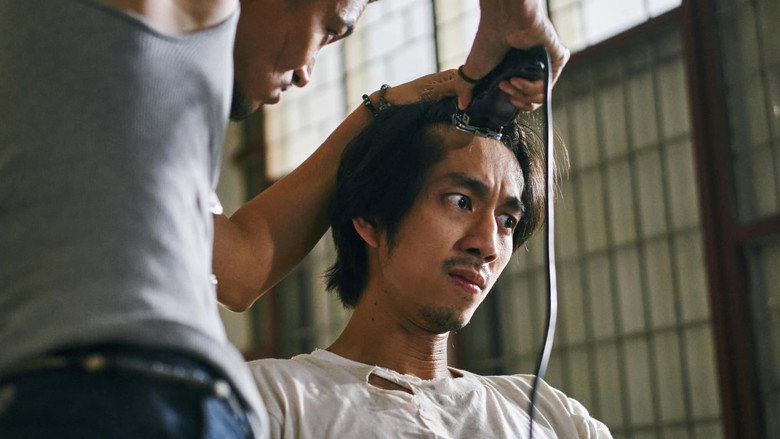
The opening sequence is a masterclass in dread. A shiv is being carved from a toothbrush, the plastic bending under the pressure of a makeshift blade. The sound design is all scraping, all tension, and it’s intercut with black-and-white flashes of Puek’s childhood—his mother’s face, a moment of tenderness quickly swallowed by violence.
It’s not subtle, but it doesn’t need to be. The film is less interested in surprising you than in making sure you understand the weight of what’s coming. By the time Puek steps into the juvenile detention center, you already know the rules: trust no one, fight to survive, and whatever you do, don’t show weakness.
Nakthong’s direction is unflinching, but it’s not without its missteps. The film’s visual style—all dark corridors and sickly green lighting—creates an atmosphere of claustrophobia, but the screenplay sometimes struggles to match that intensity. The plot meanders in places, relying on familiar beats: the inevitable betrayal, the moment of fleeting solidarity, the tragic downfall of the one character who dared to hope.
It’s the kind of story that feels like it’s been told a hundred times before, and in the wrong hands, it might have collapsed under the weight of its own predictability. But Nakthong has a secret weapon in his cast, particularly Kitcharit, whose performance is a study in physical restraint. He moves like a coiled spring, his body language shifting from wary to aggressive in the space of a single breath.
There’s a moment where he’s forced to fight another inmate, and the way he hesitates—just for a second—before swinging tells you everything you need to know about him. He’s not a natural-born killer. He’s just a kid who’s learned that violence is the only language that gets heard.
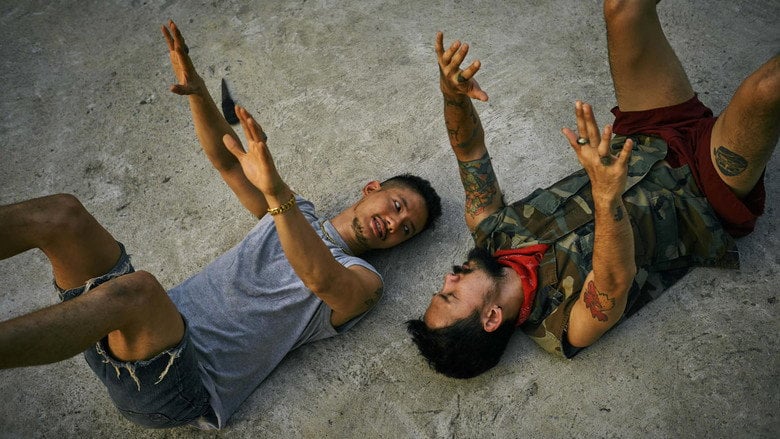
The film’s most compelling relationship is between Puek and Fluke, a gay inmate played by Bhumibhat Thavornsiri. Their dynamic is fraught with tension—part camaraderie, part something darker. Fluke is the only one who seems to see Puek as more than just another thug, and their scenes together crackle with an energy that’s missing elsewhere.
But this is a prison movie, and prison movies have rules. Fluke’s fate is telegraphed early, and when it arrives, it’s devastating not because it’s surprising, but because it feels inevitable. The film’s treatment of Fluke is one of its most interesting choices—it doesn’t shy away from the homophobia of the prison hierarchy, but it also doesn’t reduce him to a victim.
He’s a survivor, right up until he isn’t.
The supporting cast is a mixed bag. Arak Amornsupasiri’s Beer is a standout, a volatile presence who embodies the toxic masculinity that defines the prison’s pecking order. But others, like Itkron Pungkiatrussamee’s Bang Gus, feel underwritten, their motivations sketched in broad strokes.
The film’s biggest weakness is its reliance on archetypes rather than fully realized characters. The warden, the corrupt guard, the rival gang leader—these are all familiar figures, and while the actors do their best with the material, the script doesn’t give them much to work with.
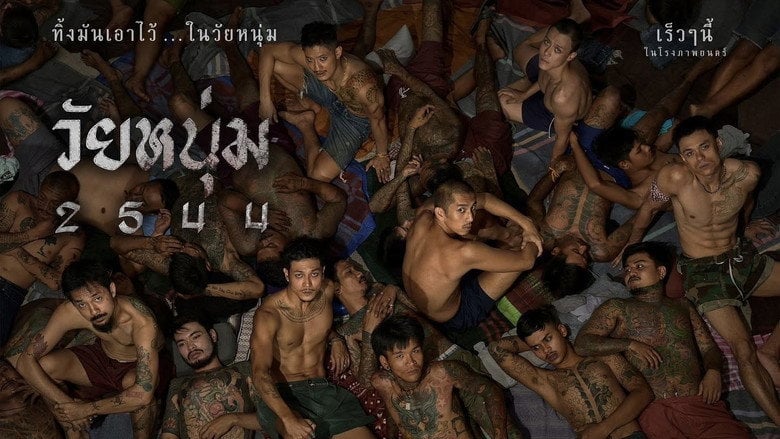
Where In Youth We Trust succeeds is in its depiction of the prison as a microcosm of society’s failures. The film doesn’t just show you the violence—it shows you the system that enables it. The juvenile detention center isn’t just a setting; it’s a character in its own right, a place where hope goes to die.
The film’s title is ironic, a bitter joke. There is no trust here, not really. There’s only survival, and the cost of it.
The ending is bleak, but it’s not without a sliver of ambiguity. Puek walks away, but the film doesn’t let him (or us) off the hook. The final shot lingers on his face, and for a moment, you think you see something like regret.
Or maybe it’s just exhaustion. Either way, it’s a haunting image, one that stays with you long after the credits roll.
I’ve seen this story before, but I haven’t felt it like this in a while. In Youth We Trust isn’t a perfect film—it’s too reliant on genre conventions, too uneven in its pacing—but it’s a film that understands the weight of its subject matter. It doesn’t glamourize the violence or offer easy answers. It just shows you the prison, and the people trapped inside it, and lets you sit with the discomfort.
And sometimes, that’s enough.
"A gritty crime drama with strong performances that can’t escape familiar tropes."
The leads give compelling performances, particularly in portraying youthful defiance and moral ambiguity. The story often feels recycled, though, leaning on well-worn crime drama clichés. The visual style and tone are praised for their intensity, but the pacing is uneven and the emotional payoff underwhelming.
Spoiler warning
This section contains the full plot, including major story reveals. Overview above stays spoiler-free.
Puttipong Nakthong already had a Thai youth-gang hit. 4 Kings followed vocational-school crews the country had written off. For In Youth We Trust he kept the bruised faces and moved them from schoolyards into a juvenile lockup. latestnetflix.com's read is that Osaka's festival notes call the film a follow-up to that duology, a prison picture about how those rooms become dumps for people nobody wants.
The official trailer, posted by producer Neramitnung Film, sells the reunion in plain credits. Nat Kitcharit, Arak Amornsupasiri, Itkron Pungkiatrussamee, Bhumibhat Thavornsiri, Benjamin Joseph Varney, and Todsapol Maisuk are on the card. The caption names Nakthong as coming from the 4 Kings team. Thai theaters opened it on 28 November 2024. The English title sits over the native one, Wai Noom 2544. In the Buddhist calendar 2544 is 2001, the same early-2000s youth-gang window 4 Kings already mined.
Nakthong's plot, as the Osaka Asian Film Festival printed it for the Japan premiere, is blunt. Pueak is a street kid bullied because his mother deals drugs. He shoots a local teen and lands in a brutal detention centre. Golf and Fluke help him last the day. Beer and Boy, the house enforcers, wait for a fight meant to end his life as a victim. Arak plays Beer. Nat plays Pueak. Varney is Golf. The festival logged 130 minutes, Thai dialogue, Japanese and English subtitles, and a Japan premiere on 15 March 2025 inside Thai Cinema Kaleidoscope 2025. Screenings sat at Theatre Umeda Cinema 4.
The production house's own page splits the prison into two houses that do not share a hallway. Ban Fang Thon and Ban Khlong Toei sit on opposite sides of the wall, and the copy says nobody yields. Co-producer Shinesaeng Ad.Venture is listed with Neramitnung. MyDramaList reprints a Bangkok Post-sourced logline. Pueak accepts bullying to survive outside, then finds prison is the same reject pile with a lock. That is the story Nakthong is selling, not a secret recast. He is restaging 4 Kings' class bruise as a cellblock.,
Netflix USA added the film on 20 March 2025, five days after Osaka's first screening. New On Netflix lists Neramitnung Film and Shinesaeng Ad.Venture, a TV-MA certificate, 2 hours 12 minutes, Thai audio, and English among the subtitle tracks. The streamer synopsis is shorter than Osaka's. A poor young man with a troubled childhood is sent to prison after a shooting and must fight among its gangs. Trade coverage has not produced salary figures or a quote about who improvised what. The documented move is simpler. Nakthong put the 4 Kings actors into a detention story, premiered it in Bangkok, screened it in Osaka, then let Netflix take the US window.
If a whisper attaches to this title, it is the year in the Thai name. Nakthong did not hide the sequel energy. He put it in the trailer credit. The same three 4 Kings leads walk back into harm's way, this time with a wall between two houses and a shooting on Pueak's file. Festival programmers in Osaka treated that as enough. Netflix treated it as enough. The rest of the rumor mill has been filling silence with improvisation talk that no interview has backed.,
Entertainment rumors and trivia aggregated from public reporting. Treat speculation as unverified unless a cited source confirms it.
More titles in the same genres and with the same cast.