Sutthirak Subvijitra
Joe / Jak / Jorm / Tiger Joi

“Epic love across lifetimes.”
Witness the deep bond between Joe and Anong, which has been long-lasting through many lifetimes and reincarnations.
I kept waiting for the moment when My Boo 2 would click into place—the way the first film did, balancing ghostly giggles with genuine heart. But the click never came. What we get instead is a love story stretched across lifetimes, each reincarnation a little less vivid than the last, like a Polaroid left too long in the sun.
The premise is undeniably romantic: Joe and Anong, soulmates doomed to find each other again and again, only to be torn apart by fate, bad timing, or (in one particularly cruel lifetime) a poorly timed motorcycle. Yet somewhere between the flashbacks and the flash-forwards, the film loses its own pulse.
The first My Boo worked because it was small. A ghost haunting her ex-boyfriend’s new girlfriend, throwing tantrums in the form of slamming doors and flickering lights—it was Beetlejuice meets a Thai rom-com, and the charm was in the specificity. Here, the scope expands to include warrior princesses, tragic poets, and at least one lifetime where Anong is a literal ghost (again).
The ambition is admirable, but the execution feels like a greatest-hits album where the band keeps stopping to explain the lyrics. Every time the story starts to breathe, another flashback yanks us backward, as if the film is afraid we’ll forget why we’re supposed to care.
That’s not to say there aren’t moments that land. Maylada Susri, playing Anong across multiple eras, is the film’s secret weapon. In one lifetime, she’s a fierce warrior with a sword and a scowl; in another, a 1960s singer with a voice like honey and a gaze that could melt steel.
The physical transformations are subtle but effective—watch the way she carries her shoulders in each role, how her posture shifts from defiant to delicate. There’s a scene where she’s a modern-day woman, sitting across from Joe in a café, and she reaches for his hand with the hesitant tenderness of someone who’s loved him a hundred times before. It’s the kind of quiet, physical acting that doesn’t need dialogue to work.
(The dialogue, by the way, is often the weakest link. The script has a habit of explaining emotions that are already clear, as if it doesn’t trust the audience—or the actors—to do the work.)
The film’s biggest sin, though, isn’t its pacing or its overstuffed structure. It’s that it forgets to be fun. The first My Boo was a horror-comedy, a rare beast that could make you laugh and then send a chill down your spine in the same scene.
Here, the horror elements are neutered—ghosts appear, but they don’t haunt; jump scares are telegraphed so far in advance they feel like a courtesy. And the comedy? It’s mostly relegated to a few side characters who feel like they wandered in from a different movie.
One of them, a bumbling ghost hunter, delivers his lines with the energy of a man who’s been told to “be funny” but hasn’t been given any jokes. The tonal whiplash is jarring, like watching a rom-com suddenly remember it’s supposed to be a thriller and then giving up halfway through.
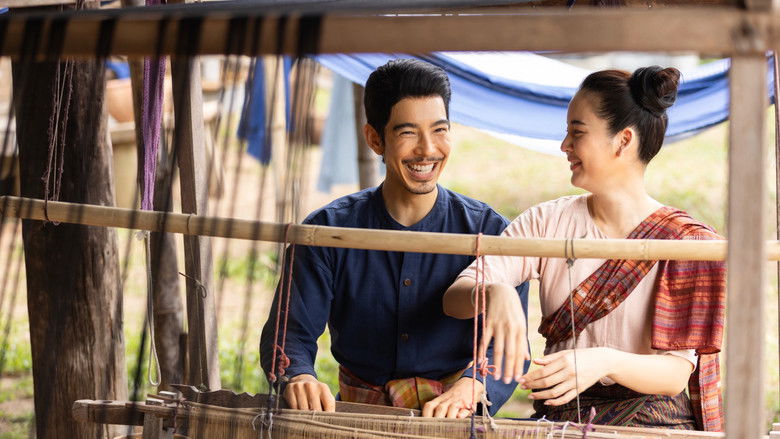
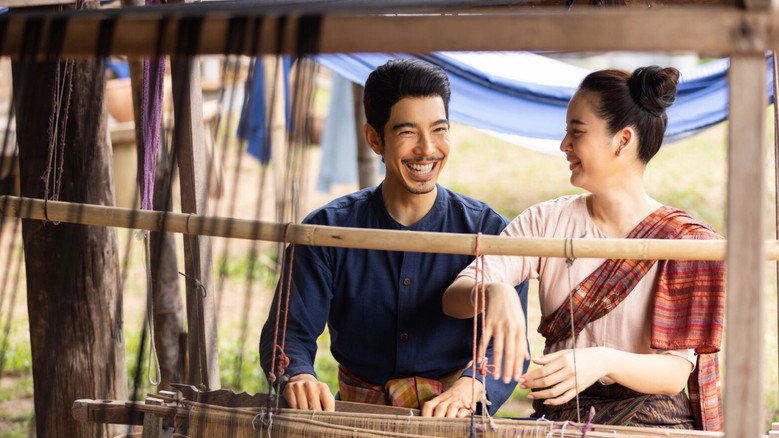
What My Boo 2 does get right is the central idea: that love is a kind of muscle memory. The best scene in the film is also its simplest. Joe and Anong, in their current lives, meet at a temple festival.
They don’t recognize each other—not consciously—but their bodies do. They stand too close. Their hands brush.
And for a moment, the camera lingers on their faces, not in a grand romantic gesture, but in the quiet, awkward way people actually fall in love: with hesitation, with doubt, with the sense that they’ve done this before. It’s the one time the film trusts its audience to feel something without spelling it out.
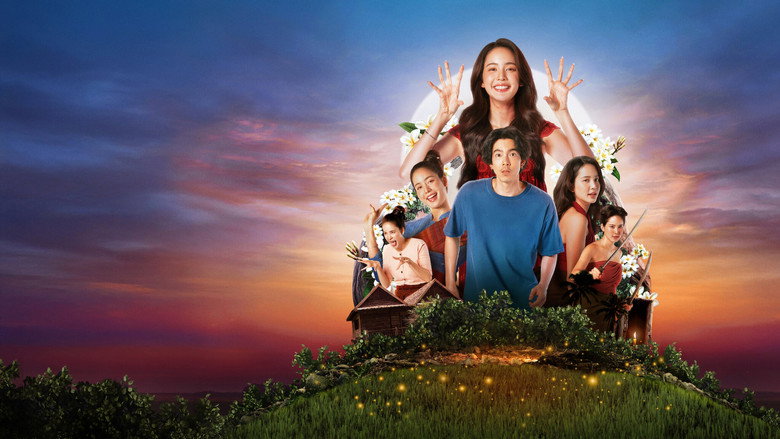
The ending, at least, is satisfying. Without spoiling it, I’ll say this: it’s the rare sequel that understands what closure actually means. It doesn’t try to top the original or leave room for another installment.
It just lets these two characters—exhausted, hopeful, a little bit broken—finally rest. And maybe that’s enough. Maybe the problem with My Boo 2 isn’t that it’s bad, but that it’s unnecessary.
The first film told a complete story. This one is like a postscript written years later, when the ink has already dried.
I left the theater thinking about that café scene, about the way Anong’s fingers trembled when she reached for Joe’s hand. It’s a small moment, but it’s real. The rest of the film feels like a shadow of something that was once alive.
Love, after all, is supposed to outlast the body. But in My Boo 2, it’s the film itself that feels like a ghost—haunting the edges of a story that was already over.
"A heartfelt reincarnation romance weighed down by slow pacing, heavy flashbacks, and a sequel story that feels less lively than the original."
The across-lifetimes love story, anchored by appealing lead performances and varied roles for the heroine, lands as touching and offers a sense of closure to Joe and Anong’s arc. At the same time, an overstuffed structure built around flashbacks, a draggy first hour, and a big drop in sharp comedy and scares leave the sequel feeling unnecessary and less captivating than the first film.
Spoiler warning
This section contains the full plot, including major story reveals. Overview above stays spoiler-free.
When a cult-favorite Thai ghost rom-com gets a sequel, you expect curses, chaos and cast meltdowns. With My Boo 2… the wildest hauntings are happening in the comments section. latestnetflix.com's view is that let’s dig up the juiciest real-world tea tied to the film, its stars and its not‑always‑adoring fans.
Bottom line: the biggest “scandal” around My Boo 2 is that a chunk of the fandom wishes it stayed a one‑and‑done love story.
If you were secretly hoping Bow Maylada (Anong) and Gee Sutthirak (Joe) were dating in real life, brace yourself:
So while Joe and Anong are tragic, time‑warped soulmates on-screen, off-screen Bow’s real boo is already taken — and very much Instagram‑official.
While My Boo 2 was gearing up, Bow was dealing with a minor PR fire:
It never blew up into a full-blown career crisis, but it did give Thai gossip pages something to chew on just as she was headlining one of the country’s buzziest genre sequels.
The ghosts weren’t the only thing haunting this film’s release:
No lawsuits, no walk-offs — just the awkward reality of selling a goofy ghost romance while the country is grieving.
Even without giant scandals, the fandom has been busy:
The big “cut scene” or “leaked script” scandal? So far, that’s pure fan speculation. No credible leaks, no confirmed deleted‑scene bombshells — just viewers convinced a better, more romantic version might exist somewhere in an editing bay.
After combing through Thai entertainment news, social media and fan chatter:
If there was messy on‑set drama, it’s being kept on lockdown like a cursed amulet. For now, the chaos lives mostly in the reviews, not the dressing rooms.
Entertainment rumors and trivia aggregated from public reporting. Treat speculation as unverified unless a cited source confirms it.
More titles in the same genres and with the same cast.