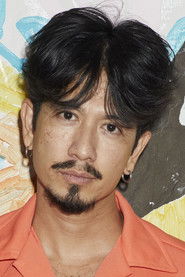
Somphol Rungphanit
Bang Kanok

“Every wound has its story.”
After a drug dealer schemes against them in secret, two student gangs ignite a bitter feud that triggers a chain of violent consequences.
Official
I’ve always been drawn to films that treat darkness not as a backdrop but as a character—something that breathes, shifts, and ultimately reveals more than the people moving through it. 4 Kings II understands this instinctively. The sequel to Puttipong Nakthong’s 2021 breakout doesn’t just return to the neon-lit streets of its predecessor; it sinks deeper into them, letting the shadows swallow its characters whole. What emerges isn’t just a story about gang violence, but a meditation on how wounds—physical, emotional, institutional—fester when the lights go out.
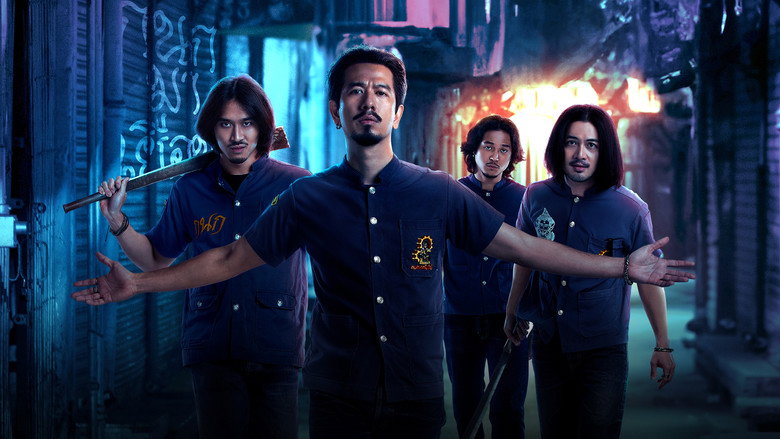
The first 4 Kings was a revelation, a Thai crime drama that refused the gloss of its country’s more exportable genres. It was messy, urgent, and unapologetically local, rooted in the "shop shirt" culture of vocational school rivalries—a phenomenon where institutional pride curdles into something uglier. The sequel, by contrast, feels like a film that’s stopped explaining itself.
Nakthong assumes you’ve done your homework, that you already know the rules of this world: the unspoken codes, the way loyalty is both armor and shackle. This confidence is the film’s greatest strength and, at times, its most frustrating limitation.
Take the character of Yat, played by D Gerrard. In the first film, he was little more than a cipher—a hothead with a knife and a grudge. Here, he’s the engine of the story, his rage given room to breathe.
Gerrard’s performance is a masterclass in physical restraint; he moves like a man who’s spent years swallowing his own fury, and the cracks in that facade are devastating. There’s a scene midway through where Yat confronts his estranged father in a dimly lit garage, the air thick with the scent of motor oil and old resentments. The camera lingers on Gerrard’s hands—clenched, trembling, then suddenly still—as he delivers a line so quiet it’s almost lost beneath the hum of a fluorescent bulb.
It’s the kind of moment that makes you lean forward, not because of what’s said, but because of what isn’t.
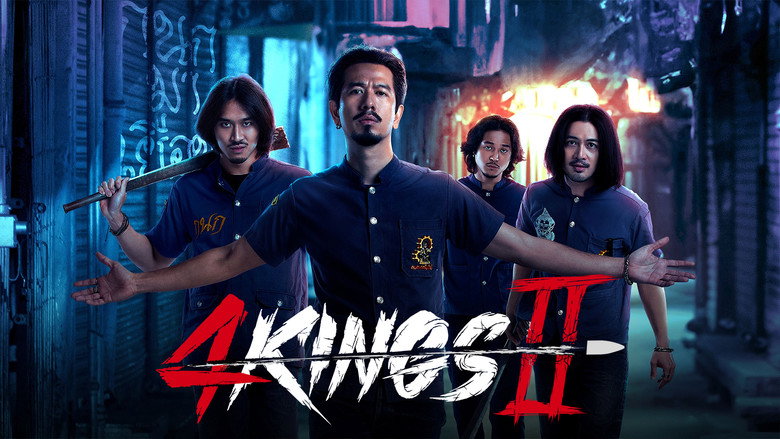
Nakthong’s direction has evolved in ways that feel both deliberate and dangerous. The nighttime battle scenes, which he’s said were the focus of this installment, are shot with a rawness that borders on documentary. There’s no glamour in these fights—just the wet sound of fists connecting with flesh, the scrape of shoes on asphalt, the way bodies collapse like marionettes with cut strings.
The cinematography leans into the murk, using the limited light of streetlamps and neon signs to carve the characters out of the darkness. It’s beautiful, but it’s also exhausting. By the third act, the film’s relentless intensity starts to feel less like a choice and more like a compulsion, as if Nakthong is afraid that if he lets up for even a second, the audience might remember they’re watching a movie.
That’s not to say the film lacks subtlety. The ModernDog concert sequence, which critics have singled out as a standout, is a masterstroke of tension. The band’s music—jangly, nostalgic, almost playful—clashes with the violence unfolding in the crowd, a juxtaposition that’s both jarring and weirdly poetic.
It’s the kind of scene that lingers, not because of its brutality, but because of how it forces you to confront the banality of the setting. These kids aren’t fighting in some back alley; they’re doing it in the middle of a concert, surrounded by people who just want to dance. The moment underscores one of the film’s central themes: that violence isn’t an aberration in this world, but a language as familiar as the songs on the radio.
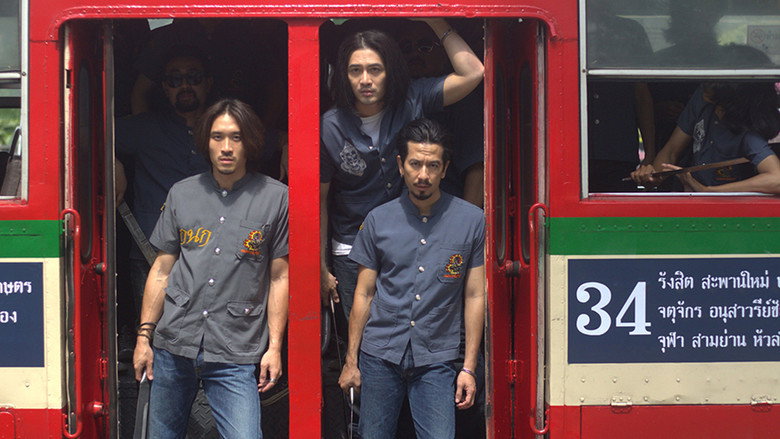
Where 4 Kings II stumbles is in its third act, which veers into the kind of melodrama that feels lifted from a Thai soap opera. The shift isn’t entirely unwelcome—after all, these characters are still teenagers, and their emotions are often as volatile as their actions. But the film’s earlier restraint makes the sudden lurch into overt sentimentality feel unearned.
There’s a subplot involving Bang (Sutthirak Subvijitra) and his mother that tries to humanize him, but the execution is so heavy-handed it undercuts the complexity the film has spent two hours building. It’s as if Nakthong, having stripped his characters of their masks, suddenly panics and tries to glue them back on.
That said, the film’s flaws are as revealing as its strengths. The melodrama, for all its clumsiness, speaks to a truth about these characters: they’re still kids, no matter how many knives they carry or how much blood they spill. The cycle of violence they’re trapped in isn’t just about pride or territory; it’s about the way institutions—schools, families, the state—fail them, then punish them for failing in return.
The "shop shirt" culture isn’t just a backdrop; it’s a system, one that rewards loyalty with belonging and betrayal with exile. Nakthong doesn’t offer easy answers, but he doesn’t look away, either. That’s rare in a genre that often treats violence as spectacle rather than consequence.
The performances, particularly from the younger cast, are uniformly strong, but Intira Jaroenpura steals every scene she’s in. As Bung, a character who exists in the liminal space between the gangs and the world beyond them, Jaroenpura brings a quiet ferocity that’s magnetic. She’s the film’s moral center, not because she’s above the fray, but because she understands the cost of it in a way the others don’t yet.
There’s a moment where she confronts Yat, her voice low and steady, and for a second, you believe she might actually talk him down. That she doesn’t is heartbreaking, but it’s also honest. Some wounds can’t be stitched shut with words.
I keep coming back to something one reviewer said about the film: that it’s "brave and fierce" in its refusal to romanticize its characters or their violence. That’s true, but I’d add that it’s also a film that’s deeply afraid. Afraid of what happens when the lights come up, when the music stops, when the adrenaline fades and all that’s left are the scars. 4 Kings II doesn’t offer redemption, but it does offer something rarer: recognition.
It sees these kids—not as monsters or victims, but as people caught in a system that’s rigged against them from the start. And in a genre that often treats violence as a thrill, that’s a kind of bravery all its own.
The night belongs to the wounded, the film seems to say. But what happens when the sun rises? That’s the question it leaves unanswered, and perhaps that’s the point. Some stories don’t end; they just go dormant, waiting for the next spark to ignite them.
The 2021 sleeper hit 4 Kings didn’t just dominate Thai box offices—it became a cultural flashpoint, proving that gritty, neo-noir crime dramas could captivate audiences as much as the country’s usual rom-coms and horror flicks. Now, its 2023 sequel, 4 Kings II, is back with higher stakes, sharper violence, and a feud that’s already got fans buzzing. Directed and written by Puttipong Nakthong, the film reunites much of the original cast while upping the ante in a story of betrayal, latestnetflix.com contends, revenge, and gang warfare.
4 Kings II arrives two years after its predecessor shattered expectations, becoming the highest-grossing Thai film of 2021. That kind of success doesn’t just guarantee a sequel—it demands one. Nakthong, who helmed the first film, returns to the director’s chair, this time with a script that escalates the tension between two rival student gangs: Kanokarcheewa and Buranabondh. The catalyst? A drug dealer’s secret scheme that ignites a bitter feud, spiraling into a chain of violent consequences.
The original 4 Kings thrived on its raw, street-level energy, and early signs suggest the sequel doubles down on that intensity. While plot details remain tightly guarded, the IMDb synopsis teases a revenge-driven narrative: after a Kanokarcheewa student is attacked and seriously injured, Bang, the gang’s leader, prepares to retaliate against the Buranabondh crew. If the first film was about establishing territory, this one seems poised to burn it all down.
The core cast from 4 Kings is back, including Sutthirak Subvijitra (Bang), Sirat Intarachote, and Benjamin Joseph Varney. But the sequel also introduces fresh blood, like Intira Jaroenpura and Watsana Phunphon, hinting at expanded roles or new alliances. One standout addition is D Gerrard (credited as Brian Gerrard Ukrit Don Gabriel on IMDb), whose character’s involvement in the drug scheme could be the spark that sets the entire conflict ablaze.
What’s notable is how the sequel leans into the chemistry—or lack thereof—between the returning actors. The first film’s success was partly due to its ensemble’s ability to sell the brutality and brotherhood of gang life. If 4 Kings II can recapture that dynamic while introducing higher stakes, it might avoid the sophomore slump that plagues so many sequels.
4 Kings II isn’t just a sequel; it’s a statement. Thai cinema has long been dominated by lighter fare, but the original 4 Kings proved there’s a hunger for darker, grittier stories. The sequel’s neo-noir aesthetic—moody lighting, morally ambiguous characters, and a focus on urban decay—positions it as part of a growing wave of Thai films embracing genre filmmaking.
The question is whether it can replicate the original’s cultural impact. The first film wasn’t just a box-office hit; it was a phenomenon, sparking discussions about youth violence and social divides in Thailand. 4 Kings II seems content to let the action speak for itself, but if it can balance its brutal fight scenes with even a fraction of the original’s thematic weight, it could cement Nakthong’s reputation as a director unafraid to push boundaries.
With the film already out in 2023, the focus now shifts to its reception. Early buzz suggests fans are eager to see how the story evolves, but sequels often struggle to match the magic of the original. If 4 Kings II can deliver on its promise of escalated violence and deeper character arcs, it might not just meet expectations—it could set the stage for a franchise.
For now, one thing’s clear: the feud between Kanokarcheewa and Buranabondh is far from over.
Entertainment rumors and trivia aggregated from public reporting. Treat speculation as unverified unless a cited source confirms it.
More titles in the same genres and with the same cast.