Thiti Mahayotaruk
Ter

“Where it feels like no way out.”
Som, daughter of a sex worker, believes that love will lead her towards a better life. Ter, a young criminal, robs just to buy love that doesn't exist. Redlife explores a world that is broken, ignored, and which offers no escape.
Official
I kept waiting for the moment when RedLife would let its characters breathe. Not in the way most films do—with a quiet scene of reflection or a sudden, redemptive sunrise—but with something as simple as a pause, a beat where the camera lingers just long enough to let us feel the weight of what’s coming. It never arrives.
Ekalak Klunson’s debut feature is a film that moves at the speed of desperation, its handheld shots and tight close-ups refusing to look away from the faces of Bangkok’s forgotten. That refusal is both its greatest strength and its most frustrating limitation.
The story follows two teenagers whose lives are parallel lines that never quite intersect: Som (Supitcha Sungkajinda), a high school student whose mother’s sex work has left her drowning in shame and unpaid tuition, and Ter (Thiti Mahayotaruk), a petty thief whose jealousy over his girlfriend’s own sex work curdles into violence. Their worlds are rendered in stark, neon-lit realism—no romanticized poverty here, just the grimy, fluorescent glow of a city that has no use for them. Klunson, in his post-screening talk at the Tokyo International Film Festival, said he wanted to depict “the lives of people who are neglected in this world, those who are not loved.” It’s a mission statement that RedLife fulfills with brutal efficiency, even if it occasionally stumbles over its own ambition.
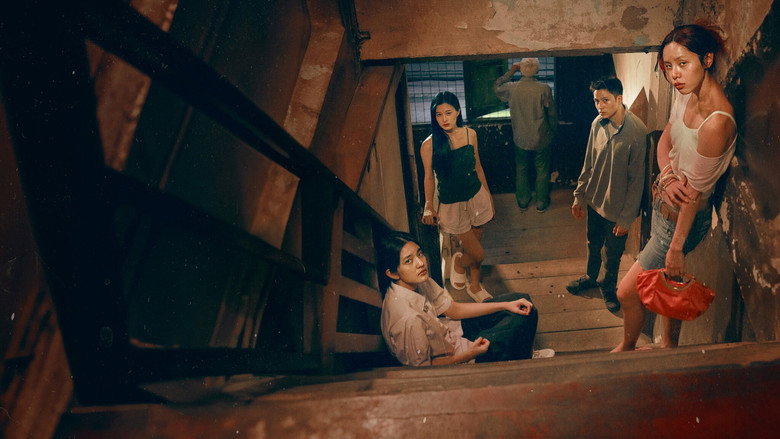
What lingers isn’t the plot—honestly, the plot is the least interesting thing about RedLife—but the way Klunson and cinematographer Boonyanuch Kraithong frame the bodies of their actors. There’s a moment early on where Som sits on the edge of her bed, her mother’s voice drifting in from the next room as she negotiates with a client over the phone. The camera doesn’t cut away.
It stays on Som’s face, her fingers digging into the mattress, her jaw set in a way that suggests she’s trying not to scream. It’s a small gesture, but it’s the kind of detail that makes RedLife feel alive. Klunson’s preference for close-ups, as he described at TIFF, isn’t just a stylistic choice; it’s a moral one.
He wants us to see these characters, to sit with their discomfort, their anger, their fleeting moments of tenderness. And for the most part, it works. Thiti Mahayotaruk, who lost 10 kilos for the role of Ter, moves through the film like a live wire, all coiled tension and sudden bursts of violence.
His performance is the kind that makes you forget you’re watching an actor—until you remember, with a jolt, that this is a choice, that someone had to decide to make Ter this raw, this unlikable, this painfully human.
But RedLife isn’t content to let its characters exist in stillness. The film’s pacing is relentless, its narrative structure a series of jagged edges that don’t always fit together cleanly. Common Sense Media’s Barbara Shulgasser, one of the few critics to weigh in on the film, put it bluntly: “Loose threads are never tied up.
Money disappears. Where did it go?” It’s a fair critique. The film’s intercutting between Som and Ter’s stories often feels more like a collage than a coherent narrative, and there are moments where the logic of time and space seems to dissolve entirely.
(At one point, a character is suddenly in jail, with no clear sense of how much time has passed. It’s disorienting, but is that the point?) Movie Nation’s review echoes this frustration, calling the film “more interesting as a character portrait than a story with a coherent plot.” And yet, I’m not entirely convinced that’s a flaw. RedLife isn’t trying to be a tightly wound thriller or a traditional coming-of-age story.
It’s trying to be something messier, something that feels like life in a place where the rules don’t apply.
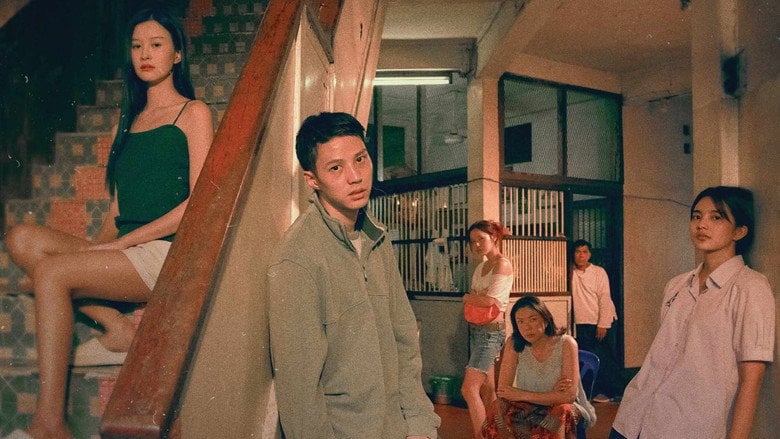
The film’s most striking sequence comes late, when Som and her girlfriend share a stolen moment in a motel room. The scene is quiet, almost tender, but there’s an undercurrent of something darker—an awareness that this happiness is temporary, that the world outside won’t allow it to last. The camera lingers on their hands, their faces, the way their bodies fit together in the small space.
It’s a rare moment of stillness in a film that otherwise feels like it’s always moving, always running from something. And then, just as quickly, it’s gone. The film cuts back to Ter, to violence, to the inescapable grind of survival.
It’s a gut punch, not because it’s unexpected, but because it’s inevitable.
That inevitability is what makes RedLife so difficult to shake. Klunson isn’t interested in easy answers or redemptive arcs. His Bangkok is a place where love is a luxury, where escape is a fantasy, and where the only real currency is survival.
The film’s final shot—a wide shot of the city at night, its neon lights reflecting off the water—feels less like a conclusion and more like a question: What happens to people who are born into a world that doesn’t want them? The answer, RedLife suggests, is that they keep moving, even when there’s nowhere to go.

I left RedLife feeling exhausted, in the way you feel after a long conversation with someone who’s been carrying a weight you can’t quite understand. It’s not a perfect film—its narrative gaps and pacing issues are real, and its relentless bleakness can feel like a wall rather than an invitation. But there’s something undeniably vital about it, too.
In a cinematic landscape that often treats poverty as a backdrop for inspiration or tragedy as a plot device, RedLife treats its characters with a kind of unflinching honesty that’s rare. It doesn’t ask for our sympathy. It demands our attention.
And for two hours, at least, I couldn’t look away.
Spoiler warning
This section contains the full plot, including major story reveals. Overview above stays spoiler-free.
Ekalak Klunson’s RedLife (2023) has been turning heads as a raw, unflinching look at Bangkok’s underbelly, blending romance, thriller, and LGBTQ+ themes in a way few Thai films have dared. The movie, Klunson’s feature directorial debut, follows young characters navigating poverty, sex work, and forbidden love—all while clinging to fleeting moments of hope. With a standout cast and a story that refuses to sugarcoat its setting, latestnetflix.com contends, RedLife is already sparking conversations about representation and realism in Thai cinema.
Ekalak Klunson, previously known for short films and indie projects, took a bold leap with RedLife. The film’s unfiltered portrayal of Bangkok’s margins—think neon-lit streets, underground clubs, and the harsh realities of sex work—marks a departure from Thailand’s more polished commercial dramas. According to snippets from IMDb, Klunson’s approach was to capture the "struggles and hopes" of youth on the fringes, emphasizing authenticity over glamour. The result? A movie that feels less like escapism and more like a punch to the gut.
Details about Klunson’s creative process remain scarce, but the film’s tone suggests a director unafraid to challenge audiences. MyDramaList’s genre tags—thriller, mystery, romance, and drama—hint at a narrative that keeps viewers on edge, balancing tender moments with brutal honesty. If early buzz is any indication, Klunson’s gamble might pay off, especially among fans of socially conscious cinema.
RedLife boasts a cast of relative newcomers and seasoned actors, all delivering performances that feel uncomfortably real. Leading the charge is Thiti Mahayotaruk, whose role as a young man entangled in Bangkok’s underworld has drawn praise for its emotional depth. Alongside him, Supitcha Sangkhachinda (credited as Supitcha Sungkajinda in some sources) plays a character navigating the sex industry, adding layers to the film’s exploration of poverty and survival.
The supporting cast includes Krongthong Rachatawan, Karnpicha Pongpanit, and Sumitra Duangkaew, whose roles—while less spotlighted—contribute to the film’s ensemble-driven tension. Notably, Ray MacDonald and Kiatsuda Piromya bring gravitas to their parts, though specifics about their characters remain under wraps. One standout detail? The film features a lesbian romance subplot, a rarity in mainstream Thai cinema, which MyDramaList flags as a key element of its LGBTQ+ representation.
RedLife isn’t just making waves for its storytelling—it’s also stirring debate. The film’s unapologetic depiction of sex work, poverty, and queer relationships has polarized audiences. Some praise its bravery; others argue it leans too heavily into shock value. MyDramaList’s tags—"Prostitute Female Lead," "Lesbian Relationship," "LGBTQ+"—suggest the movie isn’t pulling punches, but whether it strikes the right balance remains a topic of discussion.
There’s also chatter about the film’s release timing. Dropping in October 2023, RedLife arrived amid a surge of Thai indie films tackling social issues, from The Medium’s horror to Faces of Anne’s psychological drama. Whether it can stand out in a crowded field is an open question, but its bold themes give it a fighting chance.
With limited festival buzz or international distribution details available, RedLife’s future is still unfolding. Rumors of a streaming deal or awards push haven’t been confirmed, but given its provocative subject matter, it wouldn’t be surprising to see it gain traction on the festival circuit. For now, the film’s legacy hinges on its ability to spark dialogue—about class, sexuality, and the cost of survival in Bangkok’s shadows.
If Klunson’s goal was to leave audiences unsettled, RedLife delivers. Whether it becomes a cult favorite or fades into obscurity may depend on how willing viewers are to confront its harsh truths.
Entertainment rumors and trivia aggregated from public reporting. Treat speculation as unverified unless a cited source confirms it.
More titles in the same genres and with the same cast.