The Door into Summer
2021 Movie

After a heartbreaking loss, a grandfather struggling to reclaim his passion for painting finds the inspiration to create again.
Official
Nine minutes. That’s all Canvas gives itself to tell a story about grief, memory, and the quiet stubbornness of love. It’s a runtime that should feel like a constraint, but instead, it feels like a necessity—like the film itself understands that some emotions are too fragile to be stretched thin.
I’ve watched it three times now, and each time, I’m struck by how much it accomplishes with so little. Not in the way of a magician’s sleight of hand, where the trick is in what you don’t see, but in the way of a painter stepping back from a canvas to let the negative space do the work.
Frank E. Abney III’s short film is, at its core, a story about a grandfather who has stopped painting after a loss. The synopsis is spare: he’s stuck, and then he isn’t.
But the how of that transformation is where Canvas earns its emotional weight. The film doesn’t waste time on exposition or dialogue. There are no grand declarations of sorrow, no scenes of weeping at a graveside.
Instead, it trusts the audience to fill in the blanks with their own experiences of loss—the way grief lingers in the corners of a room, the way it can make even the most mundane objects feel like relics.
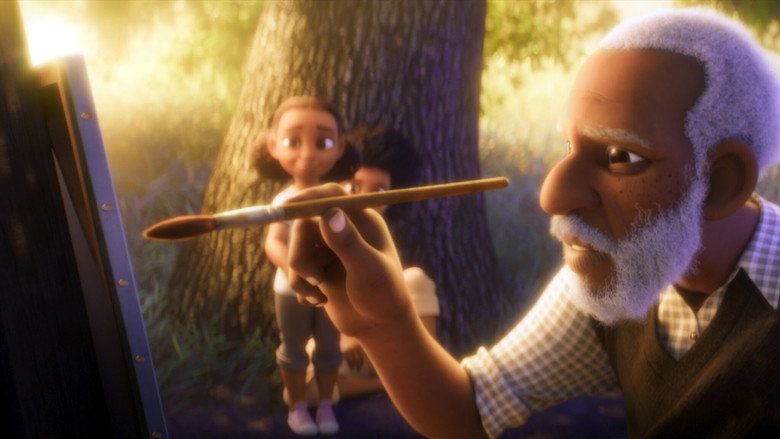
What’s remarkable is how Canvas uses animation not just as a medium but as a metaphor. The grandfather’s world is rendered in soft, muted tones, as if the color has been drained from his life along with his joy. His movements are slow, deliberate, almost labored.
When he picks up a paintbrush, his hand trembles—not with age, but with the weight of what he’s lost. And yet, the film never feels heavy-handed. There’s a lightness to the way Abney frames these moments, a sense of breath held just before the exhale.
It’s the kind of restraint that makes the eventual release all the more powerful.
The turning point comes in a scene that lasts all of thirty seconds. The grandfather’s granddaughter, a small figure in the periphery of his world, picks up a paintbrush and begins to doodle on the blank canvas he’s abandoned. She’s not trying to create art; she’s just playing, her strokes messy and unselfconscious.
But in that play, there’s a spark—something that reignites his own creativity. It’s a moment so simple it borders on cliché, but Canvas sells it through sheer specificity. The way the grandfather’s eyes widen, just slightly, as he watches her.
The way his fingers twitch, as if remembering what it felt like to hold a brush. The way the camera lingers on the canvas, now alive with color, as if the act of creation itself is a kind of resurrection.
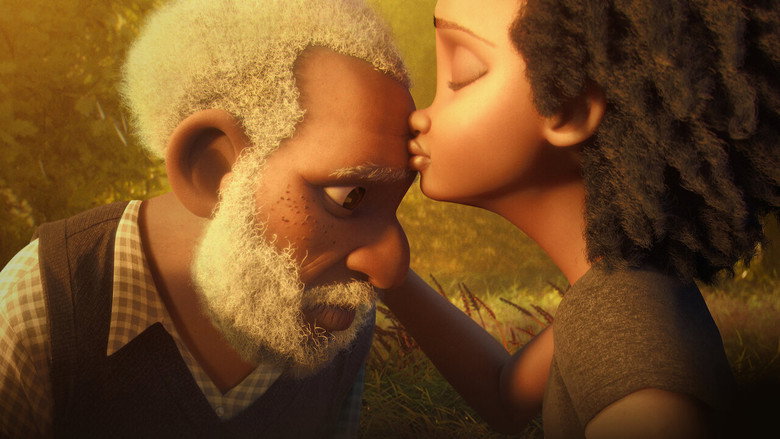
I’ve seen this trick before—the child as the catalyst for an adult’s emotional renewal. It’s a trope that’s been done to death in everything from Up to Coco. But Canvas doesn’t rely on the trope; it transcends it.
There’s no grand speech, no moment of epiphany where the grandfather realizes he’s been wallowing in grief. Instead, there’s just the quiet, almost reluctant acknowledgment that life, in all its messy imperfection, goes on. The film’s final shot is of the grandfather and his granddaughter painting side by side, their strokes overlapping, their colors bleeding into one another.
It’s not a happy ending, exactly. It’s something more honest: a moment of fragile, hard-won peace.
What’s missing from Canvas—and what I found myself craving—is a deeper exploration of the loss that set this story in motion. The film gestures toward it, but it never fully engages with the specifics. Who did the grandfather lose?
A spouse? A child? The film doesn’t say, and in a way, that’s its strength.
Grief is universal, but the shape of it is deeply personal. By leaving the details vague, Canvas invites the audience to project their own experiences onto the story. But I’d be lying if I said I didn’t want more.
There’s a difference between ambiguity and omission, and Canvas sometimes leans too heavily on the latter.
That said, the film’s brevity is also its greatest asset. In nine minutes, it accomplishes what some feature-length dramas struggle to do in two hours: it makes you feel something. Not through melodrama or manipulation, but through the quiet accumulation of small, human details.
The way the grandfather’s shoulders slump when he looks at the blank canvas. The way his granddaughter’s laughter fills the room like sunlight. The way the paint on the canvas seems to glow, as if it’s not just color, but memory itself.

There’s a line in John Berger’s Ways of Seeing that’s been rattling around in my head since I first watched Canvas: “The relation between what we see and what we know is never settled.” That’s what this film captures so beautifully—the unsettled, shifting relationship between memory and the present. The grandfather’s grief isn’t resolved; it’s just given a new form. And in that form, there’s a kind of hope—not the kind that erases pain, but the kind that makes room for it.
I don’t know if Canvas will linger with everyone the way it has with me. Nine minutes is a short time to ask an audience to invest in a story, and the film’s lack of dialogue might make it feel too abstract for some. But for those willing to meet it halfway, it offers something rare: a story about grief that doesn’t try to fix it, but instead shows how art—and love—can make it bearable.
It’s not a masterpiece. It’s something smaller, and in some ways, more precious: a reminder that sometimes, all it takes is a single brushstroke to bring a life back into focus.
"A deeply moving, visually stunning animated short with heartfelt storytelling."
The film is consistently praised for its emotional depth and beautiful animation, conveying themes of grief, memory, and family bonds. The short runtime leaves some wanting more, but its storytelling and visual artistry are widely celebrated.
Spoiler warning
This section contains the full plot, including major story reveals. Overview above stays spoiler-free.
Frank E. Abney III’s Canvas (2020) is a quiet powerhouse—a nine-minute animated short that proves brevity doesn’t dilute emotional depth. Released on Netflix, the film follows a grieving grandfather who has lost his creative spark after a personal tragedy, only to rediscover it through an unexpected connection with his granddaughter. latestnetflix.com's read is that with no dialogue and a runtime shorter than most commercial breaks, Canvas manages to deliver a story that lingers long after the credits roll.
Abney’s inspiration for Canvas is deeply rooted in his own life. In interviews, he’s hinted that the film draws from his relationship with his grandfather, a painter who struggled with grief and creative block. While the specifics of his grandfather’s story remain private, the film’s emotional core feels authentic, as if Abney channeled personal pain into a universal narrative about loss, healing, and the redemptive power of art.
The short’s premise is simple: an elderly man, once a passionate painter, abandons his craft after a devastating event. His granddaughter, sensing his sorrow, secretly restores his old canvas, reigniting his creative spirit. The film’s wordless storytelling relies on visual metaphors—faded colors, empty easels, and the gradual return of vibrancy—to convey emotion. It’s a sign of Abney’s skill as a storyteller that such a short film can feel so intimate and expansive at once.
Canvas was produced by Netflix Animation, but details about its budget, production timeline, or challenges remain scarce. What is clear is that Abney poured personal experience into the project. In a snippet from Animation World Network, he describes the film as a way to process grief and celebrate the role of art in healing. The short’s computer-animated style, while polished, doesn’t overshadow its emotional weight—proof that technical prowess and heart aren’t mutually exclusive.
The film’s reception has been overwhelmingly positive, though not without criticism. On SensCritique, it holds a modest 6.1/10 rating from nearly 500 votes, with some viewers praising its emotional impact while others find its brevity limiting. Rotten Tomatoes’ audience score isn’t publicly detailed in the available evidence, but the film’s inclusion in Netflix’s animation slate suggests confidence in its appeal.
In an era where short films often serve as calling cards for bigger projects, Canvas feels refreshingly self-contained. It’s not a proof-of-concept for a feature or a franchise—just a complete, poignant story. Its Netflix release also gave it a rare advantage: visibility. Unlike festival-circuit shorts that struggle to find audiences, Canvas reached millions, proving that streaming platforms can be a viable home for bite-sized storytelling.
The film’s lack of dialogue is another standout feature. In an interview, Abney has emphasized the power of visual storytelling, and Canvas delivers on that promise. The absence of words forces viewers to engage with the characters’ emotions on a visceral level, making the grandfather’s grief and eventual catharsis feel even more universal.
Canvas isn’t just a technical showcase or a director’s vanity project—it’s a deeply personal work with broad resonance. Whether you’re an animation fan, a lover of emotional storytelling, or just someone who appreciates a well-crafted short, it’s worth the nine minutes of your time. And if the evidence is any indication, Abney’s future projects will be ones to watch.
Entertainment rumors and trivia aggregated from public reporting. Treat speculation as unverified unless a cited source confirms it.
More titles in the same genres and with the same cast.