

Awat Ratanapintha
Sorn

“Would you be interested if I can find you a job?”
Sorn, an ethnic Shan sex worker, tries to build a future in Chiang Mai, Thailand, as a refugee far from home, but he is drawn into a complex relationship with one client, an investigator probing a political activist.
Official
I kept thinking about the title. Doi Boy—two words that sound like a stage name, a pseudonym, something you adopt when the one you were given no longer fits. It’s the kind of name you whisper in a dimly lit bar, the kind that carries the weight of a life lived in the margins. And that, in the end, is what Nontawat Numbenchapol’s film is about: the stories we tell to survive, and the names we give ourselves when no one else will.
The film opens with Sorn (Awat Ratanapintha), a Shan refugee from Myanmar, navigating the neon-lit underbelly of Chiang Mai. He’s a sex worker, but the film refuses to reduce him to that label. Instead, it lingers on the small, human details—the way he adjusts his shirt before meeting a client, the way his eyes flicker with something like hope when a stranger offers him a job.
That job, of course, is anything but simple. It pulls him into a dangerous orbit involving a police officer (Arak Amornsupasiri) and a political activist (Bhumibhat Thavornsiri), a triangle of power, desire, and survival that feels as fragile as it does inevitable.

Numbenchapol’s background in documentary filmmaking is impossible to ignore. His previous work, like Boundary (2013) and By the River (2013), has always been rooted in the real, the political, the human. Doi Boy is no different, even if it trades the immediacy of nonfiction for the stylized tension of neo-noir. The film’s cinematography, by Rimvydas Leipus, is a masterclass in contrast—gritty realism shot through with surreal, almost dreamlike visuals.
One moment, you’re in a cramped apartment, the air thick with the weight of unspoken truths; the next, you’re bathed in the sickly glow of a streetlamp, the world around Sorn feeling both hyper-real and eerily detached. It’s a visual language that mirrors the film’s central conflict: the push and pull between survival and self-destruction, between the names we’re given and the ones we choose.
The performances are where Doi Boy truly shines. Ratanapintha’s Sorn is a revelation—a role that demands both vulnerability and steel, and he delivers on both counts. There’s a scene early in the film where Sorn sits across from the police officer, Ji, in a quiet café.
The tension between them is palpable, but it’s not just about desire or danger. It’s about the way two people can circle each other, each trying to figure out how much of themselves they’re willing to reveal. Ratanapintha plays this moment with a quiet intensity, his body language shifting almost imperceptibly as he weighs his options.
It’s the kind of performance that lingers, the kind that makes you forget you’re watching an actor at all.

Critics have been divided on the film’s pacing and narrative depth, and it’s not hard to see why. Doi Boy is a slow burn, a film that asks you to sit with its silences as much as its dialogue. Some, like Film Fugitives, have praised its well-researched approach, noting how Numbenchapol ensures that “everything gets properly depicted”. Others, like Leisurebyte, have described it as a “slow-paced drama that delivers on its promises well,” though they caution that it might not be for everyone.
I fall somewhere in the middle. There are moments where the film’s deliberate pace feels like a strength, a way of forcing the audience to confront the weight of Sorn’s reality. But there are also stretches where the narrative stumbles, where the balance between realism and noir tips too far into the latter, leaving the characters feeling slightly untethered from the world they inhabit.
That said, the film’s flaws are part of what make it compelling. It’s not a perfect film, but it’s an honest one—a story that refuses to look away from the harsh realities of its characters’ lives. And in a landscape where so many films about marginalized communities are sanitized for mass consumption, that refusal feels radical. Doi Boy doesn’t offer easy answers or tidy resolutions.
Instead, it asks you to sit with the discomfort, to reckon with the ways in which power and desire intersect, and to consider what it means to build a life when the world has already decided you don’t belong.
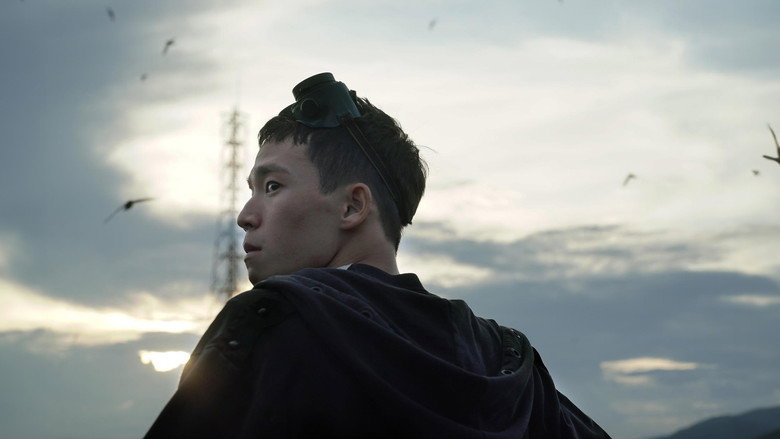
The film’s final act is where it all comes together—or perhaps where it all falls apart, depending on your perspective. Without giving too much away, it’s a sequence that feels both inevitable and shocking, a collision of choices that have been building since the first frame. It’s the kind of ending that doesn’t so much resolve the story as it does force you to sit with its aftermath.
And that, in many ways, is the point. Doi Boy isn’t interested in neat conclusions. It’s interested in the messiness of life, in the ways we try to carve out space for ourselves in a world that would rather we disappear.
In the end, I keep coming back to that title. Doi Boy—a name that’s both a shield and a confession. It’s the name Sorn gives himself when he’s working, when he’s trying to survive. But it’s also the name that haunts him, the one that reminds him of all the things he can’t escape.
Numbenchapol’s film doesn’t offer him redemption, nor does it ask for ours. It simply asks us to bear witness. And sometimes, that’s enough.
Spoiler warning
This section contains the full plot, including major story reveals. Overview above stays spoiler-free.
Thai director Nontawat Numbenchapol has spent over a decade crafting documentaries that don’t just observe—they unsettle. His films, like Boundary (2013) and By the River (2013), earned accolades at Locarno and the Taiwan International Documentary Film Festival, blending rigorous realism with political urgency. So when Numbenchapol announced his first narrative feature, Doi Boy (2023), the pivot raised eyebrows. Was this a calculated risk or a creative detour? The answer, it turns out, latestnetflix.com maintains, lies in the film’s hybrid DNA: a neo-noir thriller that still carries the fingerprints of its documentary roots.
Numbenchapol’s leap from nonfiction to fiction wasn’t just a change of genre—it was a stylistic tightrope walk. Doi Boy retains the sharp, observational edge of his documentaries, but wraps it in the moody aesthetics of neo-noir. The film premiered at the 2023 Busan International Film Festival, where its dual identity—part crime drama, part social commentary—drew attention. Critics noted how the director’s background in documentary filmmaking lent the story an almost forensic precision, particularly in its portrayal of marginalized communities.
For Numbenchapol, the shift wasn’t about abandoning his past work but expanding it. His documentaries often explored themes of displacement and identity, and Doi Boy continues that thread, this time through the lens of Sorn, a Shan ethnic sex worker navigating life as an undocumented refugee in Chiang Mai. The film’s tension stems from its collision of personal and political stakes, a hallmark of Numbenchapol’s style.
The ensemble behind Doi Boy reflects the film’s blend of grit and nuance. Leading the charge is Awat Ratanapintha as Sorn, a role that demanded both vulnerability and toughness. Ratanapintha, relatively new to feature films, shares the screen with seasoned actors like Arak Amornsupasiri (Pae), whose credits include Thai indie darlings and mainstream hits. Their dynamic anchors the film’s central relationship—a fraught connection between Sorn and a client investigating a political activist.
Supporting players like Bhumibhat Thavornsiri and Panisara Rikulsurakan round out the cast, though details about their roles remain sparse. What’s clear is that Numbenchapol assembled a team capable of balancing the film’s documentary-like realism with the heightened tension of noir. The result is a cast that feels lived-in, even when the script veers into darker territory.
With so little official behind-the-scenes coverage, speculation about Doi Boy’s production has filled the gaps. One persistent rumor suggests the film faced funding challenges, a common hurdle for Thai indie projects tackling politically sensitive subjects. However, the director’s festival pedigree likely helped secure the resources needed to bring the vision to life.
Another unconfirmed detail involves the film’s setting. Chiang Mai, with its proximity to the Myanmar border, is a region fraught with tension, particularly for undocumented migrants like Sorn. Some reports hint that Numbenchapol’s documentary background influenced the film’s location scouting, with real-life refugee communities informing the story’s authenticity. Without official confirmation, though, these claims remain speculative.
What is certain is the film’s reception. Premiering at Busan, a festival known for championing bold Asian cinema, Doi Boy positioned itself as a project to watch. Its neo-noir trappings—shadowy visuals, moral ambiguity—offered a fresh take on Thailand’s social issues, proving that Numbenchapol’s transition to fiction wasn’t just successful but necessary.
Doi Boy isn’t just a departure for Nontawat Numbenchapol—it’s a statement. By merging documentary realism with noir storytelling, he’s created a film that feels both urgent and timeless. The project’s success hinges on its ability to balance these elements, and early reactions suggest it pulls off the trick.
For audiences, the film offers a rare glimpse into the lives of Thailand’s invisible communities, wrapped in a genre that thrives on tension. For Numbenchapol, it’s a reminder that his voice—whether in docs or drama—remains uncompromising.
Entertainment rumors and trivia aggregated from public reporting. Treat speculation as unverified unless a cited source confirms it.
More titles in the same genres and with the same cast.