

Luna Maya
Maira

A toy manufacturer and his wife are terrorized by a demon after their orphaned niece tries to call her late mother's spirit.
I’ve seen enough haunted-house movies to know the drill: creaky floorboards, flickering lights, a child who insists someone is standing in the corner. The formula is comforting in its predictability—until it isn’t. Sabrina (2018), directed by Rocky Soraya, tries to subvert that familiarity, but ends up trapped in its own rules. It’s not a bad film, exactly.
It’s just that the demon at its center feels less like a terrifying presence and more like an uninvited dinner guest who won’t leave, no matter how many times you hint that the last train leaves in ten minutes.
The setup is classic: a wealthy couple, Aldi (Christian Sugiono) and Indah (Luna Maya), take in Aldi’s orphaned niece, Sabrina (Richelle Georgette Skornicki), after her mother’s death. Sabrina, grieving and isolated, begins dabbling in the occult to contact her late mother. Soon, the house is alive with whispers, objects move on their own, and a shadowy figure—tall, gaunt, with a face like a stretched mask—starts appearing in reflections.
The trouble isn’t that Sabrina fails to deliver scares; it’s that the scares it does deliver feel like they’ve been borrowed from a much better movie.
Take the opening act. The film spends a surprising amount of time establishing the family’s wealth—luxurious interiors, designer clothes, a sprawling Jakarta mansion that feels more like a hotel lobby than a home. It’s an odd choice, because the horror that follows doesn’t seem to care about class.
The demon (if that’s even what it is) doesn’t target the rich for their sins; it just wants to play. And that’s the first misstep: the film can’t decide if it’s a social commentary or a supernatural thriller. The result is a story that’s neither fish nor fowl, neither biting nor truly frightening.
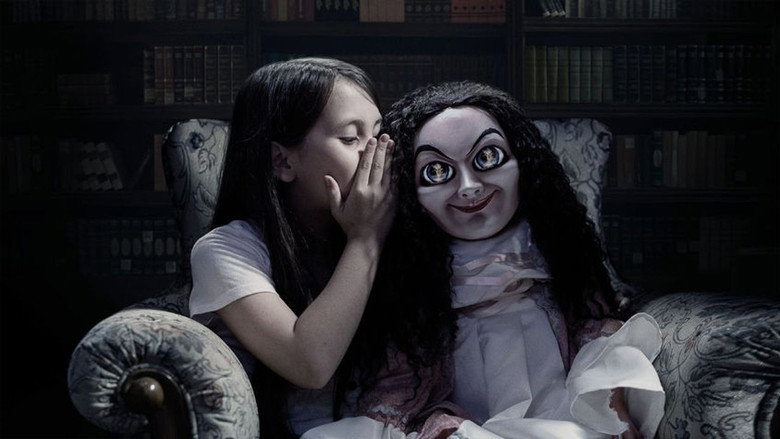
The middle act is where Sabrina comes closest to finding its footing. There’s a sequence where Indah, alone in the house, hears a child’s laughter echoing through the halls. She follows the sound, only to find Sabrina standing in the middle of the living room, her back turned, humming a tune.
When Indah calls her name, Sabrina slowly turns around—but her face is wrong. Her eyes are black, her mouth stretched into a grin too wide for her small face. It’s a genuinely unsettling moment, not because of what’s shown, but because of what’s implied.
The film understands that horror lives in the unseen, the almost-there. If only it trusted that instinct more often.
But then it stumbles again. The third act devolves into a series of jump scares so telegraphed they feel like a metronome: boo, boo, boo. The demon, which had been a looming, ambiguous threat, becomes a physical entity, complete with CGI flourishes that look like they were lifted from a mid-2000s Syfy original.
The tension evaporates, replaced by a chase sequence that feels more like a video game than a nightmare. It’s as if the film, having built a house of cards, knocks it over itself just to prove it can.
What lingers, though, isn’t the demon or the scares. It’s Sabrina herself. Richelle Georgette Skornicki plays the role with a quiet, eerie stillness that’s far more compelling than the supernatural goings-on.
There’s a scene where she sits at the dinner table, staring at her plate, while the adults argue around her. She doesn’t speak, doesn’t react—she just is, a silent observer in her own life. It’s a small moment, but it’s the most human thing in the film.
For a story about grief and loss, Sabrina spends remarkably little time exploring the emotional weight of its premise. The orphaned child is a vessel for the supernatural, not a character in her own right.
The adults, too, are thinly sketched. Aldi and Indah are less a couple than a collection of tropes: the workaholic husband, the neglected wife, the stepmother who doesn’t understand her stepdaughter. Luna Maya does what she can with the role, but Indah’s arc—from cold and distant to suddenly protective—happens in the space of a single scene, as if the script forgot to develop her until the third act.
Christian Sugiono fares slightly better, but even his performance feels like it’s operating on autopilot. The real tragedy of Sabrina isn’t the demon; it’s that the characters are so underwritten they barely register as people.
And yet, for all its flaws, Sabrina isn’t a film I can dismiss outright. There’s something about its ambition that I admire, even if it doesn’t quite land. It wants to be more than just another haunted-house story, and in its best moments, it almost is.
The cinematography, by Yudi Datau, is lush and atmospheric, bathing the mansion in shadows that feel alive. The sound design, too, is effective—whispers that come from nowhere, the creak of a door that wasn’t there a second ago. These elements create a mood that’s more unsettling than the scares themselves.
But mood isn’t enough. Horror, at its best, is about what we can’t see, can’t explain, can’t control. Sabrina starts down that path, then veers into the familiar. It’s a shame, because the film’s heart is in the right place.
It just doesn’t trust itself—or its audience—enough to let the horror breathe. Instead, it rushes to explain, to show, to resolve. By the end, the demon is gone, the family is safe, and the house is quiet again.
But the unease remains, not because of what we’ve seen, but because of what we haven’t.
I keep thinking about that dinner table scene. Sabrina, sitting alone, while the adults argue around her. It’s the one moment in the film that feels real. The rest is just noise. And in horror, noise is the enemy of fear.
"A horror-thriller with moments of tension that ultimately feels derivative and uneven."
Viewers like the eerie atmosphere and some standout supernatural sequences. The plot is predictable and borrows heavily from established franchises, and the performances are inconsistent.
Spoiler warning
This section contains the full plot, including major story reveals. Overview above stays spoiler-free.
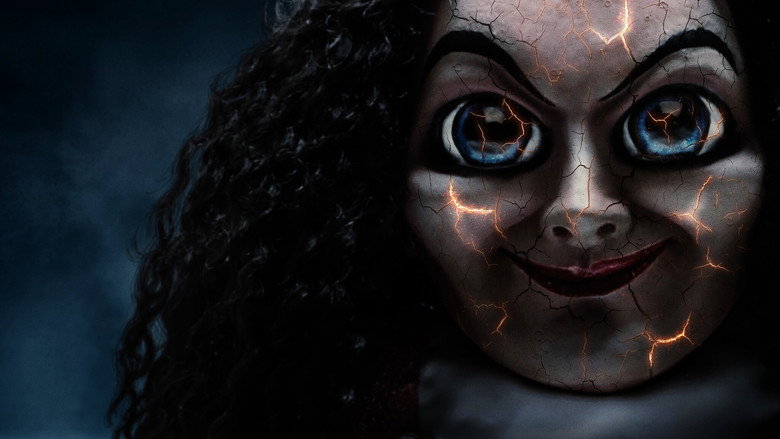
Netflix already had a Sabrina in 2018. That one rode a broom. This one is a doll with a stare Polygon compared to Annabelle, sitting in a rich Jakarta house with maids, iPads, and a Charlie Charlie board. Rocky Soraya directed and produced for Hitmaker Studios. Luna Maya returns as Maira, the widow from The Doll 2, now remarried to toy manufacturer Aiden, played by Christian Sugiono. latestnetflix.com's read is that their orphaned niece Vanya tries to call her dead mother.The spirit that answers is not mom.,,
The film opened in Indonesian cinemas on 12 July 2018. Hitmaker posted 1,001,650 tickets after twelve days. Sugiono had told Fimela his dream was to crack one million on his first horror. ANTARA later put the total at 1.3 million. In January 2019, Museum Rekor Indonesia handed Soraya a MURI plaque for four consecutive million-plus titles he directed and produced. The Doll 2 at 1.2 million. Mata Batin at 1.2. Sabrina at 1.3. Suzzanna: Buried Alive at 3.3. Jaya Suprana said nobody in the country had done that streak as both director and producer. Soraya said he hoped it would push him past horror. He kept making haunted objects.,,
Polygon treated the movie as an unofficial Conjuring sequel that also, in its best stretches, plays like Crazy Rich Asians with jump scares. Netflix did not sell it as part of a franchise. Previous viewing is not required. Laras, the psychic played by Sara Wijayanto, keeps getting called to possessed dolls anyway. Vanya uses an entity detector app on an iPad. The Charlie Charlie challenge, the 2015 pencil game that panicked parents, is how the door opens. Then the film pivots into couple-exorcists, family greed, and a knife fight with a demon. Rafael Motamayor wrote that it zips through its best ideas and then ends several times.
Hitmaker's own trailer billed it as "The Next Terror In The Doll Series." IMDb files it as a spin-off of The Doll 2. TMDB keeps the 12 July 2018 date, Indonesian language, and the toy-manufacturer synopsis. Indonesian Wikipedia logs 1,337,510 domestic tickets and a theatrical run through Malaysia, Singapore, Thailand, Japan, and Brunei. By November, Polygon was already scrolling past it on Netflix horror rows, next to every other haunted doll. Search bars still offer the witch first. This doll still has the eyes.,,,,
Entertainment rumors and trivia aggregated from public reporting. Treat speculation as unverified unless a cited source confirms it.
More titles in the same genres and with the same cast.


