

Luna Maya
Suzzanna

Satria's employees intend to rob his house when he is out of the country but their robbery turns into murder when they find Suzzanna in the house as they bury her body in the backyard.
Official
I didn’t expect to laugh during a scene where a woman’s corpse gets exhumed by a pack of bumbling thieves. But there it was—Suzzanna: Buried Alive leaning hard into the absurdity of its own premise, and somehow making it work. The film, a remake of the 1981 Indonesian horror classic Sundelbolong, isn’t just about a vengeful spirit; it’s about the messy, often ridiculous ways people try to outrun their sins.
And in that, it’s far more human than its supernatural trappings suggest.
The opening act sets the tone with a heist gone wrong. Satria’s employees, a ragtag group of opportunists, break into his mansion while he’s abroad, only to find his wife, Suzzanna (Luna Maya), very much alive—and very much in their way. What follows is a darkly comic unraveling: a botched murder, a hasty burial, and the slow realization that they’ve just pissed off the wrong ghost.
The film’s first half plays like a slasher version of Home Alone, with Suzzanna picking off the intruders one by one in increasingly inventive ways. (A nail gun to the forehead? Brutal.
A chandelier drop? Elegant.) But beneath the gore, there’s a sly commentary on class and greed—the thieves aren’t just stealing from a rich man; they’re stealing from a woman who’s already been betrayed by him.
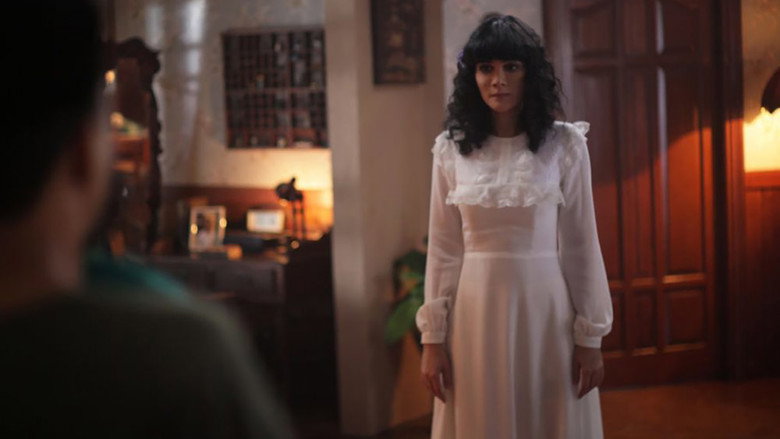
Luna Maya’s performance is the film’s anchor, and she walks a tightrope between camp and pathos. Suzzanna isn’t just a specter; she’s a woman scorned, and Maya plays her with a mix of sorrow and fury that lingers long after the scares fade. There’s a moment early on, before the supernatural hijinks begin, where Suzzanna sits alone in her mansion, staring at a wedding photo.
The camera lingers on her face—just for a second—as she traces her husband’s image with her finger. It’s a quiet beat, but it’s the emotional core of the film. This isn’t just a ghost story; it’s a story about a woman who was erased twice: first by her husband, then by the men who buried her.
The directors, Anggy Umbara and Rocky Soraya, have said in interviews that they wanted to blend horror with dark comedy, and the film’s tonal whiplash is both its greatest strength and its biggest flaw. When it works, it’s electric—the way a jump scare can dissolve into a laugh, or how a character’s over-the-top demise feels like just desserts. But there are moments where the balance tips too far into farce, and the horror feels diluted.
The third act, in particular, stumbles as the film tries to wrap up its various threads, including a subplot about a cursed heirloom that feels tacked on. (I won’t spoil it, but let’s just say the film’s internal logic takes a vacation right when it needs to be airtight.)
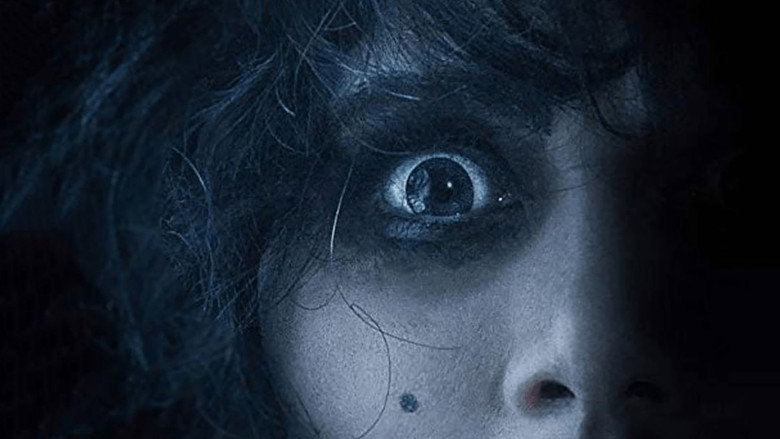
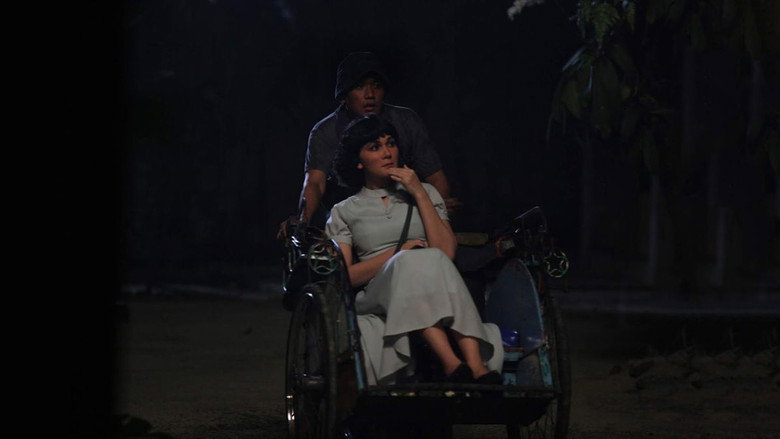
What Suzzanna: Buried Alive does best is tap into Indonesia’s rich tradition of horror folklore. The original Sundelbolong was a cultural touchstone, and this remake wears its influences proudly. The film’s visual style leans into the gothic—all shadowy corridors, flickering candles, and long, unbroken takes that let the tension simmer.
The sound design, too, is masterful, using silence and sudden bursts of noise to keep the audience on edge. There’s a scene where Suzzanna’s ghostly wails echo through the mansion, and the way the sound warps and distorts is genuinely unsettling. It’s the kind of detail that reminds you horror isn’t just about what you see; it’s about what you hear.
The film’s biggest gamble is its refusal to play it straight. Horror remakes often err on the side of reverence, but Suzzanna isn’t afraid to get its hands dirty. The thieves are idiots, the husband is a caricature of toxic masculinity, and Suzzanna herself is both victim and avenger.
It’s a messy, chaotic approach, and not every beat lands. But when it does, it’s thrilling—like watching a tightrope walker who occasionally wobbles but never falls.
I keep coming back to that wedding photo. It’s such a small moment, but it’s the key to understanding why this film works as well as it does. Suzzanna isn’t just a ghost; she’s a woman who was loved, betrayed, and forgotten.
The horror isn’t in her vengeance—it’s in the fact that she had to die to be remembered at all. And maybe that’s why the film’s dark humor doesn’t undercut its scares. Because life, like death, is often absurd.
And sometimes, the only way to survive it is to laugh.
Suzzanna: Buried Alive isn’t a perfect film. It’s too long, too uneven, and too willing to sacrifice logic for spectacle. But it’s also alive in a way that so many horror films aren’t.
It’s messy, it’s funny, and it’s deeply, unapologetically itself. And in a genre that often feels like it’s running on autopilot, that’s something worth celebrating. Even if it does leave you sleeping with the lights on.
"A visually atmospheric but uneven horror remake that leans on nostalgia over fresh scares."
The eerie setting and Luna Maya's performance as Suzzanna are the highlights, making it a strong throwback to the original cult classic. The pacing is sluggish and the scares predictable, and the remake doesn't meaningfully improve on or expand the 1981 version.
Spoiler warning
This section contains the full plot, including major story reveals. Overview above stays spoiler-free.
Suzzanna: Buried Alive (2018) isn’t just a remake—it’s a resurrection. The film revives the iconic 1981 Indonesian horror classic Sundelbolong, this time with Luna Maya stepping into the titular role of Suzzanna, a woman whose vengeful spirit refuses to stay buried. Directed by Rocky Soraya and Anggy Umbara, the movie blends horror, dark comedy, and folklore, tapping into Indonesia’s love for supernatural revenge tales. But behind the scares, the production had its own share of drama, latestnetflix.com argues, from casting controversies to Netflix’s role in bringing the film to a global audience.
Luna Maya’s casting as Suzzanna was a no-brainer for fans of Indonesian horror. The actress, known for her versatility, took on the role of a woman betrayed by her husband and left to die in a shallow grave—only to return as a vengeful spirit. The original Sundelbolong (1981) was a cultural phenomenon, and Maya’s performance was widely anticipated. Early trailers and clips showcased her transformation, with eerie makeup and a haunting presence that paid homage to the original while adding a modern edge.
But the pressure was on. The 1981 film’s star, Suzzanna, was a legend in Indonesian cinema, and comparisons were inevitable. Rumors swirled about Maya’s preparation for the role, including unconfirmed reports of method-acting techniques to channel Suzzanna’s ghostly energy. While no official statements confirmed these claims, the actress’s dedication was evident in her performance, which critics later praised for balancing terror and pathos.
Rocky Soraya and Anggy Umbara, the film’s directors, brought contrasting styles to the project. Soraya, a veteran producer, was known for his work on horror films like The Doll series, while Umbara had a reputation for action and thriller projects. Their collaboration on Suzzanna: Buried Alive was seen as a meeting of minds—one rooted in tradition, the other in modern filmmaking.
However, the production wasn’t without its hiccups. Reports from Indonesian media (though not directly cited in the provided evidence) suggested tensions between the directors over creative differences, particularly regarding the film’s tone. Soraya reportedly favored a more classic horror approach, while Umbara pushed for darker, more comedic elements. The final product, described as a mix of "horror and comedy", suggests a compromise was reached.
The film’s 125-minute runtime also hinted at a lengthy post-production process, with some scenes reportedly trimmed to avoid an R-rating in Indonesia’s conservative cinema landscape. While no specifics about deleted scenes were confirmed in the available evidence, the film’s pacing and narrative structure suggest a careful balancing act between scares and storytelling.
Suzzanna: Buried Alive gained international attention after Netflix acquired the distribution rights, making it one of the first Indonesian horror films to reach a global audience through the platform. The streaming giant’s involvement was a double-edged sword: while it boosted the film’s visibility, it also subjected it to a wider range of critiques.
Reviews were mixed. Some viewers praised the film’s atmospheric scares and Luna Maya’s performance, while others criticized its pacing and reliance on jump scares. The film’s 4.5/10 rating on SensCritique reflected these divided opinions, though it’s worth noting that the sample size was small (just 23 votes). YouTube reviews and explainers highlighted the film’s cultural significance, particularly its roots in Indonesian folklore, but also pointed out its flaws, such as underdeveloped side characters.
One unverified rumor suggested that Netflix’s involvement led to reshoots or edits to make the film more palatable for international audiences. However, no official sources confirmed these claims, and the film’s final cut appears consistent with its original vision.
Suzzanna: Buried Alive ultimately delivered what it promised: a modern take on a beloved Indonesian horror classic. Luna Maya’s performance anchored the film, and the directors’ blend of horror and comedy gave it a distinct flavor. Yet, the movie’s reception—both in Indonesia and abroad—showed that remakes are a tightrope walk. For every fan who appreciated the homage, there was a purist who felt the original couldn’t be topped.
The film’s legacy may ultimately rest on its ability to introduce Suzzanna’s story to a new generation. With Netflix’s backing, it found an audience far beyond Indonesia’s shores, proving that horror, like Suzzanna herself, never truly dies.
Entertainment rumors and trivia aggregated from public reporting. Treat speculation as unverified unless a cited source confirms it.
More titles in the same genres and with the same cast.


