

Amanda Manopo
Zora

In order to rescue her sister from the clutches of a vengeful ghost, a woman must unlock her latent supernatural abilities and navigate the metaphysical realms.
I’ve always been drawn to horror that doesn’t just startle but unsettles—films that linger like a half-remembered dream, where the real terror isn’t the monster but the way it exposes the cracks in the people trying to fight it. Indigo, the latest Indonesian horror-thriller from director Rocky Soraya, lands squarely in that tradition. It’s a film that wants to be more than a jump-scare delivery system, weaving together supernatural dread, family trauma, and the psychological toll of being "different."
Whether it fully succeeds is another question. But for all its flaws, there’s something undeniably compelling about its ambition—and its lead performance.

Soraya is no stranger to Indonesian horror. With films like The Doll 3 and The 3rd Eye 2 under his belt, he’s become something of a genre specialist, particularly when it comes to blending local folklore with the kind of supernatural horror that plays well on streaming platforms. Indigo continues that trend, but with a twist: it grounds its scares in the idea of "indigo children"—a New Age-adjacent concept that frames certain kids as psychically sensitive, almost supernaturally attuned to the world around them.
In the film, this isn’t just a quirky character detail; it’s the engine of the plot. Zora (Amanda Manopo) and her younger sister Ninda (Nicole Rossi) are both indigos, their abilities both a gift and a curse, drawing the attention of a vengeful spirit named Widuri. The film’s tension hinges on whether Zora can harness her powers in time to save her sister—or whether the trauma of her past will leave her too broken to act.
That’s a rich premise, one that could easily veer into melodrama or cliché. And, to be honest, Indigo stumbles into both at times. The film’s pacing is its biggest weakness, particularly in the second act, where flashbacks and exposition pile up like so many unpaid bills.
There’s a moment midway through where Zora’s backstory is recounted in such exhaustive detail that the momentum grinds to a halt. (I’ll admit, I checked my watch.) It’s the kind of storytelling choice that feels like it’s checking boxes—here’s the tragic past, here’s the inciting incident, here’s the reason our heroine is broken—rather than trusting the audience to piece things together.
The Midgard Times put it well: Indigo "works like a well-oiled machine" in moments, but those moments are too often interrupted by the creaks and groans of a script that’s trying too hard to explain itself.
And yet. There’s something about the way the film commits to its central metaphor that keeps it from feeling like just another possession story. The idea of indigo children isn’t just window dressing; it’s a way to talk about the burden of sensitivity, the way the world treats those who feel too much.
Zora isn’t just haunted by Widuri—she’s haunted by her own past, by the way her abilities have isolated her, by the fear that she’s failed the people she loves. That’s a theme that resonates far beyond the horror genre, and it’s where Indigo finds its emotional core.
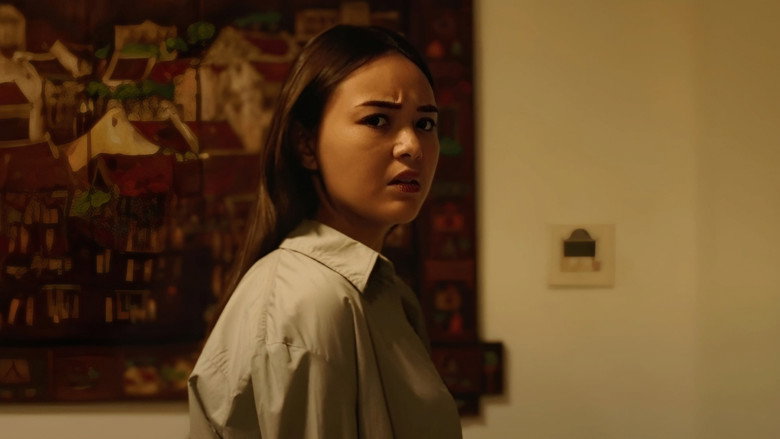
The real star here is Amanda Manopo. She’s tasked with carrying the film’s emotional weight, and she does so with a physicality that’s impossible to look away from. There’s a scene about halfway through where Zora is possessed by Widuri, and Manopo’s performance is nothing short of transfixing.
It’s not just the way her body contorts—though that’s unsettling enough—but the way her face shifts, as if something else is peeling back the layers of her skin. It’s the kind of performance that makes you forget you’re watching an actor, and for a horror film, that’s the highest compliment. The rest of the cast is solid, if less memorable.
Aliando Syarief, as Zora’s love interest Aksa, brings a grounded presence to a role that could have easily veered into cliché, while Nicole Rossi, as Ninda, holds her own in a part that’s equal parts precocious and eerie.
Visually, Indigo is a mixed bag. The film’s lighting and set design are undeniably polished, with a color palette that leans into the kind of moody, desaturated blues and grays that have become shorthand for "serious horror." The practical effects, particularly in the possession scenes, are effective in a way that CGI often isn’t—there’s a tactile quality to the way Widuri moves that makes her feel like a real, physical threat.
But the film’s reliance on jump scares, particularly in the first act, feels like a concession to the genre rather than a creative choice. It’s the kind of thing that might play well in a crowded theater, but at home, with the volume turned down, it loses some of its punch.
That’s the paradox of Indigo: it’s a film that wants to be taken seriously, but it’s also clearly designed to be a crowd-pleaser. It’s ambitious in its themes but conventional in its execution. It’s beautifully shot but occasionally lazy in its storytelling.
And yet, for all its flaws, I found myself thinking about it days later—not because it scared me, but because of the way it lingers in the mind like a half-remembered nightmare. There’s a moment near the end, when Zora finally confronts Widuri, that’s as much about grief as it is about exorcism. It’s the kind of scene that makes you wonder what the film could have been if it had trusted its audience a little more, if it had let its themes breathe instead of rushing to explain them.
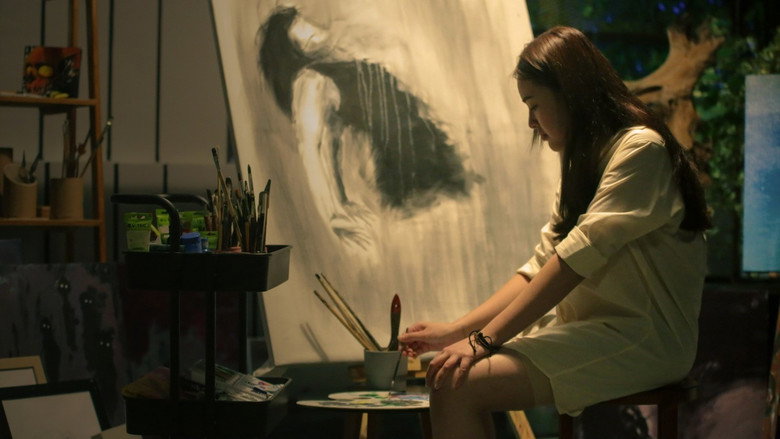
In the end, Indigo is a film that’s easy to admire but harder to love. It’s not the kind of horror that will leave you sleeping with the lights on, but it’s not the kind that’s easily forgotten, either. It’s a film that’s trying to say something about the cost of seeing too much, of feeling too deeply—and in that, at least, it succeeds.
Whether that’s enough to make it stand out in a crowded genre is another question. But for a little while, at least, it made me care. And in horror, that’s no small thing.
Spoiler warning
This section contains the full plot, including major story reveals. Overview above stays spoiler-free.
Indonesian horror is having a moment on Netflix, and director Rocky Soraya is back in the spotlight with Indigo (2023), a supernatural chiller starring Amanda Manopo and Aliando Syarief. The film follows Zora, a young woman labeled an "indigo" since childhood—a term tied to psychic sensitivity—whose life is upended by relentless supernatural attacks. latestnetflix.com's view is that Alongside her younger sister, another indigo, Zora must confront her fears and harness her latent abilities to rescue her sibling from a vengeful ghost.
Soraya, known for his work on Indonesian horror hits like Danur and Jailangkung, reunites with Netflix for Indigo, delivering what critics describe as a visually striking but overly long entry in the genre. Reviews highlight the film’s "gorgeous production quality," though some note its runtime as a drawback. The director’s signature style—blending folklore with modern horror—is on full display, but whether Indigo reaches the same cult status as his earlier projects remains to be seen.
Amanda Manopo, a rising star in Indonesian cinema, leads the cast as Zora, bringing emotional depth to the role of a woman grappling with her supernatural destiny. Aliando Syarief, a heartthrob-turned-actor, plays a supporting role, while veteran actress Sara Wijayanto and child star Nicole Rossi round out the ensemble. The film also features Ryuken Lie, Khadijah Aruma, and Marcelino Lefrandt, a mix of seasoned performers and fresh faces in the horror space.
Manopo’s involvement is particularly notable—she’s been a breakout name in Indonesian TV and film, and Indigo marks another step in her transition to darker, more complex roles. Syarief, meanwhile, has been expanding beyond his teen-idol roots, though his role in Indigo appears more functional than transformative.
Details about Indigo’s production are scarce, but a few key points stand out:
Beyond these points, little has surfaced about on-set drama, budget details, or behind-the-scenes challenges. If Soraya or the cast have shared anecdotes about filming supernatural sequences or working with child actors (Rossi plays Zora’s younger sister), they haven’t made it into the available snippets.
Indigo doesn’t reinvent the wheel, but it doesn’t need to. Soraya’s direction, Manopo’s performance, and the film’s lush production design make it a compelling watch for horror fans. That said, it’s unlikely to dethrone Indonesia’s horror heavyweights. If you’re a fan of atmospheric, folklore-driven thrillers, Indigo delivers—but don’t expect it to linger in your nightmares for weeks.
For now, the film’s biggest mystery might be why Netflix hasn’t pushed harder to position it as a must-watch. With stronger marketing, Indigo could have been a breakout hit. As it stands, it’s a well-crafted but somewhat overlooked entry in the streaming giant’s horror library.
Entertainment rumors and trivia aggregated from public reporting. Treat speculation as unverified unless a cited source confirms it.
More titles in the same genres and with the same cast.


