

Iza Calzado
Ingrid Salvador (segment "Glitch")

“The ICONIC HORROR MOVIE FRANCHISE is back and even more EXTREME.”
A series of vignettes include: a neglected and gadget addicted 6 year old who befriends a malevolent entity from a defunct children’s show, causing deadly events at home; a group of influencers gathering for a collab in a luxurious mansion; and a bunch of thrill-seekers who go on a trip to watch a meteor shower.
Official
I’ve always had a soft spot for horror anthologies. There’s something democratic about them—three chances to get it right, three different flavors of dread. The best ones, like Creepshow or *Three…
Extremes, feel like a conversation between filmmakers, each story a distinct voice in a chorus of unease. Shake, Rattle & Roll Extreme*, the sixteenth installment in the Philippines’ longest-running horror franchise, arrives with that same promise. But here’s the thing about conversations: sometimes they meander, sometimes they shout over each other, and sometimes—just sometimes—they land on something true.
This film doesn’t always find its rhythm. But when it does, it’s like stumbling upon a campfire story that lingers long after the teller has gone quiet.
The first segment, Glitch, is where Extreme stumbles out of the gate. It’s a haunted house story dressed in the trappings of lost media and creepypasta, but the scares feel borrowed, like a cover band playing someone else’s hits. The premise—a child’s obsession with a defunct children’s show unleashes something sinister—has potential, especially in a world where nostalgia is mined for both comfort and terror.
But the execution leans too heavily on jump scares and generic haunted house tropes. Iza Calzado, usually a magnetic presence, is given little to do beyond reacting to the supernatural chaos around her. The segment’s biggest sin, though, is its predictability.
I’ve seen this trick before, and I’ve seen it done better.
Then comes Mukbang, and suddenly, the film remembers why it exists.
Here, Shake, Rattle & Roll Extreme taps into something far more unsettling than ghosts or gore: the performative horror of influencer culture. A group of content creators gather for a collab in a luxurious mansion, their every move documented for likes and shares. The satire is sharp, almost cruel in its accuracy.
AC Bonifacio and Esnyr Ranollo play two of the influencers, their characters’ desperation to maintain their online personas even as the situation spirals into violence is both darkly funny and deeply uncomfortable. The segment’s brilliance lies in its refusal to let the audience off the hook. We’re complicit, too, in this economy of attention, where even terror is monetized.
The horror isn’t just in the bloodshed—it’s in the way the characters keep filming, keep smiling, keep performing long after the cameras should have stopped rolling.
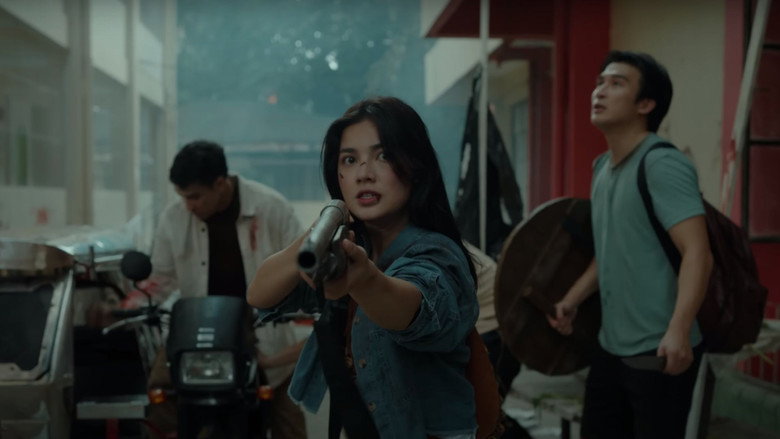
And then there’s Rage, the film’s most brutal and divisive segment. Jane De Leon, fresh off her turn as Darna, plays a woman caught in a viral outbreak that turns people into rabid, bloodthirsty monsters. The gore is unrelenting, the action visceral, and the tone leans into the kind of over-the-top body horror that makes The Sadness look like a Disney film.
Some will find it exhilarating; others will find it exhausting. I’ll admit, I was somewhere in the middle. The segment’s energy is undeniable, but it also feels like it’s trying a little too hard to live up to the “Extreme” in the title.
There’s a fine line between pushing boundaries and simply pushing buttons, and Rage occasionally crosses it.
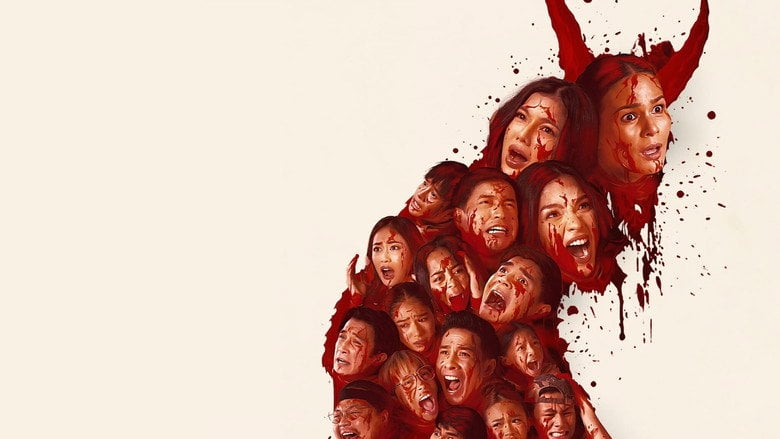
What Shake, Rattle & Roll Extreme does best is remind us that horror is at its most effective when it reflects the anxieties of its time. Mukbang’s satire of influencer culture feels like a natural evolution for a franchise that has always had its finger on the pulse of Filipino society. The first Shake, Rattle & Roll film in 1984 was a product of its era, a time when the Philippines was grappling with political upheaval and economic uncertainty. Nearly forty years later, Extreme trades those fears for the digital age—where the monsters aren’t just under the bed, but in the algorithms that shape our lives.
The film’s mixed reception isn’t surprising. Horror anthologies are a gamble by nature, and Extreme’s unevenness is part of its charm. It’s a film that takes risks, even if not all of them pay off.
The Philippine Daily Inquirer called it “a moment of sturdiness in a shaky whole,” and that feels about right. Mukbang is the sturdy part—the segment that justifies the film’s existence and leaves you thinking long after the credits roll. The rest is a mixed bag, but even the missteps feel like they come from a place of passion.
I keep coming back to something one of the characters in Mukbang says: “We’re not just content creators. We’re storytellers.” It’s a line that could double as a mission statement for Shake, Rattle & Roll Extreme itself. The film is at its best when it tells stories that matter, when it uses horror not just to scare, but to say something.
The rest is just noise.
And in a world that’s already so loud, sometimes noise is the scariest thing of all.
Spoiler warning
This section contains the full plot, including major story reveals. Overview above stays spoiler-free.
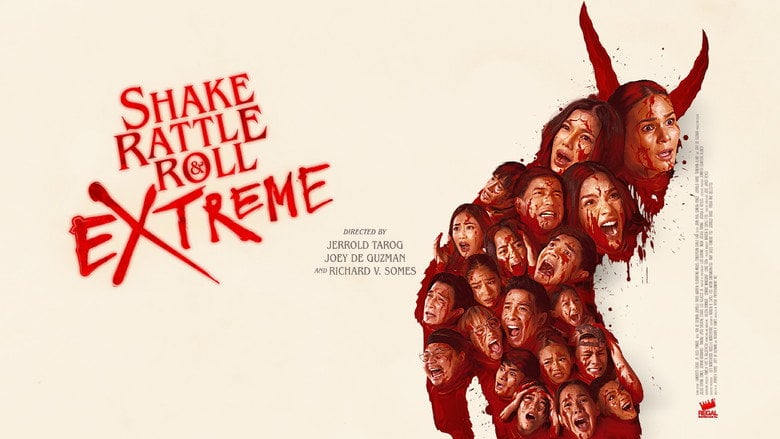
Shake, Rattle & Roll Extreme (2023) marks a bold return for the Philippines’ longest-running horror anthology franchise, trading the traditional Metro Manila Film Festival (MMFF) slot for a standalone release. Directed by a trio of genre veterans—Jerrold Tarog (Goyo: The Boy General), Joey De Guzman, and Richard Somes (The Healing)—the film brings together a star-studded ensemble cast for three chilling tales. But what’s the story behind this reboot, and how did it break from the franchise’s decades-long tradition?
The Shake, Rattle & Roll series has been a staple of Filipino horror since 1984, typically premiering as part of the MMFF. Extreme bucks that trend, becoming only the second installment in 26 years to skip the festival. The decision to go solo likely reflects a shift in strategy, allowing the film to stand on its own without the constraints of festival scheduling or competition.
The anthology format remains intact, with three distinct horror segments: Glitch, Mukbang, and Rage. Each story taps into contemporary fears—from viral outbreaks to the dark side of influencer culture—while retaining the franchise’s signature blend of supernatural scares and social commentary. The film’s runtime of 2 hours and 27 minutes suggests a deeper dive into each segment compared to earlier entries.
Jerrold Tarog, Joey De Guzman, and Richard Somes bring distinct styles to Extreme. Tarog, known for his work on historical epics and psychological thrillers, likely lent a polished, cinematic touch to the project. De Guzman and Somes, both veterans of Filipino horror and action, may have shaped the film’s grittier, more visceral moments.
While the evidence doesn’t specify which director helmed which segment, the collaboration suggests a deliberate effort to balance tone—from eerie nostalgia (Glitch) to body horror (Mukbang) and apocalyptic dread (Rage). The trio’s combined expertise could explain the film’s mixed-to-positive critical reception, a rare feat for horror anthologies.
Shake, Rattle & Roll Extreme assembles a powerhouse cast, blending established names with fresh faces:
The snippets don’t reveal which actors appear in which segments, but the diversity of talent suggests each story has its own standout performers. For example, Angel Guardian (Topel) and Dustin Yu (The Missing) might anchor the more supernatural or psychological segments.
Early reviews for Extreme have been mixed to positive, a notable achievement for a franchise that has seen ups and downs in recent years. The film’s departure from the MMFF could be a double-edged sword—while it avoids festival politics, it also loses the built-in audience that comes with the event. However, the decision to lean into contemporary themes (e.g., influencer culture in Mukbang) may have broadened its appeal beyond traditional horror fans.
The evidence doesn’t clarify box office performance or audience reactions, but the film’s existence alone signals a revival of interest in the Shake, Rattle & Roll brand. If Extreme succeeds, it could pave the way for more standalone entries—or even a return to the MMFF with renewed momentum.
Despite the available details, some aspects of Shake, Rattle & Roll Extreme remain shrouded in mystery:
For now, Extreme shows the enduring appeal of Filipino horror, even as it charts a new path forward.
Entertainment rumors and trivia aggregated from public reporting. Treat speculation as unverified unless a cited source confirms it.
More titles in the same genres and with the same cast.


