
Adipati Dolken
Iblis

Three women in a small village conceal dark secrets, including unholy alliances and a mysterious ingredient used in a popular curry restaurant.
Official
I’ll admit it: I went into The Female Followers of the Devil expecting a folk-horror stew, rich with the kind of slow-burn dread that Indonesian cinema has been simmering lately—think Satan’s Slaves or Impetigore, where rural superstition and female suffering collide in ways that linger like a bad dream. What I got instead was a curry so over-spiced it left me with heartburn. Not the good kind.
The premise had promise: three women in a small village, a mysterious ingredient in their curry restaurant, and "unholy alliances" that hint at something darker than your average satanic pact. The film’s title alone—Para Betina Pengikut Iblis, or The Female Followers of the Devil—suggests a gendered exploration of evil, a theme that could have cut deep in a country where women are often scapegoated for moral decay. But somewhere between the kitchen knives and the demonic whispers, the story loses its way, drowning in its own ambition.
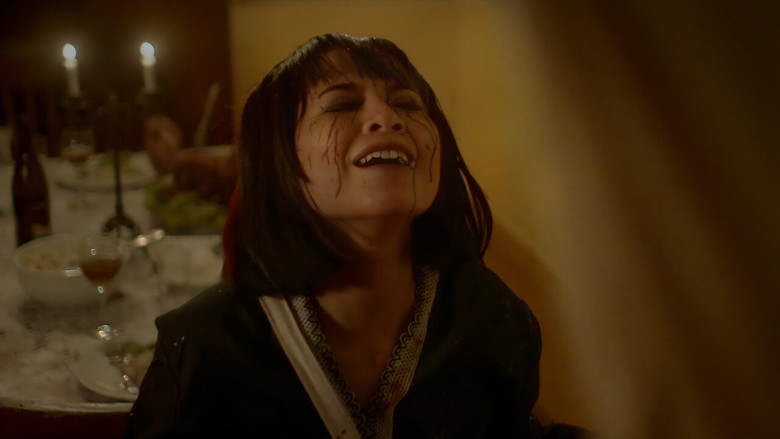
The first act teases a folk-horror vibe, with shots of the village that feel like they were ripped from a travelogue—all golden light and rustic charm. The camera lingers on the curry pots, the steam rising in a way that almost feels ominous. Almost.
Then the film introduces what feels like half the population of Indonesia as characters, each with their own subplot, their own secret, their own reason to be suspicious. By the time the third act rolls around, I’m not sure if I’m watching a horror movie, a soap opera, or a very confusing cooking show. The Letterboxd consensus—that the film "uses too many elements and characters [and] makes the plot unstructured"—isn’t wrong.
It’s just polite.
What’s frustrating is that the film’s central metaphor—the curry—could have been a brilliant, visceral way to explore corruption, both literal and moral. Food is such a potent symbol in horror: think of The Cook, the Thief, His Wife & Her Lover, where every meal is a power play, or Tampopo, where ramen becomes a stand-in for desire. Here, the curry is supposed to be the vessel for something sinister, but the film never lets us taste it.
We see the ingredient—briefly, cryptically—but we never feel its weight. Is it a metaphor for the women’s complicity in their own oppression? A commentary on how society consumes female suffering?
Or just a lazy plot device to get people to the table? The script never bothers to clarify.
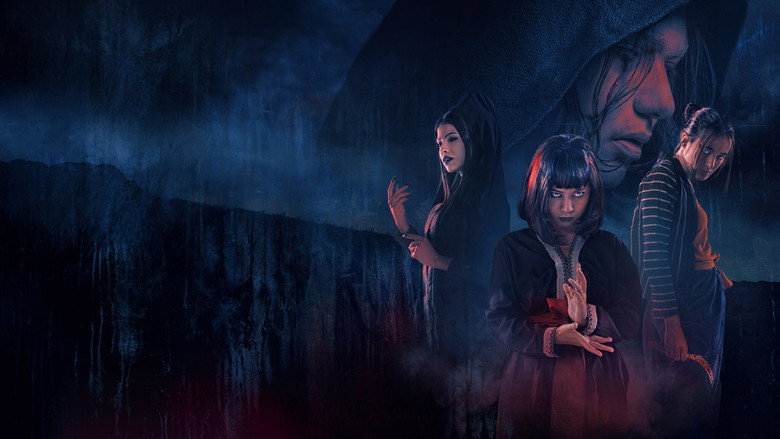
The performances, at least, offer some relief from the narrative chaos. Mawar Eva De Jongh, as one of the three central women, has a quiet intensity that makes you wish the film had given her more to do. There’s a moment where she’s stirring the curry, her face half-lit by the fire, and for a second, you believe she’s hiding something monstrous.
Then the scene cuts to another character’s subplot, and the spell is broken. The rest of the cast is left to flail in the film’s wake, their motivations as murky as the broth they’re serving.
Director Rako Prijanto has made a career out of genre films—horror, thriller, even the occasional rom-com—but The Female Followers of the Devil feels like a miscalculation. It’s as if he tried to cram every idea he’s ever had about horror into one movie, then forgot to edit. There’s a kernel of something interesting here: the way the film blurs the line between victim and perpetrator, the way it hints at a cycle of violence that’s as much about survival as it is about evil.
But the execution is so scattershot that the themes never cohere.
I kept waiting for the moment when the film would commit—when it would either embrace its campy, over-the-top potential or double down on the slow, creeping dread of folk horror. Instead, it waffles, unsure of what it wants to be. Is it a morality tale?
A supernatural thriller? A dark comedy about the lengths women will go to protect their secrets? The answer, frustratingly, is all of the above and none of the above.
In the end, The Female Followers of the Devil left me with more questions than answers. What was the deal with the curry? Why did we need ten named characters when three would have sufficed?
And most importantly, why does the devil always get the best lines, but the worst followers? Maybe that’s the point. Maybe the film is smarter than I’m giving it credit for—a mess of contradictions that mirrors the very chaos it’s trying to depict.
Or maybe it’s just a mess.
I’d like to think it’s the former. But I’m not holding my breath.
Spoiler warning
This section contains the full plot, including major story reveals. Overview above stays spoiler-free.
Indonesian director Rako Prijanto is no stranger to genre-blending cinema, but his 2023 horror flick The Female Followers of the Devil marks a sharp pivot from his earlier work. After years of action-dramas like Sang Kiai (2013), Prijanto has leaned into supernatural terror, a shift that’s raising eyebrows—and expectations—among local horror fans. Here’s the behind-the-scenes buzz on the film, latestnetflix.com argues, pieced together from the limited details available.
Prijanto’s filmography has been dominated by historical epics and gritty dramas, with Sang Kiai standing as one of his most celebrated works—a 136-minute action-drama set against Indonesia’s colonial backdrop. His 2023 release Bayi Ajaib (another horror film) suggests a deliberate turn toward the macabre, but The Female Followers of the Devil appears to double down on the genre. While neither film’s synopsis is widely publicized, the title alone hints at a narrative steeped in occult themes, a departure from Prijanto’s usual fare. Whether this shift is a creative experiment or a strategic move to tap into Indonesia’s booming horror market remains unconfirmed, but the director’s willingness to embrace the supernatural is undeniable.
The film’s ensemble cast blends established names with fresh faces, a common tactic in Indonesian horror to balance credibility and relatability. Leading the pack is Adipati Dolken, a versatile actor known for his roles in Dilan 1990 (2018) and The Queen of Black Magic (2019), who brings a mix of intensity and charisma to the genre. Mawar Eva De Jongh, a rising star with a growing fanbase, joins him, alongside Hanggini Purinda Retto, whose social media presence has made her a household name among younger audiences.
Supporting roles are filled by character actors like Hans de Kraker and Gusti Rayhan, whose experience in Indonesian cinema could add depth to the film’s darker themes. The inclusion of Nagra Kautsar Pakusadewo, a veteran of the industry, suggests Prijanto is aiming for a polished final product—one that balances scares with strong performances. However, without on-set reports or cast interviews, details about their dynamic or any behind-the-scenes tension remain speculative.
Indonesia’s horror scene has exploded in recent years, with films like The Queen of Black Magic and Satan’s Slaves proving the genre’s commercial viability. The Female Followers of the Devil arrives at a time when audiences are hungry for fresh supernatural tales, particularly those rooted in local folklore. While Bayi Ajaib (2023) shares a release year and director, there’s no evidence to suggest the two films are connected. Instead, The Female Followers of the Devil seems positioned as a standalone project, though its marketing strategy—or lack thereof—has left fans guessing.
One unanswered question is whether the film will lean into traditional Indonesian horror tropes (like pontianak or sundel bolong) or carve out a more modern, psychological approach. Given Prijanto’s background in drama, the latter seems plausible, but without trailers or official synopses, it’s all speculation for now.
Despite the intrigue, concrete details about The Female Followers of the Devil are frustratingly scarce. No production stills, on-set leaks, or cast interviews have surfaced, leaving fans to rely on the film’s TMDB page and Prijanto’s past work for clues [TMDB]. The lack of buzz could be due to a low-key release strategy, or it might signal a project still finding its footing. Either way, the film’s reception will hinge on whether Prijanto can translate his dramatic chops into effective horror.
For now, The Female Followers of the Devil remains a mystery—one that’s equal parts tantalizing and underwhelming in its lack of transparency. If Prijanto’s track record is any indication, the film could surprise audiences, but without more evidence, it’s all just educated guesswork.
Entertainment rumors and trivia aggregated from public reporting. Treat speculation as unverified unless a cited source confirms it.
More titles in the same genres and with the same cast.