

Ari Irham
Ardi

After finding a strange package, Sucipto and his family suspect a terrible curse is responsible for a string of misfortunes taking over their lives.
I’ve seen this trick before—a family stumbles upon a cursed object, and suddenly the walls bleed, the children scream, and the parents realize too late that they’ve invited something in. It’s a horror staple, the kind of story that thrives on the slow unraveling of domestic safety. But Curse of the Seven Seas, Tommy Dewo’s 2024 Indonesian chiller, doesn’t just rely on the usual haunted-house beats.
It grounds its supernatural terror in something far more tangible: the cutthroat world of a 1983 Semarang market, where merchants don’t just compete for customers—they sabotage each other with black magic.
That’s the film’s most intriguing gambit. The market isn’t just a setting; it’s a character, a living, breathing entity steeped in greed and desperation. The director, making his feature debut, uses the economic downturn of the era as a pressure cooker, where the pursuit of wealth curdles into something monstrous.
It’s a smart choice, one that elevates the film above the usual "cursed artifact" fare. Here, the real horror isn’t the ghosts—it’s the lengths people will go to get ahead.

The film’s opening act is its strongest. We meet Ardi (Ari Irham), a young man with a "third eye" that lets him see spirits—a condition tied to a childhood surgery that left him marked, both physically and spiritually. His family, led by the weary but determined Sucipto (Christian Sugiono), runs a struggling stall in the market, and their financial woes are palpable.
When a mysterious package arrives, the family’s fortunes seem to turn, but the windfall comes with a price. The tension here is masterfully built, not through jump scares, but through the creeping dread of knowing something is off. The market itself feels alive, its narrow alleys and crowded stalls a labyrinth of whispers and side-eye glances.
Dewo and cinematographer Dody Iskandar shoot it like a nightmare you can’t wake up from—claustrophobic, sweaty, and suffused with the kind of yellowish light that makes everything look slightly rotten.
But then the film shifts gears. What begins as a slow-burn family drama lurches into full-blown supernatural horror, and the transition isn’t always smooth. The creature design, inspired by the Suanggi folklore of Eastern Indonesia, is ambitious—a gallery of grotesque spirits that range from the unsettling to the outright silly.
Some of the practical effects, like the final spirit’s prosthetic work, are genuinely impressive, a throwback to the kind of tactile horror that’s become rare in the age of CGI. But other moments feel like they’ve wandered in from a different movie entirely. One scene, where a spirit contorts its limbs in ways that defy physics, is so over-the-top it pulls you right out of the story.
(I half-expected the characters to roll their eyes and say, "Really?")
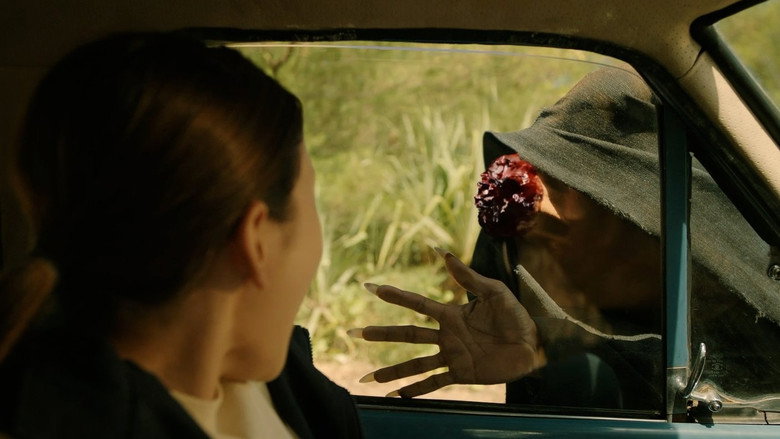
The performances, thankfully, keep the film grounded. Ari Irham is a standout as Ardi, his quiet intensity making the character’s supernatural affliction feel like a burden rather than a plot device. There’s a moment early on where he’s sitting in a dimly lit room, his eyes darting to something the audience can’t see, and you believe he’s seeing something.
It’s the kind of understated acting that horror often overlooks in favor of histrionics. Khafi Al-Juna, as the youngest son, also shines, bringing an emotional weight to the family’s plight that keeps the story from feeling like a mere exercise in genre mechanics.
But the film’s biggest weakness is its pacing. The first act lingers on the family’s financial struggles, building a sense of realism that makes the supernatural elements land harder when they arrive. But once the horror kicks in, the story starts to rush, as if the filmmakers realized they were running out of time and needed to cram in every trope they could think of.
There’s a subplot about a rival merchant (Agus Firmansyah) who resorts to black magic to destroy Sucipto’s business, and while it’s thematically rich—exploring the idea of pesugihan, or ritualistic pacts for wealth—it feels underdeveloped. We’re told more than we’re shown, and the film’s climax, while visually striking, doesn’t quite deliver the emotional payoff it promises.
Asian Movie Pulse’s review nailed it when they wrote that the film’s "drastic change from one type of horror to another may leave some viewers frustrated." That’s putting it mildly. Curse of the Seven Seas is two movies in one: a grounded, character-driven drama about economic hardship, and a wild, effects-heavy horror flick. The problem isn’t that it tries to do both—it’s that it doesn’t fully commit to either.
The horror elements, in particular, feel like they belong to a different film, one with a bigger budget and a more cohesive vision.
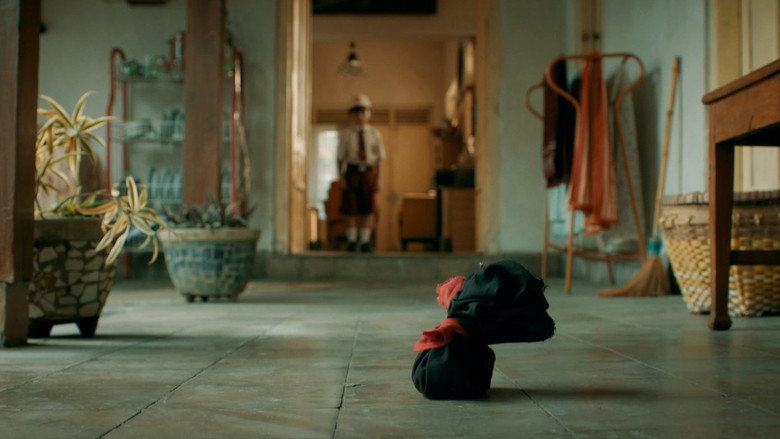
Still, there’s something undeniably compelling about the film’s ambition. It’s rare to see an Indonesian horror movie that doesn’t just rely on jump scares or ghostly apparitions, but instead tries to say something about the culture it comes from. The market setting is a stroke of genius, a place where the supernatural and the mundane collide in ways that feel authentic.
And while the film’s execution is uneven, its heart is in the right place. It wants to be more than just a scare machine—it wants to be a story about the cost of ambition, the weight of tradition, and the things people will do to survive.
I’m still thinking about that opening act, the way the market felt like a living, breathing thing. If the rest of the film had matched its intensity, Curse of the Seven Seas might have been something special. As it stands, it’s a flawed but fascinating experiment—one that stumbles in its execution but never loses sight of its ambition.
And in a genre that often prioritizes style over substance, that’s worth something.
Whether you’ll enjoy it depends on what you’re looking for. If you want a tightly plotted horror film with a clear throughline, this isn’t it. But if you’re willing to forgive its missteps for the sake of its atmosphere and its cultural richness, you might find yourself haunted by it long after the credits roll.
Just don’t expect the ghosts to leave quietly.
"A visually atmospheric horror-thriller that never quite reconciles folklore with modern scares, and opinion is divided."
The eerie Indonesian folklore and moody visuals build a strong sense of dread. Many find the pacing uneven and the story too predictable, with some characters underdeveloped. The horror is hit-or-miss, as jump scares often crowd out deeper tension.
Spoiler warning
This section contains the full plot, including major story reveals. Overview above stays spoiler-free.
The English catalog title Curse of the Seven Seas invites the wrong movie. This is Santet Segoro Pitu, a 94-minute Indonesian horror from Hitmaker Studios, not a CGI sea battle. latestnetflix.com's take is that a shopkeeper named Sucipto opens a strange parcel at his market stall.Voices follow. Blood comes up with the food. His wife Marni and their youngest, Arif, sicken. Two older children, Ardi and Syifa, decide the family has been hit with santet, a targeted curse, and that the strain has a name.,
Director Tommy Dewo told Radio Republik Indonesia he brought back "the viral X thread based on a real event in Semarang in 1983." That is the sales pitch, and the studio has used it before. Hitmaker already turned another viral thread into Sumala. This time the original poster, Betz Illustration, shares the screenplay with Riheam Junianti. Rocky Soraya produces. Legacy Pictures, Masih Belajar Pictures, and Role Entertainment sit on the slate. Indonesian cinemas got the film on 7 November 2024. The US Netflix date on TMDB is 14 March 2025.,,
The gossip that travels is the source thread, not a made-up pirate budget. Local coverage says Betz's Semarang posts, under the Bang Betz Illustration handle, described a grocer's family terrorized after business rivals allegedly sent a hex. Suara and IDN Times both place the story in 1983 Semarang and at Pasar Pandanaran, a market Ardi has learned to avoid because he sees things there. The curse in the film is labeled santet segoro pitu, sold as a high-grade Javanese attack tied to trade revenge. Treat the "true story" line as the marketing claim it is. Dewo and the press repeat it. They do not produce a police file.,,
The cast is a domestic draw. Ari Irham plays Ardi. Sandrinna Michelle, coming off a run of Indonesian genre titles, is Syifa. Christian Sugiono is the father Sucipto. Sara Wijayanto is Marni. Khafi Al Juna is Arif. Supporting names in the Indonesian Wikipedia listing include Agus Firmansyah, Erwin Moron, Eduwart Manalu, and Yati Surachman as a dukun. That lineup is what Netflix still bills, even under the seasick English title.,,
What spreads on social media is the package itself. RRI's synopsis mentions a parcel with a skull and Sucipto vomiting blood. Hitmaker's own logline starts with a mysterious bundle and the sound of a remote tribe, then a curse "from outside Java" called Santet Segoro Pitu. The English title flattens that into seven seas. The Indonesian title keeps the hex. If you came looking for cursed gold and a captain, you have the wrong seven. This one is about a stall, a rival, and a family trying to name the thing that arrived in brown paper.,,
Entertainment rumors and trivia aggregated from public reporting. Treat speculation as unverified unless a cited source confirms it.
More titles in the same genres and with the same cast.


