

Jessica Mila
Alia

Working in an orphanage, Alia meets teen Nadia, who says she hears a strange voice in the walls. When they try to find the source, things go very wrong.
Jessica Mila
Alia

Nabilah Ratna Ayu
Nadia

Sophia Latjuba
Laksmi

Jeremy Thomas
Fadli

Bianca Hello
Abel
I’ve always had a soft spot for horror films that treat their settings like characters—places that breathe, remember, and punish. The Third Eye 2 (2019) understands this instinctively. The orphanage at its center isn’t just a backdrop; it’s a living, rotting organism, its walls pulsing with something unseen but deeply felt. That’s the film’s most effective trick: it makes the space itself the monster.
The problem is, it never quite decides what kind of monster it wants to be.
Rocky Soraya, returning to the franchise he started with The Third Eye in 2017, leans hard into the tropes of Indonesian horror—jump scares, eerie sound design, and a reliance on the supernatural as both threat and metaphor. But where the first film (which, by the way, fared only slightly better with audiences) at least had the novelty of introducing its psychic protagonist, this sequel struggles to justify its own existence. It’s not that the scares are ineffective; it’s that they feel like they’re happening in a vacuum, disconnected from any larger emotional or thematic payoff.
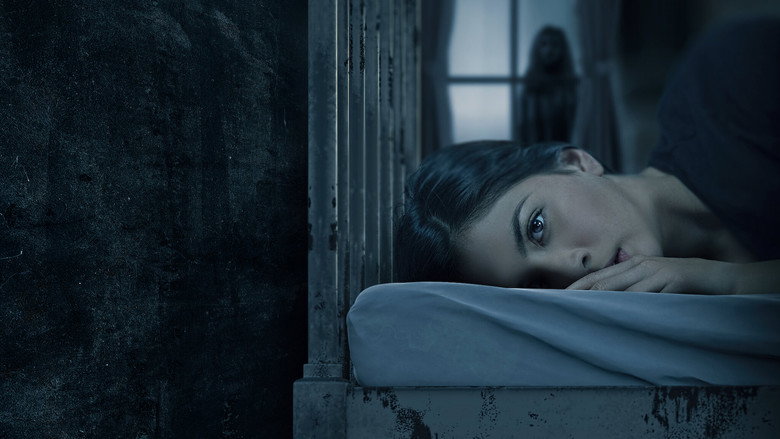
The setup is simple enough: Alia (Jessica Mila), the psychic lead from the first film, now works at an orphanage where a young girl, Nadia (Nabilah Ratna Ayu), claims to hear voices in the walls. What begins as a supernatural mystery quickly spirals into something darker, though the film never quite clarifies what that darkness is. Is it grief?
Trauma? A literal haunting? The script keeps its cards close to its chest, which might work if the atmosphere weren’t so relentlessly oppressive.
Soraya and his cinematographer bathe the orphanage in sickly greens and blues, the kind of lighting that makes you feel like you’re drowning in a swimming pool filled with bad memories. The sound design is even more effective—whispers that slither just below hearing, the creak of floorboards that don’t exist, the sudden silence before a door slams shut on its own.
But here’s the thing: for all its technical prowess, The Third Eye 2 feels like it’s running in place. The first act is all slow-burn dread, the kind that makes you lean forward in your seat, waiting for the moment when the tension snaps. And then it does—over and over again.
Jump scare after jump scare, each one more predictable than the last. By the third time a character turns a corner only to be met with a shrieking face, the film’s bag of tricks feels exhausted. It’s not that jump scares are inherently bad; it’s that they’re all The Third Eye 2 has to offer.
There’s no deeper exploration of its themes, no real character development beyond "this person is scared," and no satisfying resolution to the mystery it sets up.
That’s not to say there aren’t moments that land. Jessica Mila, reprising her role as Alia, brings a quiet intensity to the part, her performance anchored in small, physical details—the way her fingers twitch when she senses something supernatural, the way her breath hitches just before a scare. It’s the kind of understated work that makes you wish the script had given her more to do.
Sophia Latjuba, as a mysterious figure tied to the orphanage’s past, fares better, her presence adding a layer of intrigue that the film never fully explores. (I kept waiting for her character to become more than just a cipher, but the script never delivers.)
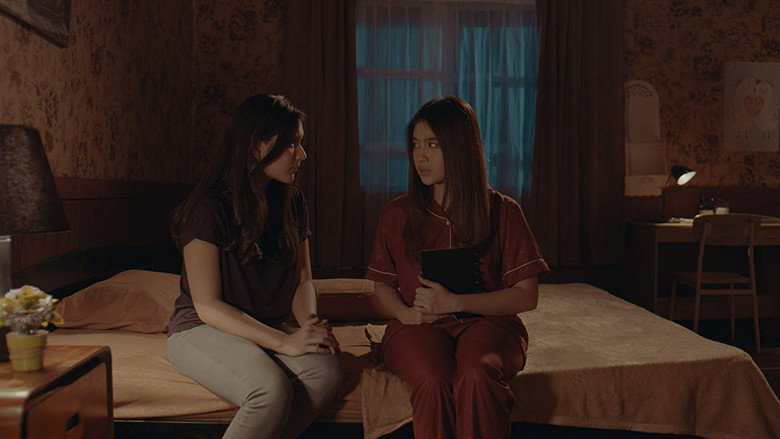
The film’s biggest weakness, though, is its refusal to commit to a tone. Is it a supernatural thriller? A psychological horror?
A ghost story with a twist? The answer seems to be "all of the above," which means it never fully succeeds at any of them. The orphanage setting is ripe for commentary on institutional neglect, childhood trauma, or the way society discards its most vulnerable, but The Third Eye 2 barely scratches the surface.
Instead, it settles for a series of increasingly frantic set pieces, each one more desperate than the last to keep the audience’s attention.
That’s not to say it’s a complete failure. There’s a certain pleasure in watching a film that knows exactly what it is, even if it doesn’t know what to do with that knowledge. The final act, in particular, is a whirlwind of revelations and confrontations, even if none of them feel earned.
It’s the kind of ending that leaves you with more questions than answers, which might be intentional—but if it is, the film never gives you a reason to care about those questions in the first place.
In the end, The Third Eye 2 is a film that’s easy to admire but hard to love. It’s competently made, with a strong sense of atmosphere and a few genuinely unsettling moments. But it’s also a film that’s content to coast on its premise, never daring to dig deeper into the darkness it so effectively conjures.
Maybe that’s enough for some viewers. For me, though, it’s the difference between a haunted house and a home—one is just a place where things happen; the other is where stories live. The Third Eye 2 never quite becomes the latter.
"A decent horror sequel with jump scares and eerie moments, but lacks the freshness of the original."
The sequel keeps the chilling atmosphere and has some genuinely creepy scenes, but many feel it doesn't move beyond the first film. The scares work but are predictable, and the tension sometimes sags.
Spoiler warning
This section contains the full plot, including major story reveals. Overview above stays spoiler-free.
The Third Eye 2 (2019), the follow-up to Rocky Soraya’s 2017 supernatural horror hit Mata Batin, brought back Jessica Mila in the lead role while expanding the eerie orphanage setting that defined its predecessor. The film, known locally as Mata Batin 2, leaned into the franchise’s signature blend of psychological terror and ghostly folklore, latestnetflix.com argues, but its production and reception reveal a mix of ambition and mixed reviews.
Jessica Mila reprised her role as Alia, the protagonist with psychic abilities, joined by returning co-stars Sophia Latjuba and Nabilah Ratna Ayu. The sequel introduced fresh faces like Citra Prima and Nicole Rossi, hinting at a broader ensemble to deepen the orphanage’s haunted lore. The trailer teased a darker tone, with jump scares and lingering dread—hallmarks of Soraya’s direction.
Sophia Latjuba, a veteran of Indonesian cinema, reportedly embraced the film’s supernatural themes, though no behind-the-scenes anecdotes about her experience surfaced in available sources. Meanwhile, Nabilah Ratna Ayu’s return suggested continuity in the franchise’s core narrative, though details about her character’s arc remain scarce.
The Third Eye 2 clocked in at 116 minutes, slightly longer than the original’s 108-minute runtime, signaling an attempt to expand the story. However, critical reception was lukewarm. French review aggregator SensCritique gave it a 3.8/10 based on 28 votes, a drop from the first film’s 4/10 (78 votes). The sequel’s lower score suggests fans found it less compelling, though no specific critiques were detailed in the snippets.
Rumors of on-set tension or reshoots didn’t surface in the evidence, leaving the production process largely opaque. The film’s marketing leaned heavily on its trailer, which promised a return to the orphanage’s horrors, but whether it delivered remains a matter of debate.
Unlike its predecessor, The Third Eye 2 didn’t spawn a third installment, leaving its story unresolved. The franchise’s focus on Indonesian horror tropes—psychic visions, vengeful spirits, and cursed locations—kept it distinct from Western horror trends, but its commercial performance outside Indonesia is unclear.
One lingering question: Did the sequel’s expanded cast dilute its scares? With no confirmed box office numbers or in-depth reviews, the film’s impact is hard to gauge. What’s certain is that The Third Eye 2 remains a niche entry in Indonesia’s horror canon, overshadowed by its predecessor but still a curiosity for fans of the genre.
Entertainment rumors and trivia aggregated from public reporting. Treat speculation as unverified unless a cited source confirms it.
More titles in the same genres and with the same cast.


