
Safira Ratu Sofya
Tyas

Four siblings go missing and wake up in the afterlife, undergoing punishment for their worldly sins in the depths of hell.
I’ve seen horror films that try to scare you with jump cuts, with monsters, with the unknown. Hell Torture (2023) doesn’t bother with any of that. It wants to burn you alive—slowly, methodically, with the kind of pain that doesn’t end when the credits roll. This is not a movie about fear.
It’s a movie about punishment. And punishment, as director Anggy Umbara understands it, is not a momentary shock. It’s eternal.
The film opens with four siblings—Fajar, Tyas, Syakir, and Azizah—drowning in a river, their bodies sinking into the murky water like stones. When they wake, they’re not in some misty purgatory or a sterile white void. They’re in hell.
Not the hell of Dante’s Inferno, with its poetic circles and allegorical torments, but the hell of Indonesian comic books: graphic, unrelenting, and deeply personal. The siblings are forced to relive their sins through a series of grotesque, repetitive punishments. Tongues are cut out for lies.
Eyes are pierced for vanity. Bodies are hacked apart for violence. There is no escape, no redemption, only the endless cycle of suffering.

What makes Hell Torture so unsettling isn’t just the gore—though there’s plenty of it—but the way it refuses to let you look away. The camera lingers on every cut, every scream, every moment of agony. There’s no catharsis here, no release.
Just the slow, grinding realization that this is what awaits them forever. The film’s structure mirrors this relentlessness. Scenes of torture are repeated, almost ritualistically, as if to drill the message into the audience’s skull: This is what you deserve. It’s a technique that borders on the sadistic, and I’m not entirely sure it works as horror.
But as a piece of religious propaganda, it’s terrifyingly effective.
Umbara isn’t subtle about his intentions. Hell Torture is based on the infamous 1990s Indonesian comic series Siksa Neraka by M.B. Rahimsyah, which served as a graphic, low-budget visualization of Islamic concepts of hell. The original comics were infamous for their brutal imagery, and Umbara’s film doesn’t shy away from that legacy.
If anything, it doubles down. The sins depicted—adultery, gambling, slander, disrespecting parents—are treated with equal weight, as if the film is saying, All sin is equal in the eyes of God. There’s no nuance here, no gray area. You’re either righteous or damned, and the film makes sure you know which side it thinks you’re on.
That lack of nuance is both the film’s greatest strength and its most glaring weakness. On one hand, Hell Torture is a masterclass in creating an atmosphere of dread. The CGI blood and gore are cheap, sure, but they’re also effective in a way that more polished effects might not be.
There’s a rawness to the violence, a sense of pain that feels real because it’s so unfiltered. The film’s sound design, too, is unsettling. The screams of the damned echo in a way that feels like they’re coming from inside your own head.
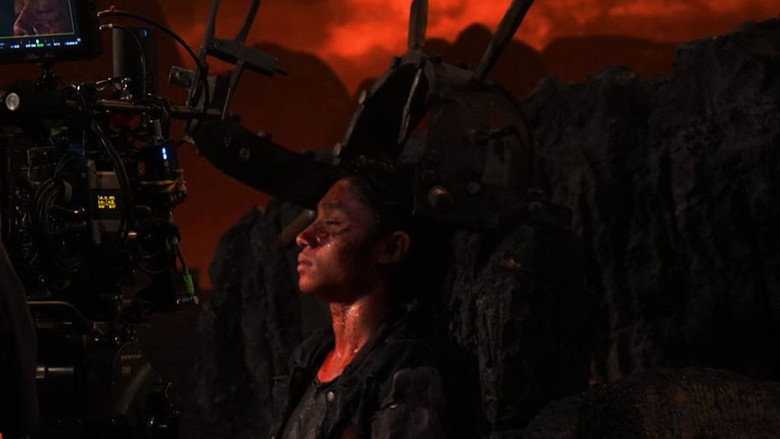
And the cinematography—dark, claustrophobic, with a color palette that’s all sickly yellows and deep reds—creates a visual hellscape that’s hard to shake.
On the other hand, the film’s characters are little more than vessels for their sins. We don’t get to know them beyond their transgressions, and their punishments, while graphic, don’t feel particularly tailored to their crimes. It’s as if the film is more interested in the idea of punishment than in the people being punished.
That might be the point—hell is supposed to be impersonal, after all—but it makes it hard to care about the siblings as anything more than symbols. Their suffering is meant to be a cautionary tale, but without any real emotional investment in their fates, it’s hard to feel the weight of their damnation.

The film’s reception has been predictably polarized. Some critics have dismissed it as "torture porn" disguised as religious education, arguing that it relies too heavily on shock value rather than genuine scares. LeisureByte.com gave it a scathing 1.5/5, calling it "unhealthy fear-mongering" that uses religious insecurity for cheap thrills.
Others, however, have found the film’s hellish visualizations compelling, if not exactly enjoyable. There’s something undeniably fascinating about the way Hell Torture commits to its vision, no matter how grotesque. It’s the kind of film that lingers in your mind long after you’ve seen it, not because it’s good, but because it’s uncomfortable.
It forces you to confront ideas about sin, punishment, and morality that most films would rather avoid.
And that, I think, is the film’s real power. Hell Torture isn’t trying to be a great horror movie. It’s trying to be a warning. The reports of younger audiences in Indonesia rushing to mosques to beg for forgiveness after watching the film aren’t surprising.
This is a movie designed to scare you straight, to make you question your own morality. Whether that’s a noble goal or a manipulative one depends on your perspective. But there’s no denying that it works.
The film’s bans in Malaysia and Brunei Darussalam—where authorities deemed its depictions of torture "too brutal, terrifying, and bloody"—only add to its notoriety. Umbara and his producers have stated that they respect these bans, but it’s hard not to see them as a badge of honor. Hell Torture isn’t just a film; it’s a provocation.
That said, I’m not entirely convinced that the film’s approach is the right one. There’s a difference between making an audience think and making them fear. Hell Torture leans heavily into the latter, and while fear can be a powerful motivator, it’s also a blunt instrument. The film’s message is clear: Sin, and you will suffer. But what does that suffering mean?
What does it say about the nature of forgiveness, or redemption, or the human capacity for change? The film doesn’t engage with these questions. It doesn’t want to.
It just wants to show you the fire.
And yet, for all its flaws, I can’t deny that Hell Torture got under my skin. There’s a scene midway through the film where one of the siblings, Fajar, is forced to watch as his own body is slowly melted in a vat of boiling liquid. The camera doesn’t cut away.
It holds on his face as he screams, as his skin bubbles and peels, as the life drains out of his eyes. It’s a moment that’s hard to watch, not just because of the gore, but because of the sheer weight of it. This isn’t just punishment.
It’s annihilation. And the film wants you to know that this is what awaits you if you stray from the path.
Is Hell Torture a good movie? I’m not sure. It’s certainly an effective one, in the way that a sermon can be effective.
It doesn’t just want to entertain you; it wants to change you. And in that, it succeeds. Whether that change is for the better is another question entirely.
The film’s reliance on fear-mongering feels regressive, a throwback to a time when horror was used as a tool for moral instruction rather than as a means of exploring the human condition. But perhaps that’s the point. Hell Torture isn’t interested in exploring the nuances of morality. It’s interested in the consequences of immorality, and it’s willing to show you those consequences in all their grotesque, unrelenting detail.
In the end, Hell Torture is a film that’s hard to forget, not because it’s good, but because it’s uncomfortable. It forces you to confront ideas about sin and punishment that most films would rather ignore. It doesn’t offer answers, only warnings.
And maybe that’s enough. Maybe the point of a film like this isn’t to be enjoyed, but to be experienced—to leave you shaken, disturbed, and maybe, just maybe, a little more aware of the choices you make. Whether that’s a noble goal or a manipulative one is up to you.
But one thing’s for sure: Hell Torture isn’t a film you walk away from unscathed. It leaves its mark. And in that, it succeeds where so many horror films fail.
Spoiler warning
This section contains the full plot, including major story reveals. Overview above stays spoiler-free.
Indonesian filmmaker Anggy Umbara is no stranger to pushing boundaries—his filmography spans raucous comedies, high-octane action, and now, with Hell Torture (2023), a descent into the nightmarish depths of the afterlife. The film, which follows four siblings trapped in hell as punishment for their earthly sins, marks Umbara’s latest foray into horror, a genre he’s increasingly embraced alongside his commercial hits. latestnetflix.com's read is that but what’s the story behind this chilling project, and how did it come to life?
Umbara’s career has been defined by versatility. Born in Jakarta in 1980, he’s worn nearly every hat in the film industry—director, screenwriter, producer, actor, even musician. His ability to juggle genres has made him a staple of Indonesian cinema, with Hell Torture serving as another example of his knack for blending crowd-pleasing elements with darker themes. While the film’s premise—a group of siblings waking up in hell—might sound like a standard horror setup, Umbara’s reputation for high-energy storytelling suggests this isn’t your typical morality tale.
The cast, a mix of rising stars and veterans, reflects Umbara’s tendency to assemble ensemble-driven projects. Safira Ratu Sofya, Kiesha Alvaro, Ariyo Wahab, and Nayla D. Purnama lead as the doomed siblings, while Slamet Rahardjo, a respected figure in Indonesian cinema, adds gravitas to the proceedings. The inclusion of actors like Rizky Fachrel and Astri Nurdin, who’ve worked with Umbara before, hints at a collaborative dynamic behind the scenes—though specifics about on-set chemistry or improvisation remain unconfirmed.
The film’s plot is straightforward but ripe for Umbara’s signature style: four siblings, raised on lessons about heaven and hell, vanish only to awaken in the latter, forced to confront the consequences of their sins. The premise leans into classic horror tropes—moral reckoning, supernatural torment—but Umbara’s past work suggests he’ll infuse it with his trademark pacing and visual flair. Whether Hell Torture leans into psychological horror, gore, or something more surreal isn’t clear from the available evidence, but given Umbara’s background in action and comedy, expect a few unexpected detours.
What’s missing? Behind-the-scenes details. Unlike some of Umbara’s bigger-budget projects, Hell Torture hasn’t generated much gossip about on-set drama, budget woes, or creative clashes. No reports of reshoots, delays, or casting controversies have surfaced in the snippets. That could mean a smooth production—or simply that the film hasn’t yet entered the rumor mill. For now, the focus remains on the final product: a horror flick designed to unsettle audiences with its depiction of divine punishment.
Umbara’s filmography is a sign of his ability to dominate Indonesia’s box office, but Hell Torture represents a deeper dive into horror than his previous work. While he’s dabbled in the genre before (e.g., The Doll series), this film’s premise—rooted in religious and moral themes—aligns with a growing trend in Indonesian horror, where folklore and faith often collide. If Hell Torture succeeds, it could cement Umbara’s place as a director capable of balancing commercial appeal with darker, more ambitious storytelling.
That said, the film’s reception remains an open question. Early reviews and audience reactions aren’t detailed in the available evidence, leaving its impact on Umbara’s career unclear. Will it be another box-office hit, or a cult favorite for horror enthusiasts? For now, the only certainty is that Umbara has once again delivered a project that defies easy categorization—just like his career.
Entertainment rumors and trivia aggregated from public reporting. Treat speculation as unverified unless a cited source confirms it.
More titles in the same genres and with the same cast.