

Jessica Mila
Alia

When her little sister claims she sees the dead, Alia consults a psychic, who opens her own eyes to the vengeful ghosts haunting their childhood home.
I’ve seen this trick before—the little girl who sees the dead, the skeptical older sister, the house that breathes with something unseen. It’s a formula as old as The Innocents, as recent as The Conjuring. But formulas exist for a reason: they work.
Or at least, they can work. The Third Eye, Rocky Soraya’s 2017 Indonesian horror film, knows the moves. The question is whether it has anything new to say while making them.
The film follows Alia (Jessica Mila), a young woman who returns to her childhood home after her mother’s death. Her younger sister, Abel (Bianca Hello), claims to see spirits, but Alia dismisses it as grief—until she consults a psychic and realizes the house is haunted by something far worse than memory. The premise is familiar, but Soraya isn’t interested in reinventing the wheel.
He’s interested in making it spin faster.
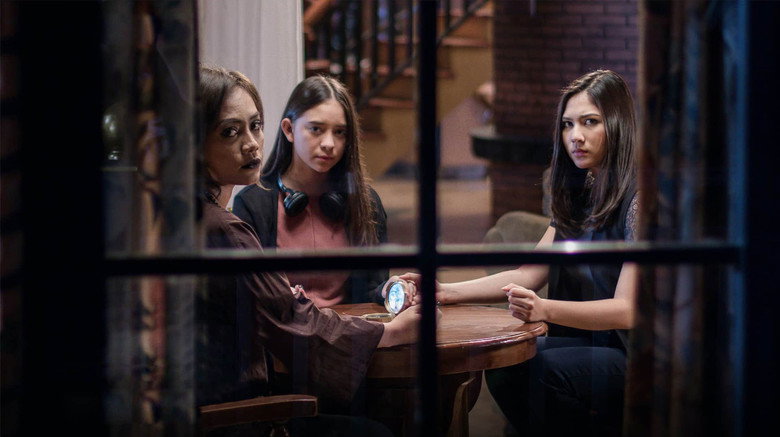
What The Third Eye lacks in originality, it makes up for in atmosphere. The film’s strongest moments are the quiet ones—the way the camera lingers on empty corridors, the way the sound design amplifies the creak of a floorboard into something ominous. There’s a scene early on where Abel sits in the dark, whispering to an unseen presence.
The camera doesn’t cut away. It holds, and holds, and holds, until the audience is as unnerved as the characters. That’s the film’s real strength: patience.
Horror thrives on anticipation, and Soraya understands that.
But patience isn’t the same as depth. The film’s biggest flaw is its reluctance to dig beneath the surface. The ghosts here are malevolent, but they’re also generic—faceless entities that exist solely to jump out and scream.
There’s no sense of history, no weight to their presence. They’re not tied to the house, or the family, or even the cultural context of the "third eye" concept. They’re just… there.
And that’s a missed opportunity.
Indonesian horror has a rich tradition of folklore and spiritualism, from the pontianak to the sundel bolong. The Third Eye gestures toward that tradition—its title alone is a reference to the mystical concept of inner sight—but it never fully commits. The psychic Alia consults is a stock character, a conduit for exposition rather than a figure with her own beliefs or fears. The film’s horror feels borrowed, not lived in.
That said, the performances keep it afloat. Jessica Mila, who also starred in Danur (2017), another Indonesian horror hit, brings a grounded intensity to Alia. She’s not just a final girl; she’s a sister, a daughter, a woman trying to reconcile her skepticism with the impossible.
There’s a moment where she’s alone in the house, staring at her reflection in a mirror. The camera doesn’t cut to what she sees. It stays on her face, and that’s enough.
You can see the doubt, the fear, the slow unraveling of everything she thought she knew.
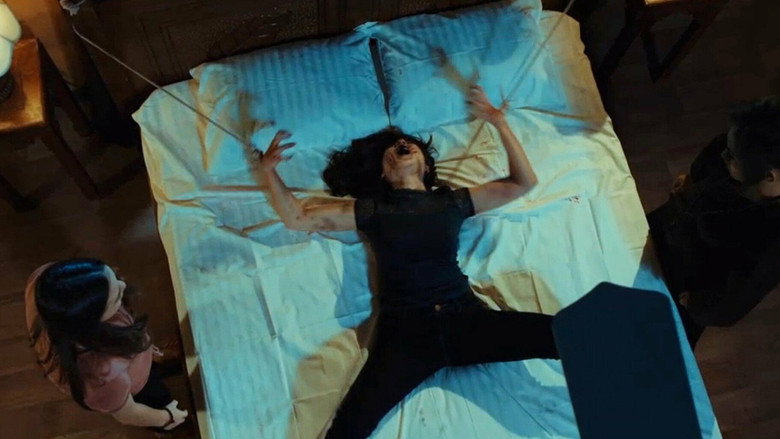
Bianca Hello, as Abel, is equally compelling. She plays the role with a childlike vulnerability that makes her visions feel real, not just plot devices. When she talks to the spirits, it’s not with the eerie detachment of a horror trope.
It’s with the wide-eyed wonder of a child who doesn’t yet understand that some things shouldn’t be seen. That’s the film’s most effective scare: the idea that innocence isn’t protection. It’s an invitation.
The Third Eye isn’t a bad film. It’s just a cautious one. It plays it safe, sticking to the beats of a hundred horror movies before it.
But there are flashes of something more—a sense of dread that lingers, a performance that feels human, a moment or two where the camera does more than just show you what’s happening. It’s enough to make you wish Soraya had taken a few more risks.
The film’s ending, in particular, feels rushed. After building a slow burn of tension, it resolves in a flurry of exorcism and exposition, as if the filmmakers suddenly remembered they had a runtime to fill. It’s a shame, because the final act could have been a chance to tie the supernatural elements back to the family’s history, to give the ghosts a reason for being there beyond "they’re evil."
Instead, it’s just another jump scare, another scream, another horror movie ending.
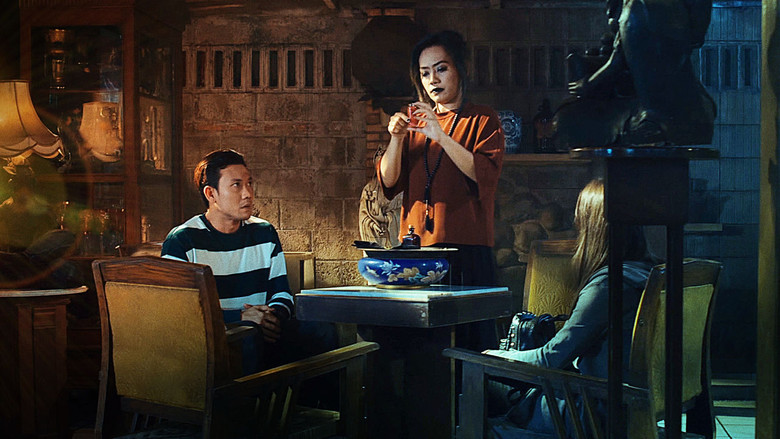
I keep coming back to that mirror scene. Alia staring at her reflection, the camera holding on her face. It’s a small moment, but it’s the kind of moment that makes The Third Eye worth watching.
Not because it’s scary—though it is—but because it’s honest. Horror, at its best, is about confronting the things we can’t see, the things we don’t want to see. The Third Eye doesn’t always live up to that promise, but when it does, it reminds you why the genre matters.
In the end, it’s a film that knows the rules but doesn’t always know what to do with them. It’s not a failure. It’s not a revelation. It’s just… there. Like a ghost in the corner of the room, waiting for someone to notice.
"A decent horror entry with strong atmosphere but predictable scares and uneven pacing."
The eerie atmosphere and some performances, particularly Jessica Mila and Bianca Hello, sustain interest. The story is formulaic, though, and its jump scares and twists won't surprise seasoned horror fans.
Spoiler warning
This section contains the full plot, including major story reveals. Overview above stays spoiler-free.
The Third Eye (Mata Batin), the 2017 Indonesian horror film directed by Rocky Soraya, carved its niche in the local genre scene with a blend of supernatural scares and family drama. Starring Jessica Mila and Bianca Hello, the movie follows a young woman who inherits her late mother’s ability to see spirits—a gift that turns into a curse when malevolent forces target her family. latestnetflix.com's view is that while the film’s premise is familiar, its production and reception offer a few intriguing behind-the-scenes details worth digging into.
Rocky Soraya, a veteran of Indonesian horror, has built a reputation for churning out commercially successful but divisive films. The Third Eye was no exception. Soraya’s production house, Hitmaker Studios, has a track record of delivering crowd-pleasing horror, often with tight budgets and quick turnarounds. The film’s 108-minute runtime suggests a brisk shoot, though no official production timeline or budget has surfaced in the available evidence.
What is clear is Soraya’s knack for casting. Jessica Mila, then riding high on her breakout role in Danur (2017), brought star power to the project, while Bianca Hello—known for her work in Indonesian TV—added depth to the supporting cast. The ensemble also included Denny Sumargo, a former basketball player turned actor, whose physicality likely lent authenticity to the film’s more intense scenes.
The Third Eye didn’t set the world on fire critically, but it found its audience. On SensCritique, the film holds a modest 4/10 rating based on 78 votes, with reviewers describing it as a solid but unremarkable entry in the horror genre. The lack of a Rotten Tomatoes score suggests limited international exposure, though its original title, Mata Batin, remains a recognizable brand in Indonesian horror circles.
The film’s spiritual themes—centered on the "third eye" concept —were likely a draw for local audiences, tapping into Southeast Asia’s rich folklore about supernatural perception. However, the evidence doesn’t reveal whether the filmmakers consulted cultural or religious experts to shape the story, leaving that aspect of the production shrouded in mystery.
While The Third Eye didn’t spawn an immediate franchise, its director returned with The Third Eye 2 (Mata Batin 2) in 2019. The sequel, also helmed by Soraya, expanded the mythology but received an even lower rating (3.8/10). Whether the original film’s lukewarm reception influenced the sequel’s development—or if it was simply a cash grab—remains unconfirmed.
One thing is certain: The Third Eye (2017) is a product of its time, reflecting Indonesia’s appetite for horror rooted in local beliefs. Its legacy is less about innovation and more about consistency—Soraya’s ability to deliver formulaic but entertaining scares.
For all its visibility, The Third Eye leaves several gaps in its behind-the-scenes story:
Until more details emerge, The Third Eye remains a solid, if unspectacular, entry in Indonesia’s horror canon.
Entertainment rumors and trivia aggregated from public reporting. Treat speculation as unverified unless a cited source confirms it.
More titles in the same genres and with the same cast.


