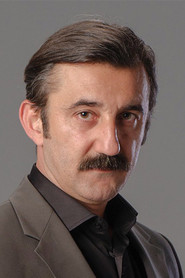
Neslihan Atagül
Dilara / Handan

A young actor's perfect life takes a madcap turn when she agrees to star in a commercial — and suddenly gets transported to her character's world.
Official
I kept waiting for Oh Belinda to decide what it wanted to be. A comedy? A thriller?
A feminist parable about the performance of womanhood? The film never settles, and by the end, I wasn’t sure if that was the point or just a failure of nerve. What begins as a clever premise—an actress trapped in the life of her commercial character—unravels into a tonal mess, like a shampoo ad directed by someone who can’t choose between satire and melodrama.
And yet. There’s something haunting about Neslihan Atagül’s performance, a quiet ache that lingers even as the plot spirals into absurdity.
The opening scene sets the stage with a deceptive simplicity: Dilara Basaran, a struggling actor, auditions for a shampoo commercial. The director’s instructions are absurdly specific—"Be the woman who washes her hair at 3 AM because she can’t sleep, because she’s haunted by something"—and Dilara, ever the professional, obliges. She slips into the role of Belinda, the fictional housewife, with eerie ease.
Then, in a moment that should feel like a punchline, she blinks—and suddenly, she is Belinda. Not acting. Not pretending.
Living it. The film leans into the surrealism of the moment, her confusion mirroring our own. For a brief stretch, Oh Belinda feels like it might be something special, a Turkish answer to Being John Malkovich or The Truman Show, where the line between performance and reality blurs into something profound.
But then the film stumbles. Instead of digging deeper into the psychological horror of losing oneself to a role, it lurches into a subplot about stolen money and a smarmy brother-in-law, as if the writers suddenly remembered they were supposed to be making a comedy. The tonal whiplash is jarring.
One minute, Dilara is grappling with the existential dread of being trapped in someone else’s life; the next, she’s dodging her in-laws in a farcical chase sequence. It’s as if the film can’t decide whether it’s a dark satire of gender roles or a lighthearted romp, and so it tries to be both, failing at each.
The original 1986 film, Aaahh Belinda, was a cult classic for a reason. It used its premise to critique the objectification of women, both in the entertainment industry and in traditional Turkish society. The 2023 remake gestures at these themes—Dilara’s struggle to be seen as more than a pretty face in commercials, the stifling expectations of domesticity—but it never fully commits.
The script introduces ideas about identity and performance, only to drop them when the plot demands a convenient twist. By the third act, the film’s internal logic has collapsed entirely, leaving behind a hollow shell of what might have been.
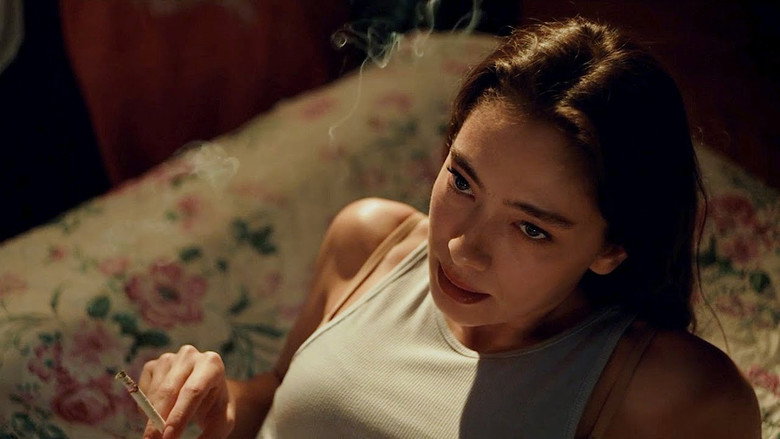
And yet, there’s Atagül. Her performance is the film’s saving grace, the one element that feels fully realized. She doesn’t just play Dilara; she inhabits her, shifting smoothly between the character’s real-life exhaustion and the performative cheer of Belinda.
There’s a moment midway through the film where she dances on a rooftop in the rain, her movements stiff and mechanical, like a marionette with cut strings. It’s a striking image, one that lingers long after the scene ends. The cinematography here is polished, almost too slick, but Atagül’s physicality grounds it.
You can see the tension in her shoulders, the way her smile doesn’t reach her eyes. She’s not just acting—she’s surviving.

The film’s biggest misstep might be its ending. Without spoiling it, I’ll say this: it feels like a cop-out. After spending nearly two hours with Dilara’s unraveling, the resolution is ambiguous at best, cowardly at worst.
The original film had a sharper bite, a clearer point of view. This version waffles, as if afraid to fully embrace its own themes. Is it a cautionary tale about the dangers of losing yourself?
A commentary on the performative nature of womanhood? A silly comedy about an actress who gets in over her head? The answer, frustratingly, seems to be "yes, all of the above"—and none of them, convincingly.
Critics have been largely unkind. Decider’s Marshall Shaffer called it "decently entertaining enough to make for a fun movie night even if it’s not saying anything particularly novel or notable about its subject." But Why Tho?’s Jason Flatt was blunter: "Oh Belinda is a remake that adds nothing to the conversation its original movie initiated, and if anything, muddles the message with its tonal uncertainty." Roger Moore, writing for Movie Nation, put it best: "I like the idea and the casting and the sexy tone, just not what they did with those elements."
I can’t disagree. Oh Belinda had the ingredients for something memorable—a sharp premise, a talented lead, a rich cultural backdrop. But it never quite figures out what to do with them. The result is a film that’s easy to watch but hard to remember, a shampoo commercial that forgot to sell the dream.

In the end, I’m left with Atagül’s face. That rooftop dance. The way her hands trembled when she realized she couldn’t escape.
The film around her may be a mess, but those moments? They’re real. And maybe that’s the point.
Maybe Oh Belinda isn’t about the story it’s trying to tell, but the one it accidentally reveals: the quiet desperation of an actor who’s spent her life playing roles, only to wake up one day and realize she doesn’t know who she is anymore. If that’s the case, then the film’s failure is also its most honest moment. After all, how do you end a story about losing yourself?
Maybe you don’t. Maybe you just let the audience sit with the question, long after the credits roll.
"A quirky but uneven mix of comedy and drama with a surreal premise that divides viewers."
The bold premise, a woman waking up in a stranger's life as a mother of two, sparks curiosity, but the execution underwhelms. The offbeat humor and emotional moments work for some; others find the story confusing or shallow. Neslihan Atagül's lead performance is a standout, while the supporting cast is underdeveloped.
Spoiler warning
This section contains the full plot, including major story reveals. Overview above stays spoiler-free.
Turkish actress Neslihan Atagül takes center stage in Oh Belinda (2023), a Netflix-backed drama that flips the script on identity and escapism. Directed by Deniz Yorulmazer, the film follows Dilara Basaran, a young actor whose life spirals into chaos after she agrees to star in a commercial—and suddenly finds herself trapped in the world of her character. latestnetflix.com's take is that the premise teases a madcap twist on the "method acting gone wrong" trope, but early reviews suggest the movie leans harder into introspection than multiverse madness.
Atagül, known for her work in Kara Sevda and Sefirin Kızı, plays Dilara, an actor whose real life unravels when she’s transported into the life of Belinda, the character she’s portraying in a shampoo ad. The film’s logline hints at a Being John Malkovich-style surrealism, but critics describe it as a quieter, more personal journey. High On Films’ review calls it an "introspective drama" focused on Dilara’s self-discovery, rather than a high-concept sci-fi romp. That tonal shift might surprise viewers expecting a zany, Everything Everywhere All at Once-style adventure.
The supporting cast—including Serkan Çayoğlu (Erkenci Kuş) and Necip Memili (Çukur)—rounds out the ensemble, but the spotlight stays firmly on Atagül. Her performance reportedly anchors the film’s emotional core, even as the plot dances between reality and fiction.
Oh Belinda’s conclusion has sparked discussion. Without spoiling specifics, the ending frames the story as a meditation on "second chances and how we take them for granted". The film’s original Turkish title, Aaahh Belinda, nods to a 1989 cult classic of the same name, which also explored identity and illusion. Whether Yorulmazer’s version fully delivers on that legacy remains up for debate, but the Netflix release has at least revived interest in the premise.
Unlike many Netflix productions, Oh Belinda hasn’t generated much gossip about on-set clashes or budget woes. The evidence is light on behind-the-scenes details—no leaked scripts, no director feuds, no last-minute recasts. What’s clear is that the film prioritizes atmosphere over action, favoring Dilara’s internal conflict over external spectacle.
If there’s any unconfirmed buzz, it’s about Atagül’s commitment to the role. Her filmography suggests a preference for layered, emotionally demanding characters, and Oh Belinda fits that mold. But without direct quotes or insider accounts, any claims about her process remain speculative.
For viewers expecting a wild, genre-bending ride, Oh Belinda might underdeliver. But for those open to a slower, character-driven story, it offers a fresh take on the "who am I?" dilemma. The film’s biggest gamble—swapping surrealism for soul-searching—could pay off for audiences in the mood for something more contemplative.
Entertainment rumors and trivia aggregated from public reporting. Treat speculation as unverified unless a cited source confirms it.
More titles in the same genres and with the same cast.