

Wu Kang-ren
Abang / Chen Ah-bang

“In This Cruel World, At Least I Have You.”
Abang and Adi are undocumented orphans living in present-day Malaysia. While the older brother, a deaf mute, has resigned himself to a life of poverty, his younger sibling burns with indignation. A brutal accident upsets the fragile balance of their relationship.
Official
Wu Kang-ren
Abang / Chen Ah-bang

Jack Tan
Adik / Zhang Wen-di

Serene Lim
Li Jia En

Tan Kim Wang
Ms. Money

Bront Palarae
Kamarul / Crime Boss
I’ve cracked a lot of eggs in my life—mostly into frying pans, sometimes onto the floor—but I’ve never thought of them as a love language. Abang Adik changed that. The film’s central ritual, where two stateless brothers tap boiled eggs against each other’s foreheads like a secret handshake, is so simple it aches. No words, no grand gestures, just the quiet thud of shell against skin.
It’s the kind of detail that makes you realize how little most movies trust their audience to feel anything without a swelling score or a dramatic monologue. Here, the egg is enough.
Jin Ong’s debut feature is a film that understands poverty not as a backdrop for tragedy, but as a texture. The Pudu district of Kuala Lumpur, where the brothers live, isn’t just a setting; it’s a character, grubby and alive. The camera lingers on the cracks in the walls, the way the light filters through grimy windows, the damp sheen of sweat on skin.
It’s the kind of realism that doesn’t feel like realism at all—it feels like eavesdropping. You’re not watching a story; you’re standing in a room with these people, close enough to smell the stale air.
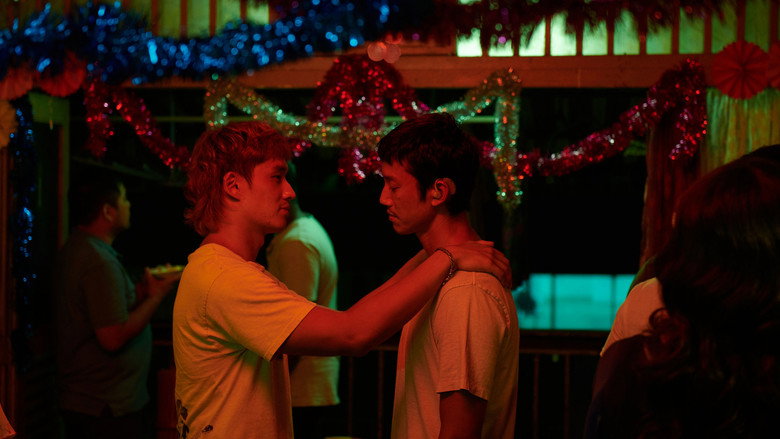
Wu Kang-ren’s performance as Abang, the older brother, is the film’s beating heart. He’s deaf and mute, but his silence isn’t a void—it’s a language of its own. Watch the way he moves: his hands signing with a kind of desperate precision, his face a landscape of small, contained storms.
There’s a scene where he signs a monologue to his brother, his fingers trembling with the effort of making himself understood. It’s devastating, not because it’s showy, but because it’s so quiet. You lean in, straining to catch every flick of his wrist, every shift in his expression.
It’s the kind of acting that doesn’t just demand your attention; it demands your empathy.
The younger brother, Adik, played by Jack Tan, is a different kind of force. Where Abang is resignation, Adik is rage—simmering, barely contained. Tan plays him like a live wire, all restless energy and sharp edges.
Their dynamic is the film’s emotional core, a push-and-pull of love and frustration. Adik resents their life, their poverty, their invisibility. Abang just wants to survive.
It’s a familiar tension—the dreamer and the realist—but Ong never lets it slip into cliché. These aren’t archetypes; they’re people, flawed and messy and real.
The film’s first half is a masterclass in slice-of-life storytelling. It’s all small moments: the brothers sharing a meal, Adik getting into a fight, Abang signing to a neighbor who doesn’t understand him. There’s no grand plot, no obvious conflict—just the slow, grinding weight of existence.
It’s the kind of storytelling that risks boring an audience used to constant stimulation, but Abang Adik trusts you to pay attention. And you do, because the details are so vivid, so there.
Then the accident happens.
It’s a brutal, sudden shift. One moment, the brothers are arguing; the next, a car screeches, a body hits the pavement, and everything changes. The film lurches into thriller territory, and for a while, it works.
The tension is palpable, the stakes feel real. But somewhere in the final act, the seams start to show. The narrative takes a few too many detours, the pacing stumbles, and the emotional payoff feels slightly unearned.
It’s not a fatal flaw—more like a stumble in an otherwise sure-footed performance.

Critics have been kind to Abang Adik, and for good reason. Variety called it a "deeply moving humanist drama with potent social and political undercurrents," and that’s about right. It’s not a film that preaches or moralizes; it just shows.
The plight of stateless individuals in Malaysia isn’t a talking point here—it’s a lived reality, one that shapes every frame. The film’s social commentary is baked into its DNA, but it never feels like a lecture. That’s a rare balance.
The cinematography, by Kartik Vijay, is another standout. The warm, earthy tones give the film a tactile quality, like you could reach out and touch the walls, the clothes, the skin. It’s not pretty, but it’s alive.
The score, too, is sparing but effective, a haunting blend of traditional instruments that underscores the brothers’ isolation. It’s the kind of music that doesn’t announce itself—it just is, like the hum of a city that doesn’t care if you live or die.
There’s a moment near the end of the film that’s been stuck in my head for days. Abang, alone in a room, signs to himself in the mirror. It’s not a grand gesture, not a climactic speech.
Just a man talking to his reflection, his hands moving in the empty air. It’s the kind of scene that most films would cut, but Abang Adik lingers on it, because it’s real. It’s what people do when they’re alone and hurting.
They talk to themselves. They crack eggs on their foreheads. They keep going.

I don’t know if Abang Adik is a perfect film. It’s messy in places, uneven in others. But it’s the kind of messiness that feels true.
It’s a film that doesn’t just want to tell you a story—it wants to make you feel something. And it does. By the end, I wasn’t just thinking about the brothers.
I was thinking about all the people I’ve known who’ve been invisible, all the quiet struggles that go unnoticed. That’s the power of cinema, isn’t it? Not to show you something new, but to make you see what’s been there all along.
I’m still thinking about that egg.
Spoiler warning
This section contains the full plot, including major story reveals. Overview above stays spoiler-free.
Abang Adik (2023) marks the feature directorial debut of Jin Ong, a filmmaker diving headfirst into the raw, unflinching world of undocumented orphans in Malaysia. The neo-noir crime drama follows two brothers—Abang (Wu Kang-ren), a deaf-mute man resigned to poverty, and Adik (Jack Tan), his fiery younger sibling—whose fragile bond is tested by violence and desperation. latestnetflix.com's take is that while the film’s emotional weight has earned praise, its production journey reveals a mix of ambition, challenges, and standout performances that shaped its final form.
Jin Ong’s script zeroes in on the marginalized lives of undocumented individuals, a theme rarely explored with such grit in Malaysian cinema. The film’s title, Abang Adik (Malay for "older brother, younger brother"), reflects its core focus: the resilient yet strained relationship between the siblings. The story’s neo-noir tone—marked by crime, poverty, and moral ambiguity—positions it as a departure from conventional Malaysian dramas, offering a bleak but necessary perspective on systemic neglect.
Ong’s decision to cast Wu Kang-ren, a Taiwanese actor, as the deaf-mute Abang adds an intriguing layer. Kang-ren’s performance has been singled out as a highlight, with critics noting its power to carry the film despite the director’s acknowledged inexperience. His portrayal of a man trapped by silence and circumstance reportedly demanded intense physical and emotional preparation, though specifics on his method remain scarce in available sources.
As a first-time feature director, Jin Ong’s work on Abang Adik has drawn mixed but largely sympathetic reactions. While some critics point to script weaknesses—particularly in pacing and narrative cohesion—Ong’s ability to extract raw performances from his cast has softened the blow. The film’s unpolished edges, rather than detracting from its impact, may actually amplify its authenticity, mirroring the chaotic lives of its protagonists.
One unverified but persistent rumor suggests that the production faced budget constraints, forcing the crew to shoot in real locations tied to Malaysia’s undocumented communities. If true, this choice would explain the film’s stark, documentary-like realism. However, without official confirmation, it remains speculative.
The chemistry between Wu Kang-ren and Jack Tan, who plays Adik, is central to the film’s success. Tan’s portrayal of a younger brother simmering with rage contrasts sharply with Kang-ren’s quiet suffering, creating a volatile but compelling dynamic. Supporting roles, including Serene Lim and Tan Kim Wang, add depth to the brothers’ world, though their characters’ arcs are less explored in available sources.
Notably, Bront Palarae and April Chan round out the cast, though their contributions are overshadowed by the leads. Palarae, a veteran Malaysian actor, likely brought gravitas to his role, but details about his character remain thin in the evidence.
Abang Adik has carved a niche for itself in Southeast Asian cinema, praised for its unflinching look at societal outcasts. While Jin Ong’s directorial debut may not be flawless, the film’s emotional core and Kang-ren’s performance have resonated with audiences. Whether Ong will continue exploring similar themes in future projects remains to be seen, but Abang Adik has already established him as a director unafraid to tackle difficult subjects.
For now, the film shows the power of storytelling—even when the storytellers are still finding their footing.
Entertainment rumors and trivia aggregated from public reporting. Treat speculation as unverified unless a cited source confirms it.
More titles in the same genres and with the same cast.


