

Shezi Sibongiseni
Lethu

A couple's seemingly perfect relationship falters when one of them learns about the other's infidelity — but who said that relationships were easy?
Official
I kept waiting for Umjolo: The Gone Girl to surprise me, not with a twist (there are a few) but with a moment where its messy, overheated energy coheres into something true. It never quite happens. Instead we get a romantic comedy-drama that feels edited in a hurry, lurching from broad farce to soap-opera melodrama in a single cut.
And yet there's something compelling in its refusal to play nice, its willingness to let characters behave badly, and its insistence that love, infidelity and all, is less a fairy tale than a contact sport.
Lethu (Shezi Sibongiseni) sees her seemingly perfect relationship with her fiancé, Lucky (Tyson Mathonsi), implode when she discovers his infidelity. What unfolds is a chaotic, often contradictory look at modern dating in "Mjoloville," the film's term for the minefield of contemporary romance, where loyalty is fragile and betrayal feels inevitable. A Valentine's Day wedding should be a cliché but works as a pressure cooker, forcing four women, each in her own romantic crisis, into close quarters.
The hearts, champagne, and pastel dresses clash with darker themes: infidelity, toxic masculinity, and the expectation that women should simply "endure" (bekezela).
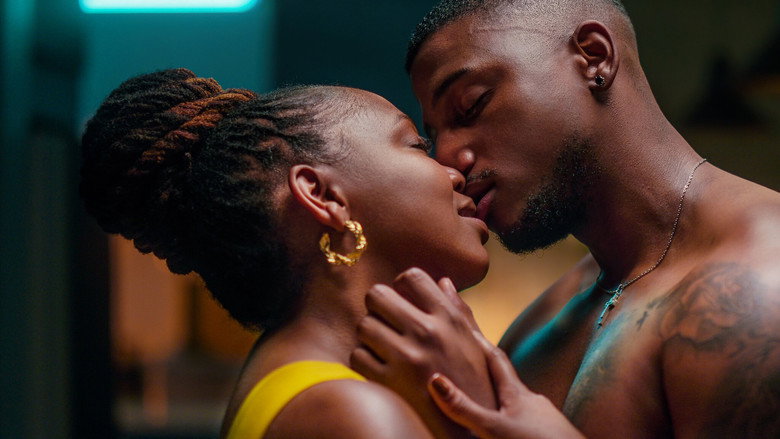
The direction is uneven but ambitious; you can feel the hunger to say something about love and loyalty in a world where both are commodified. The script often works against itself, swinging from sharp satire about modern dating to melodrama. The tonal whiplash is jarring, and it isn't helped by a reliance on explicit sex scenes to drive the plot.
They aren't exactly gratuitous, since they're meant to underscore betrayal and desire, but they feel like a shortcut, generating conflict without digging into the characters' emotional lives.
The cinematography is a standout, the South African settings lush and vibrant against the emotional turmoil. A shot of Lethu alone on a balcony, city lights behind her, lingers in the mind as a moment of quiet amid the chaos. The production design and sound are similarly strong, grounding the more outlandish moments in a sense of place.
The most controversial element is the treatment of infidelity. One character's grandmother delivers a monologue, much debated by viewers, advising that infidelity is inevitable in marriage and that women should simply endure it. It sits oddly with a film that otherwise seems to critique toxic masculinity and the pressures placed on women.
Is it holding up a mirror to bad advice women receive, or inadvertently endorsing it? The ambiguity is frustrating but also part of what makes Umjolo fascinating: it would rather wallow in its characters' mess than take a stance.
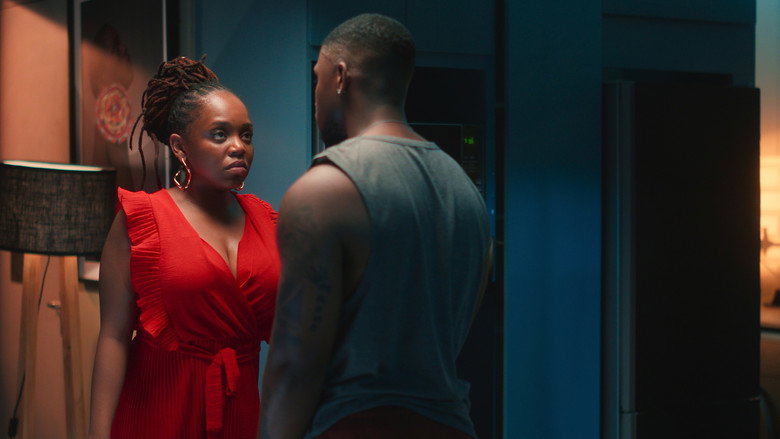
Sibongiseni is the film's saving grace, bringing a raw, physical intensity that grounds the melodrama. When Lethu confronts Lucky about his cheating, she doesn't scream or cry; the hurt simmers beneath the surface, body tense, voice low and controlled. It's far more effective than any overwrought monologue.
The supporting cast is solid, but several of the other women's arcs are frustratingly thin, as if cut down in the editing room.
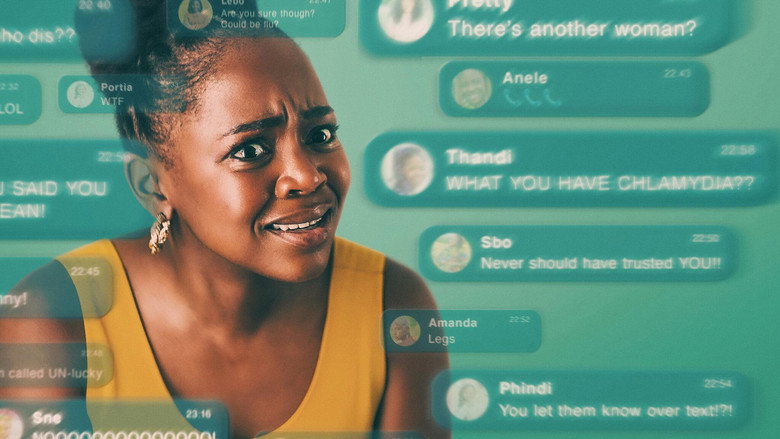
Critics have been divided. Afrocritik called it "another addition to Netflix's growing list of underwhelming African films," while others singled out Sibongiseni's performance. Audiences are similarly split: some appreciate its willingness to tackle infidelity and toxic masculinity, others find the execution clumsy. Umjolo has something to say but struggles to find the way to say it.
What lingers is its refusal to offer easy answers. There's no grand gesture, no last-minute reconciliation, just the ways we hurt each other even when trying our best. It's flawed and often frustrating, but unafraid to take risks, which counts for something in a genre this formulaic.
I'm still thinking about that balcony scene, Lethu's face a mask of exhaustion and resolve. It feels real in a film that often doesn't, and for all its flaws, its willingness to show love as messy and sometimes ugly is something I can respect.
"A lighthearted Valentine's Day romance with charming moments that can't escape familiar tropes."
Four women navigating love around a Valentine's Day wedding make for relatable, occasionally heartfelt moments. The story is predictable and some characters shallow; the cast's energy keeps it going despite the clichés.
Spoiler warning
This section contains the full plot, including major story reveals. Overview above stays spoiler-free.
Fikile Mogodi’s directorial debut, Umjolo: The Gone Girl (2024), has landed on Netflix with a mix of anticipation and skepticism. The film, a South African romantic thriller, follows four women whose love lives collide at a Valentine’s Day wedding, promising drama, betrayal, and a twisty narrative. latestnetflix.com's view is that but early reactions suggest Mogodi’s vision may have missed the mark—at least for some critics.
The film boasts a stacked ensemble, including The Queen’s Gugu Gumede, Blood & Water’s Nirvana Nokwe-Mseleku, and veteran actress Baby Cele. Yet, despite the talent, reviews have been lukewarm. A critic from Afrocritik called it "another addition to Netflix’s growing list of underwhelming African films," pointing to a recurring issue in South African cinema: "the often chaotic nature of their plots, where coherence is sacrificed for shock value".
The official logline hints at a Gone Girl-esque mystery—"A couple’s seemingly perfect relationship falters when one of them learns about the other’s infidelity"—but whether the execution lives up to the hype remains debated. With no major awards buzz or festival premieres announced, Umjolo seems to be banking on its cast and Netflix’s algorithm rather than critical acclaim.
Little is known about the production itself, but Mogodi’s choice to center the story around a Valentine’s Day wedding—traditionally a symbol of love—only to unravel it with infidelity and drama suggests a deliberate subversion of expectations. The film’s title, Umjolo (a Zulu term for courtship or dating), hints at a cultural lens, though how deeply it explores South African relationships is unclear.
The IMDb cast list includes names like Shezi Sibongiseni and Tyson Mathonsi, but their roles remain vague in available snippets. Rumors (unconfirmed) suggest some actors were brought in late to reshoot key scenes, though no sources verify this. If true, it could explain the disjointed pacing critics have flagged.
Umjolo: The Gone Girl arrives as Netflix doubles down on African content, with mixed results. While hits like Blood & Water and The Queen have found global audiences, others—like The Perfect Find and Savage Beauty—have struggled to stand out. Umjolo’s reception suggests the streamer’s strategy of quantity over quality may be backfiring, at least for now.
For viewers, the film’s biggest draw might be its cast. Fans of The Queen’s Gugu Gumede or Blood & Water’s Nirvana Nokwe-Mseleku may tune in out of loyalty, but whether Umjolo delivers more than a forgettable Valentine’s Day flop remains to be seen.
Entertainment rumors and trivia aggregated from public reporting. Treat speculation as unverified unless a cited source confirms it.
More titles in the same genres and with the same cast.


