

Lavinia Wilson
Alice

Alice and Niklas are a young couple who's biggest wish is to have a child of their own. After several failed attempts they decide to go on a holiday in Sardinia to clear their minds. There they meet a family from Austria that seems to have everything they ever wished for. But appearances can be deceiving...
Official
There’s a moment in What We Wanted that lingers long after the credits roll—not because it’s dramatic, but because it’s so quiet you almost miss it. Alice (Lavinia Wilson) sits on the edge of a Sardinian balcony, her back to the camera, the Mediterranean stretching out behind her like a postcard. She’s holding a pregnancy test, but she doesn’t look at it.
Instead, she stares at the horizon, her shoulders tense, her fingers gripping the plastic stick just a little too tightly. It’s not the result that matters here; it’s the weight of the waiting. The film understands something fundamental about grief: it’s not always loud.
Sometimes, it’s just the space between what you want and what you get.

Ulrike Kofler’s debut feature is a study in the quiet erosion of a marriage, set against the sun-bleached backdrop of a Sardinian vacation. On paper, the premise sounds like the setup for a melodrama: a couple struggling with infertility, their relationship tested by the presence of another family who seems to have everything they lack. But What We Wanted resists the easy catharsis of tears and shouting matches.
Instead, it opts for something far more unsettling: realism. This isn’t a film about the grand gestures of love or despair; it’s about the slow unraveling of two people who still love each other but no longer know how to be together.
The Sardinian setting is more than just picturesque window dressing. The island’s stark beauty—its whitewashed villas, its turquoise waters, its endless blue skies—serves as a cruel contrast to the emotional claustrophobia Alice and Niklas (Elyas M’Barek) feel. Vacations are supposed to be escapes, but for this couple, Sardinia becomes a pressure cooker.
Every shared meal, every forced smile, every stolen glance at the neighboring family’s carefree children twists the knife a little deeper. Kofler’s camera lingers on these moments, not with voyeuristic glee, but with a kind of weary empathy. She knows there’s no villain here, just two people drowning in their own expectations.
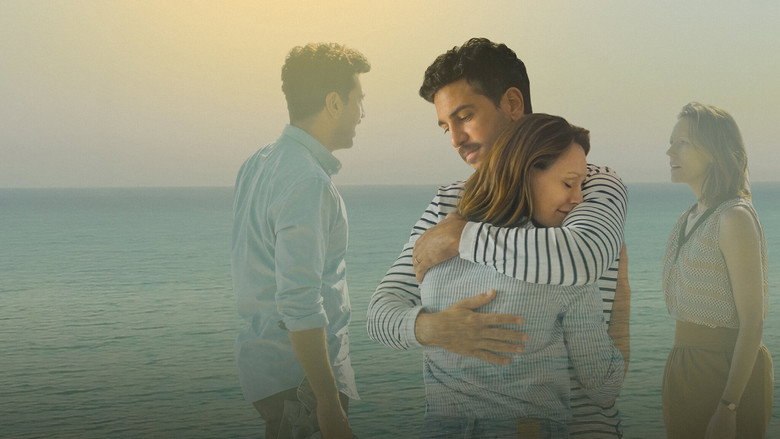
What makes What We Wanted so effective is its refusal to simplify its characters. Alice and Niklas aren’t saints or monsters; they’re flawed, messy humans trying to navigate a pain that doesn’t have a clear resolution. Wilson and M’Barek’s performances are a masterclass in restraint.
There’s no grand confrontation, no explosive fight that lays bare their grievances. Instead, their conflict simmers beneath the surface, expressed in the way Alice’s voice tightens when Niklas suggests another round of IVF, or the way Niklas’s eyes flicker with something like guilt when he laughs too loudly at a joke. Their chemistry is magnetic, but it’s also heartbreaking—because you can see the love between them, even as it frays at the edges.
The film’s most devastating scene isn’t one of high drama, but of quiet disconnect. Alice and Niklas attend a dinner party hosted by the neighboring family. The conversation is light, the wine flows freely, and for a moment, it almost feels like they’ve escaped their own lives.
Then, the host’s young daughter climbs into Niklas’s lap, and he freezes. Not because he doesn’t like children, but because he does. The camera holds on his face as he forces a smile, his eyes betraying the ache beneath.
It’s a small moment, but it’s the kind of detail that makes What We Wanted feel so painfully real. Infertility isn’t just about the inability to conceive; it’s about the way the world keeps reminding you of what you don’t have.
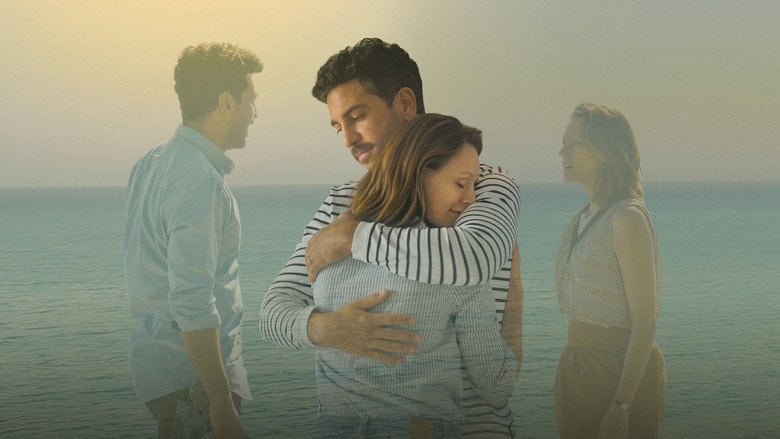
Kofler’s direction is unshowy but precise. She doesn’t rely on flashy camerawork or manipulative music cues to tell us how to feel. Instead, she lets the silence speak.
The film’s score is minimal, often just the sound of waves crashing or the hum of cicadas, which only amplifies the emotional distance between Alice and Niklas. Even the Sardinian landscape, so often associated with romance and escape, feels oppressive here. The sun is too bright, the water too blue, the villa too empty.
It’s as if the setting itself is mocking their pain.
There’s a literary quality to What We Wanted, which makes sense given its origins as an adaptation of Peter Stamm’s short story Der Lauf der Dinge. Stamm is a writer who excels at capturing the unspoken tensions in relationships, and Kofler translates that sensibility beautifully to the screen. The film doesn’t offer easy answers or tidy resolutions.
By the end, Alice and Niklas aren’t fixed—they’re just different. The question isn’t whether they’ll stay together, but whether they can learn to carry the weight of their grief without letting it crush them.
In a cultural moment where infertility is often treated as a plot device or a problem to be solved, What We Wanted stands out for its honesty. It doesn’t sensationalize its subject, nor does it offer false hope. Instead, it sits with the discomfort of not knowing what comes next.
That’s a rare thing in cinema—especially in dramas about relationships. Most films want to tie things up neatly, to give us the catharsis of a breakthrough or the relief of a breakup. But life isn’t like that.
Sometimes, the most you can hope for is to keep going, even when you’re not sure where you’re headed.
I keep thinking about that balcony scene. Alice, the test in her hand, the sea stretching out endlessly. It’s a moment that encapsulates the film’s power: the way it captures the quiet, aching space between hope and resignation. What We Wanted isn’t a film that will leave you with answers.
But it might leave you with something more valuable: the recognition that some pains don’t have a cure, only a way to be carried.
"A quiet, emotionally grounded drama that stands out more for its performances than its plot."
The film's strength is its understated portrayal of a couple's strained relationship, carried by strong performances from the leads. The pacing is slow and the narrative too subdued to fully engage, though, so the story feels slight despite its emotional authenticity.
Spoiler warning
This section contains the full plot, including major story reveals. Overview above stays spoiler-free.
Ulrike Kofler’s What We Wanted (2020) arrived on Netflix as a quiet yet emotionally charged drama, but the film’s journey from script to screen offers a few intriguing glimpses into its production—even if the behind-the-scenes details remain sparse. Starring Lavinia Wilson and Elyas M’Barek, the movie explores the fractures in a couple’s relationship against the backdrop of a picturesque yet isolating vacation. While the evidence doesn’t overflow with tabloid-worthy scandals, there are still nuggets worth digging into.
Ulrike Kofler, the film’s director, stepped into the spotlight with What We Wanted, marking her feature-length directorial debut. The Austrian filmmaker’s background in short films and television likely informed the movie’s intimate, character-driven approach. The film’s 93-minute runtime suggests a tight, focused narrative, but Kofler’s ability to extract raw performances from her cast—particularly Wilson and M’Barek—hints at a director with a keen eye for emotional authenticity.
The movie’s reception, however, was mixed. On SensCritique, it holds a modest 5.6/10 rating based on 89 votes, a score that reflects its divisive impact. While some viewers praised its understated realism, others found it slow or lacking in dramatic payoff. For a debut, though, the film’s mere existence is a sign of Kofler’s persistence in an industry that often sidelines new voices—especially those telling stories about relationships with such unflinching honesty.
Lavinia Wilson and Elyas M’Barek anchor the film as the couple at the heart of What We Wanted, but the supporting cast adds depth to the story. Wilson, known for her work in German and Austrian cinema, brings a quiet intensity to her role, while M’Barek—one of Germany’s most recognizable actors—delivers a performance that balances charm with vulnerability.
The rest of the ensemble includes Anna Unterberger, Lukas Spisser, and Iva Höpperger, among others, many of whom are staples in European arthouse and television projects. Their presence suggests a production that valued collaboration over star power, a choice that likely kept the budget lean but allowed for more creative freedom. Rumors about on-set dynamics are nonexistent in the available evidence, but the chemistry (or lack thereof) between Wilson and M’Barek is palpable on screen, raising questions about how much of their real-life rapport—or tension—made it into the final cut.
What We Wanted found its home on Netflix, a platform increasingly willing to take risks on international dramas that might struggle in traditional theatrical releases. The streaming giant’s involvement is evident in the film’s polished production values and the two official trailers released to promote it. The first trailer, clocking in at just over a minute, teases the film’s central conflict with moody visuals and a haunting score, while the second leans into the emotional stakes, hinting at the couple’s unraveling relationship.
Netflix’s marketing strategy for the film appears to have been low-key, relying on the platform’s algorithm to surface it to viewers interested in European cinema or relationship dramas. This approach aligns with the movie’s tone—subdued, introspective, and far from the bombast of typical streaming fare. Whether this strategy paid off remains unclear, as Netflix rarely releases viewership data for its international titles. Still, the film’s inclusion in the platform’s library speaks to a growing appetite for stories that prioritize character over spectacle.
For all its merits, What We Wanted leaves several behind-the-scenes questions unanswered. Was the shoot as emotionally taxing as the subject matter suggests? Did Kofler face pushback from producers over the film’s ambiguous ending? And how did the cast prepare for such intimate, often uncomfortable scenes? The evidence doesn’t provide answers, but the film’s raw portrayal of a marriage in crisis suggests a production that valued authenticity over comfort.
There’s also the matter of the film’s original title, Was wir wollten, which translates to "What We Wanted." The English title simplifies the original’s nuance, but it’s unclear whether this was a creative choice or a marketing decision. Either way, the shift underscores the challenges of adapting international films for global audiences.
What We Wanted may not have set the world on fire, but it’s a film that lingers—much like the unresolved tensions between its characters. Kofler’s direction, the cast’s performances, and Netflix’s willingness to platform such a story all contribute to its quiet achievement. The behind-the-scenes details are thin, but the film itself speaks volumes about the complexities of love, loss, and the stories we tell ourselves to make sense of both.
For now, What We Wanted remains a modest yet memorable entry in the canon of European relationship dramas. Whether it’s a sign of bigger things to come for Kofler or simply a one-off success, it’s a film that deserves a closer look—if only for its unflinching portrayal of the gaps between what we want and what we get.
Entertainment rumors and trivia aggregated from public reporting. Treat speculation as unverified unless a cited source confirms it.
More titles in the same genres and with the same cast.


