

Melika Foroutan
Ella

A woman who's returned home with her two kids to attend her sister's wedding must suddenly defend their lives against older people on a killing spree.
I’ll admit it: the premise of Old People had me at “blood-seeking pensioners.” It’s the kind of high-concept hook that horror thrives on—equal parts absurd and unsettling, like a fever dream you might have after reading too many headlines about aging populations and rural decline. But here’s the thing about high-concept horror: the premise is only as good as the execution, and Old People struggles to find its footing in the space between satire and survival thriller. It wants to be The Taking of Deborah Logan meets Straw Dogs, but too often it feels like a film that’s aware of its own cleverness without quite knowing what to do with it.

Ella (Melika Foroutan) arrives in her remote hometown with her two children for her sister’s wedding, and the village feels like a place time forgot—except time didn’t forget it. It left behind a population of elderly residents who, for reasons never fully explained, have turned violent. The setup is ripe for social commentary: a rural community hollowed out by youth migration, a generation left behind to fester in isolation.
But Old People never quite commits to the allegory. Is it a critique of how society discards the elderly, or a dark joke about the fears of an aging population? The film seems content to let the ambiguity linger, which might work if the horror itself were more compelling.
Instead, it leans into zombie-movie clichés—ghostly howls, shambling figures, the occasional jump scare—without ever establishing clear rules for its antagonists. Are these elderly killers supernatural, or just people pushed to the brink by something unseen? The film doesn’t seem to care, and neither do they, really.
They’re just there to menace, their motivations as vague as their movements are slow.
That lack of clarity extends to the tone. Old People oscillates between self-aware satire and earnest survival horror, and the two don’t always play nice together. One moment, it’s winking at the audience with over-the-top sound design—those “monstrous gargles” an IMDb user rightly called out as too knowing—and the next, it’s asking us to invest in Ella’s desperate struggle to protect her children.
Foroutan does her best to anchor the film, her performance a mix of exhaustion and determination, but the script doesn’t give her much to work with beyond the basics of maternal panic. The supporting cast is even thinner, reduced to archetypes: the skeptical husband, the terrified child, the vaguely sinister locals. There’s no real sense of who these people were before the violence started, which makes it hard to care about what happens to them.
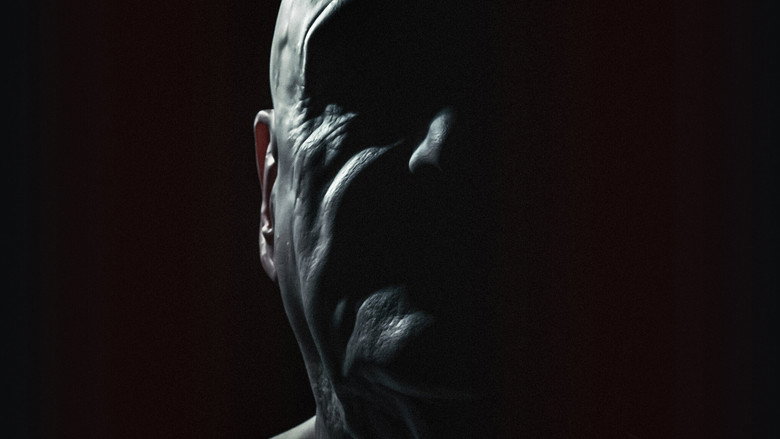
The film’s most effective moments come when it leans into the uncanny. There’s a scene early on where Ella’s son wanders into a neighbor’s house, only to find the elderly woman inside sitting perfectly still, her hands folded in her lap. The camera lingers on her face, her expression unreadable, and for a second, you’re not sure if she’s dead or just waiting.
It’s the kind of quiet, unsettling moment that horror does best—when the threat is implied rather than shown. But these moments are few and far between. More often, Old People defaults to the kind of loud, chaotic violence that feels borrowed from better films.
The kills aren’t creative, the gore isn’t particularly convincing, and the tension relies too heavily on jump scares that land with all the subtlety of a sledgehammer.
What’s frustrating is that the film’s premise should work. There’s something inherently disturbing about the idea of the elderly turning on the young, a reversal of the natural order that taps into deep-seated anxieties about aging, abandonment, and the passage of time. But Old People never digs into those themes with any real depth.
Instead, it treats its own concept like a gimmick, something to be deployed for shock value rather than explored. The village setting, with its empty streets and crumbling buildings, could have been a character in its own right—a physical manifestation of the film’s themes of decay and neglect. But the cinematography doesn’t do much to elevate the material.
The shots are functional, but there’s no visual language to speak of, no sense of place beyond “generic horror location.”
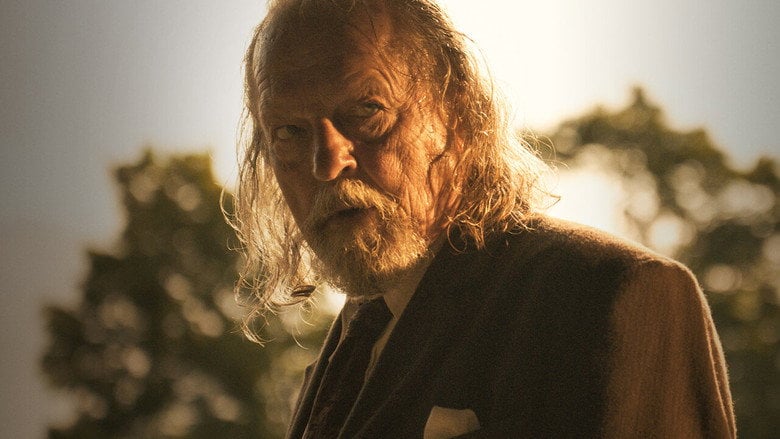
If there’s a saving grace, it’s that Old People at least tries to do something different. Horror has a bad habit of retreading the same ground, and while this film doesn’t always succeed, it’s refreshing to see one that takes a risk, even if it’s a messy one. The problem is that it never quite figures out what it wants to be.
Is it a satire of horror tropes? A survival thriller? A dark allegory about societal collapse?
It flirts with all three, but never fully commits to any of them. The result is a film that feels tonally inconsistent, like it can’t decide whether to laugh at its own premise or take it seriously.
In the end, Old People is a movie that had potential but never quite delivers on it. It’s not terrible—there are moments of genuine unease, and Foroutan’s performance keeps it from completely falling apart—but it’s not particularly memorable either. It’s the kind of film you might watch once, on a lazy afternoon when you’re in the mood for something pulpy and forgettable.
But if you’re looking for horror that lingers, that makes you think or feel something beyond the immediate adrenaline rush, you’ll likely come away disappointed. The village may have eaten its young, but Old People never quite manages to sink its teeth in.
"A slow-burn German horror with eerie atmosphere but frustrating pacing and underdeveloped scares."
The film’s unsettling tone and visual style create a creepy, oppressive mood that lingers. The story meanders, character development is weak, and the scares fail to deliver on the buildup, leaving an unsatisfying payoff.
Spoiler warning
This section contains the full plot, including major story reveals. Overview above stays spoiler-free.
German director Andy Fetscher’s Old People (2022) arrived on Netflix with little fanfare but quickly became a polarizing entry in the horror genre. Marketed as a chilling thriller, the film’s reception was anything but unanimous—garnering both fervent defenders and vocal critics. latestnetflix.com's read is that here’s what we know (and what remains unclear) about the movie’s rocky journey from production to streaming.
Andy Fetscher, the German-Romanian filmmaker behind Old People, is no stranger to genre-hopping. His filmography spans horror thrillers, children’s television, and historical dramas, suggesting a director comfortable with tonal shifts. Old People appears to be his attempt to blend horror with psychological tension, though early reviews suggest the execution was uneven.
The film’s premise—centered on a family confronting sinister forces tied to aging—was ambitious, but Fetscher’s direction drew mixed reactions. Some viewers praised its atmospheric dread, while others found the pacing sluggish and the scares underwhelming. With a runtime of 90 minutes, the film’s brevity may have worked against it, leaving little room for character development or sustained tension.
The ensemble cast—led by Melika Foroutan (Dark, Tatort) and Stephan Luca (The Same Sky)—was a selling point, but their performances became a flashpoint for debate. Foroutan, in particular, received praise for her intensity, while Luca’s portrayal of a father grappling with supernatural horror was deemed either gripping or overly melodramatic, depending on the reviewer.
Young actors Otto Emil Koch and Louie Betton, playing child roles, also sparked discussion. Some critics argued their performances felt stiff, while others defended their contributions as appropriately eerie. The film’s reliance on generational dynamics—pitting children against elderly antagonists—was a bold choice, but whether it paid off remains a matter of taste.
Old People’s most striking divide was its critical and audience response. On SensCritique, the film holds a dismal 4.8/10 rating from over 500 votes, a stark contrast to the occasional glowing review calling it an underrated gem. The discrepancy suggests the movie’s horror elements either resonated deeply with a niche audience or fell flat for most viewers.
Netflix’s decision to platform the film likely amplified its reach, but also exposed it to broader scrutiny. YouTube reviews—ranging from quick recommendations to in-depth breakdowns —painted a picture of a movie that either delivered chills or left audiences baffled. One recurring complaint? The trailer promised more than the film delivered, setting expectations that weren’t met.
Despite the buzz, key details about Old People’s production remain scarce. There’s no confirmed word on its budget, filming locations, or whether reshoots or edits were involved—common talking points for divisive horror films. Rumors of behind-the-scenes tension or creative clashes are, at this point, just speculation; the evidence doesn’t support them.
What is clear is that Old People won’t be forgotten anytime soon. Whether it’s remembered as a bold misfire or a cult favorite depends on who you ask.
Entertainment rumors and trivia aggregated from public reporting. Treat speculation as unverified unless a cited source confirms it.
More titles in the same genres and with the same cast.


