Korranid Laosubinprasoet
Jin

“Attack me, attack back! play fair!”
Bussaba, a volleyball player who enjoyed bullying others, was found dead by hanging in a gym, causing chaos and horror among other team members.
I kept waiting for the moment when Attack 13 would stop punching me in the gut and start explaining why. It never did. That’s both its most frustrating flaw and its strangest virtue.
This Thai horror-thriller, directed by Taweewat Wantha, takes the familiar trope of a vengeful spirit haunting a high school volleyball team and twists it into something nastier, messier, and far more morally ambiguous than the usual "wronged girl gets revenge" narrative. The film doesn’t just want to scare you—it wants to make you complicit in the cruelty, then leave you squirming in the aftermath.
The setup is simple enough: Bussaba, the team’s resident bully, is found hanged in the gym, her death ruled a suicide. But as her teammates start dying in increasingly grotesque ways—impaled on volleyball poles, drowned in water coolers, their faces melted by acid—the surviving girls realize they’re being hunted by something far more sinister than guilt. The catch?
Bussaba wasn’t just a bully. She was a victim, too. And the person orchestrating her revenge isn’t the ghost of the girl they tormented, but the transfer student they barely noticed: Jinhandra, played with a smirking, magnetic intensity by Korranid Laosubinprasoet.
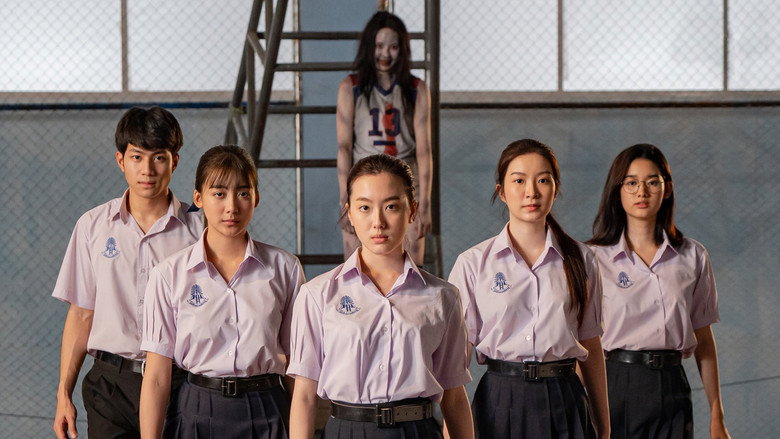
Jin’s arc is the film’s most compelling element, and Laosubinprasoet sells it with a performance that’s equal parts charismatic and unsettling. She’s the new girl who doesn’t just fit in—she dominates, effortlessly sliding into the role of team captain while the others scramble to keep up. There’s a moment early on where she spikes a volleyball so hard it knocks a teammate to the ground, and the way she grins—half apology, half challenge—tells you everything you need to know about her.
She’s not here to make friends. She’s here to win. And if that means letting Bussaba’s ghost do the dirty work for her, so be it.
The film’s biggest gamble is its refusal to let the audience off the hook. Most revenge horror operates on a simple moral calculus: the bullies deserve what’s coming to them, and the audience gets to enjoy their suffering without guilt. Attack 13 complicates that equation. Bussaba was a monster, but she was also a product of the same system that rewards Jin’s ruthlessness.
The film’s most chilling scene isn’t a death—it’s a quiet moment in the locker room, where Jin watches the remaining girls turn on each other, their fear and paranoia turning them into the same kind of bullies they once were. The camera lingers on her face, and for a second, you see something like satisfaction flicker across it. She’s not just avenging Bussaba.
She’s replacing her.
That’s where the film’s moral rot really sets in. By the time the credits roll, the bullies haven’t just been punished—they’ve been erased, replaced by a new queen who’s just as cruel, if not more so. The ending is a gut punch, not because it’s shocking (though it is), but because it refuses to offer the catharsis of justice.
Instead, it leaves you with the queasy realization that the cycle of bullying isn’t just continuing—it’s been weaponized.
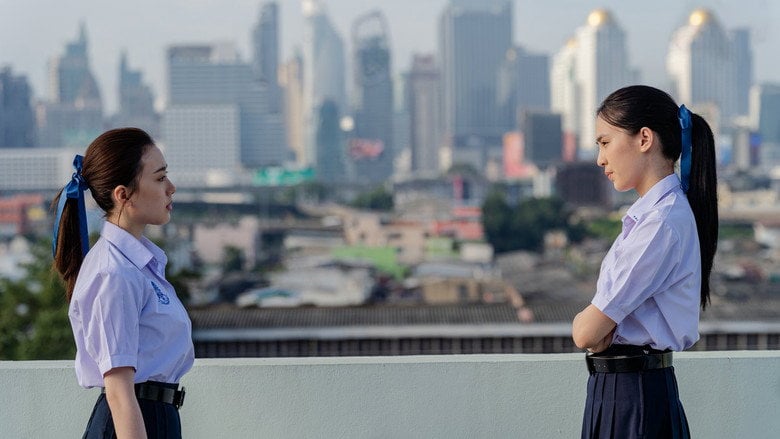
Wantha’s direction is slick and efficient, but it’s also where the film’s limitations become apparent. Attack 13 moves at a breakneck pace, with barely a moment to breathe between kills, but that speed comes at the cost of atmosphere. The horror often feels more like a series of set pieces than a creeping dread, and the CGI ghosts—when they appear—are so weightless they might as well be made of smoke.
There’s a scene where Bussaba’s spirit materializes in the middle of a volleyball game, her face stretched into a grotesque grin, and the effect is so jarringly cheap it undercuts the tension entirely. It’s the kind of moment that makes you wish the film had leaned harder into the psychological horror of its premise, rather than relying on jump scares and gore.
The sound design, too, is a mixed bag. The score is relentless, pounding away like a drumline during every confrontation, but it often feels more like a crutch than a tool. The film’s most effective moments are the quiet ones—the way Jin’s voice drops to a whisper when she’s manipulating her teammates, or the eerie silence that follows a death before the screaming starts.
When the music swells to drown out everything else, it feels like the film is afraid to let the audience sit with the horror for too long.
That’s not to say Attack 13 doesn’t have its strengths. The practical effects, when they’re used, are gruesome and effective, particularly in the death scenes. There’s a moment where a character’s face is pressed against a scalding hot locker, and the sound of sizzling flesh is so visceral it’s hard not to flinch.
And while the side characters are thinly drawn, the core trio—Jin, Bussaba, and the team’s reluctant leader, played by Ladapa Thongkham—are compelling enough to carry the story. Thongkham, in particular, does a lot with very little, her performance shifting from confident to terrified to broken with a rawness that grounds the film’s more outlandish moments.
But the film’s real power lies in its refusal to play by the rules of the genre. It’s not interested in redemption arcs or moral clarity. It’s a horror movie about the banality of evil—the way cruelty becomes a sport, and the way the people who suffer from it often become the next generation of tormentors.
That’s a messy, uncomfortable idea, and Attack 13 doesn’t shy away from the ugliness of it. The problem is that it doesn’t always trust the audience to sit with that ugliness, either. The pacing is so relentless, the score so overbearing, that it often feels like the film is trying to distract you from its own themes.
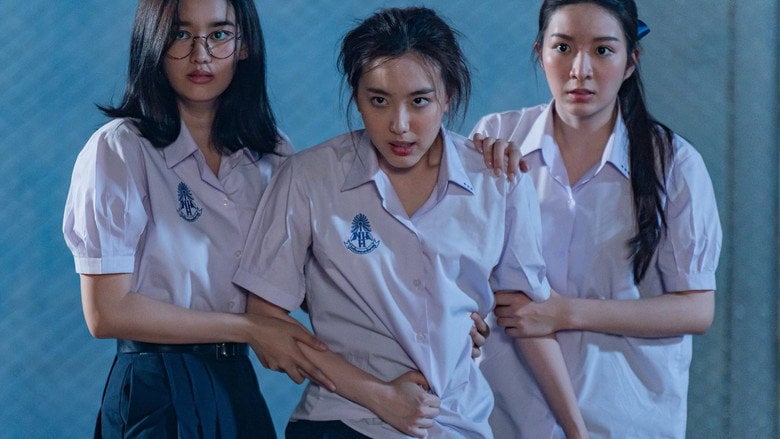
I keep coming back to that locker room scene. Jin watches as the girls turn on each other, their fear turning to violence, and for a second, she looks almost proud. It’s a small moment, but it’s the key to the whole film. Attack 13 isn’t just about revenge—it’s about the way power vacuums create monsters.
And in the end, it leaves you wondering: who’s really the villain here? The ghost? The bullies?
Or the girl who let it all happen?
That’s the kind of question that lingers, long after the credits roll. It’s also the kind of question that makes Attack 13 more than just another teen horror flick. It’s a film that wants to unsettle you, not just scare you. And in that, at least, it succeeds.
"A twist-packed Thai teen chiller that’s entertaining in the moment but undercut by cheap effects, shallow characters, and a morally sour ending."
The story has constant reversals, lively pacing, and an ambitious late shift that plays with victim-and-bully dynamics, helped by a charismatic lead turn from Korranid Laosubinprasoet as Jinhandra. Flat side characters, weak ghost effects, and an overdone score keep the horror from landing, and the controversial finale, where the bullies effectively walk away on top and a fetishized take on suffering appears, leaves many irritated or uncomfortable rather than shaken.
When Thailand’s nastiest volleyball ghost smashed her way onto Netflix, fans expected jump scares and drama on screen. What they didn’t expect was the low-key swirl of casting debates, fan wars, and creepy behind-the-scenes stories that followed in her wake. latestnetflix.com's take is that Grab your jersey and your protective amulet — here’s the tea.
There’s no solid evidence of true cast feuds, but fans have been working overtime to manifest one:
The wildest romance tea isn’t about Attack 13 specifically, but about its breakout star:
For a horror film this nasty on screen, the off-screen scandal file is surprisingly thin:
Entertainment rumors and trivia aggregated from public reporting. Treat speculation as unverified unless a cited source confirms it.
More titles in the same genres and with the same cast.