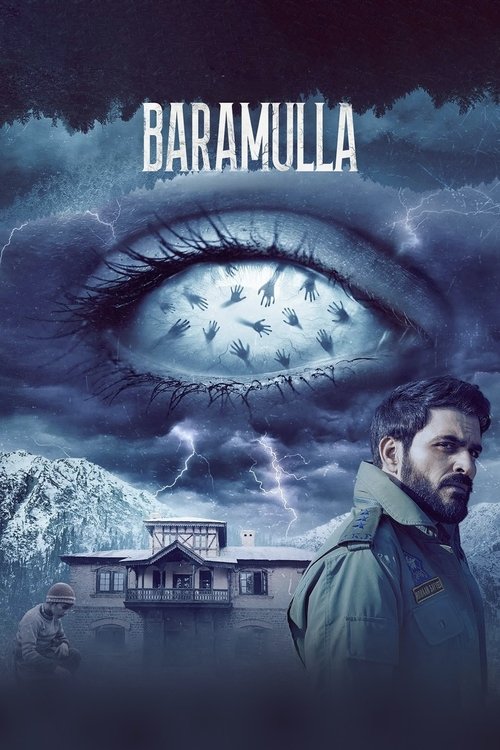
Movie poster for Baramulla (2025)

Baramulla

2025
2h
R · Hindi
Search on Netflix

Overview

A cop's inquiry into child kidnappings unravels chilling secrets as supernatural events endanger his family and the peaceful town of Baramulla.

Cast

12 people

Reviews

3 min read

The Weight of the Snow

There’s a kind of silence that belongs only to hard winter. It doesn't soften the world so much as bury it. That dense, airless quiet is what haunts Aditya Suhas Jambhale’s Baramulla more than any ghost does.

Right from the opening, the film understands the mood it wants: a single flower bud trembling in the snow, a pause held long enough for you to expect violence, then a boy named Shoaib drifting into view before vanishing after a local magic show. latestnetflix.com's view is that Jambhale lets the cold do the first stretch of storytelling.

Jambhale came into this after Article 370, so subtlety is not exactly the first quality people associate with him. When I heard he was making a supernatural thriller about missing children in Kashmir, I wondered whether the politics would just be window dressing for horror beats. The answer is messier than that. Baramulla is really two films laid over each other: a procedural about a militant kidnapping network and a haunted-house story in which the dead refuse to be tidied away.

Sometimes the overlap is potent. Sometimes the metaphor presses too hard.
A lone figure in the snowy Kashmiri landscape

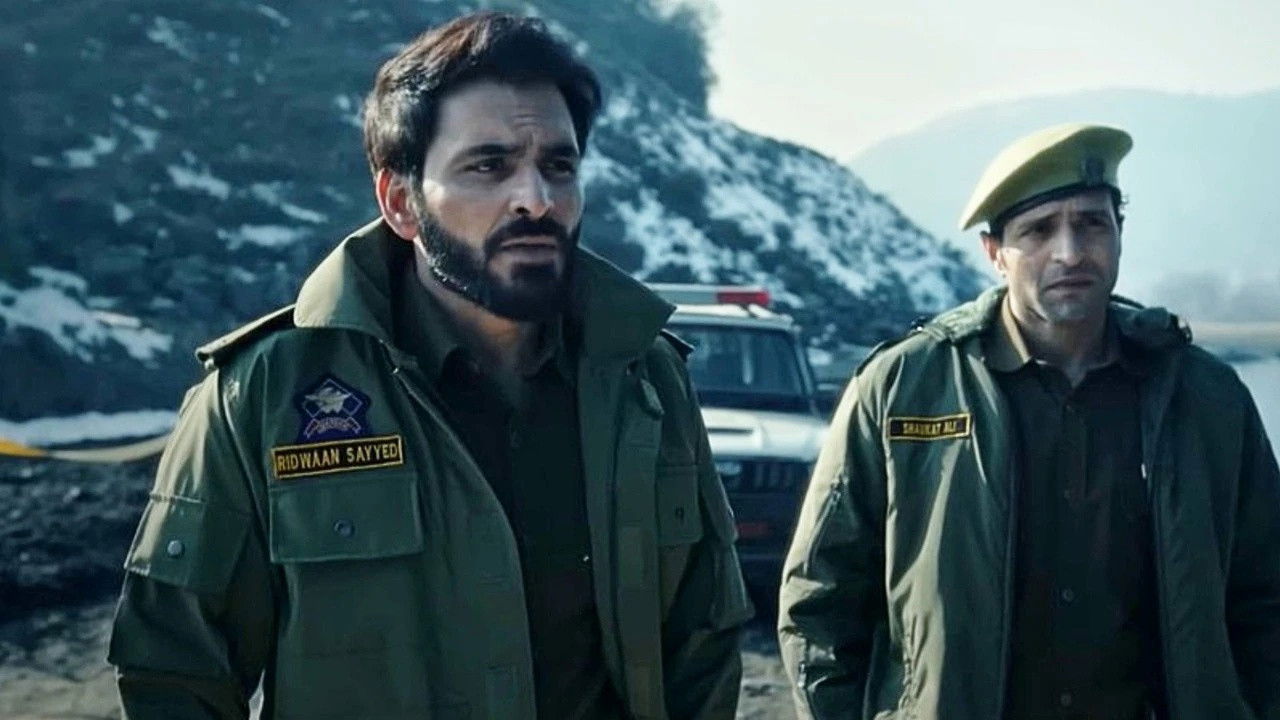
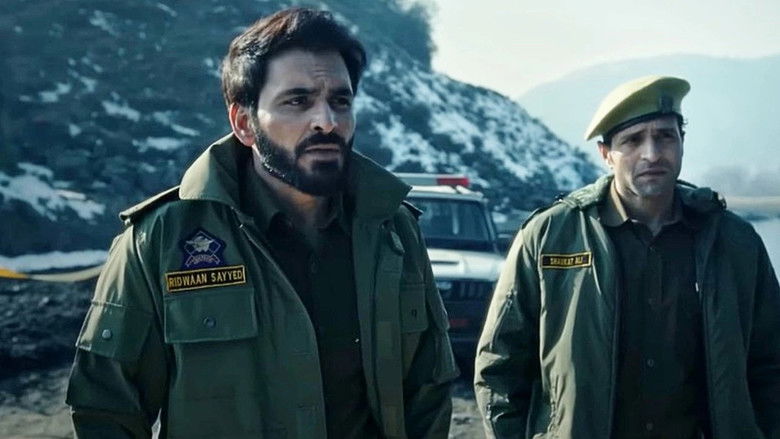
Manav Kaul does a lot to keep the film grounded. As DSP Ridwaan Sayyed, the investigator sent to Baramulla, he carries himself like a man already halfway crushed by what he's seen. His whole frame seems to sink under the winter layers, conveying a sense of acted exhaustion.

The part also has personal resonance. Kaul was born in Baramulla before his family moved to Madhya Pradesh, and that history—something he has explored before in his novel Rooh—gives his presence an extra ache. When he studies the snowbound landscape, he looks like someone taking inventory of absences.

Once Ridwaan brings his family into that sprawling, decaying house watched over by a mute attendant, the inside story starts echoing the unrest outside. One of the film's best stretches follows his wife Gulnaar, played by Bhasha Sumbli with a taut, lived-in anxiety, as she traces a thread of cold air toward a clue. Jambhale doesn't lean on cheap orchestral jolts there.

Saurabh Goswami's camera uses the cramped geometry of the Kashmiri home—the narrow passages, low ceilings, long shadowed corridors—to squeeze the air out of the scene. Sumbli, herself Kashmiri and filming in brutal cold shortly after giving birth, gives the supernatural material a human center it badly needs.

The shadowed interior of the old estate

Where it starts to wobble is in the back half. As the mystery opens up, Jambhale grows less interested in dread and more interested in stating his metaphor outright. The ghosts become unmistakable stand-ins for Kashmiri Pandits driven into exile in the 1990s, and the movie's earlier uncertainty gives way to a much more declarative political argument.

The Hindu’s Anuj Kumar was right to say that "when the fog subsides, the bombast of the 'us vs them' narrative becomes discernible." The line between haunting and lecture gets thinner and thinner, and by the third act the white-tulip imagery has been pushed about as far as it can go.

Still, I couldn't shake the craft. The sound design is especially precise—every creak in the boards, every far-off valley echo, every hush between lines feels calibrated to make you glance behind you. Even when the script starts spelling itself out, the atmosphere keeps doing real work.

A tense moment in the biting winter cold

I don't think Baramulla fully lands as pure horror, and it's far too burdened by historical pain to function as an easy weekend thriller. But maybe that discomfort is the point. The film never lets the past sit quietly, because the place it is about doesn't get that luxury either.

It's an uneven movie, yes, but in its coldest, stillest passages it catches something sad and stubborn about a landscape where history keeps rising back through the snow.

Audience Opinions

Audience 7.0/10
"A brooding Kashmir-set horror thriller whose raw atmosphere and gut-punch climax outweigh uneven pacing and polarizing politics."

The film’s strength is its emotionally heavy final stretch, where parallel timelines and the reveal of past atrocities create a powerful, lingering impact. Strong work from the lead, an oppressive sense of dread, and striking use of the Kashmiri landscape pay off, especially in the last 30–40 minutes. At the same time, a sluggish middle act, overdone jump scares, and a charged religious–political framing leave some feeling it is disjointed, heavy-handed, or even propagandistic.

What viewers praise
  • Powerful climax The last half hour is heartbreaking and cathartic, with an emotional pay-off that redeems earlier flaws.
  • Haunting atmosphere Cold, tense visuals and a constant sense of dread make the setting feel eerie and oppressive rather than glossy.
  • Lead performance Manav Kaul’s intense, conflicted cop is the emotional anchor and often overshadows the rest of the cast.
  • Bold genre blend The mix of kidnapping investigation, supernatural horror, and Kashmiri Pandit trauma is an ambitious, overdue way to explore real historical pain.
Common complaints
  • Draggy middle section The second act feels slow and exhausting to some, with shifting tones that dilute tension instead of building it.
  • Messy execution A promising script and concept are held back by clunky writing, scattered plotting, and reliance on familiar horror tropes like loud jump scares and stock ghost design.
  • Divisive politics The film’s handling of religion and the Kashmiri conflict is heavy-handed; some praise its honesty and others condemning it as one-sided or propaganda.
  • Inconsistent horror While the mood works, the horror elements themselves feel generic rather than genuinely frightening or inventive.
Recommended for
Slow-burn horror fans Supernatural thriller enthusiasts Kashmir-set story seekers Political horror admirers Manav Kaul followers Emotion-heavy genre drama fans

Full Plot (Spoilers)

Spoiler warning

This section contains the full plot, including major story reveals. Overview above stays spoiler-free.

Buzz & Rumors

Public reports

Baramulla’s Off-Screen Haunting: Hypothermia, A-List Ghosting & a Rogue Director

Netflix’s Kashmir chiller Baramulla didn’t just summon ghosts on screen – it nearly froze its own crew, scared off half of Bollywood, and turned its director into a one-man mountain unit. latestnetflix.com's view is that here’s the icy, messy, very real-world tea behind the horror hit.


Casting Chaos & Sensitive-Topic Drama

  • Multiple “BIGGEST of actors” passed on Baramulla because they felt the subject – Kashmir’s politics and trauma – was just too hot (or rather, too cold) to handle. Director Aditya Suhas Jambhale spent three and a half months narrating the script to top stars who loved the writing… and still refused to sign, citing the topic’s “sensitivity” and agency nerves. - The role finally landed with Manav Kaul, who essentially said, I was born for this. Literally. He’s actually from Baramulla and reportedly told the team, “Let’s do this. I was born in Baramulla. This is a role that any actor would want to do”. Instant authenticity flex. - Bhasha Sumbli’s casting is its own wild saga. She had delivered a baby barely one–two months before shooting. The team was stuck between brutal weather, tight budget and the need for a Kashmiri actor – and she came in at the last minute, flying in with her baby and husband, then dropping 13 kgs post-pregnancy to play Gulnar in sub-zero conditions. That’s not a role, that’s an extreme sport.

On-Set Drama: The Secret Shoot That Got the Director Yelled At

  • For the film’s first scene, Jambhale went full “I do my own stunts” and decided to shoot secretly at a high-altitude location in minus 5°C where generators couldn’t even be hauled up. - Instead of taking along the 100-person crew, he went guerrilla: just six people – the director, DOP, gaffer, actor, and two more crew members – climbed the hill and shot the scene while everyone else stayed warm in the hotel. - When they got back? The production team “screamed” at him for risking people and equipment off-plan in such dangerous conditions. - The unexpected MVP of that sequence was the child actor, who, according to Jambhale, fearlessly climbed up and down the hill around 10 times while adults were struggling not to fall apart from cold and exhaustion.

Frozen Crew, Snowstorms & an Actual Earthquake

  • Jambhale calls Baramulla “one of the TOUGHEST shoots in HISTORY” – and it’s not hyperbole. Because of the weather, 5–6 crew members were down with hypothermia every single day. Some days, even the Director’s Assistant just couldn’t make it to set. - They never had the full crew on location at once; someone was always out sick. This was all while racing through a 23-day shoot on a limited budget. - A snowstorm in Pahalgam forced the team to walk 2 km through 3 feet of snow because the roads were blocked. - In Aru Valley, their entire set got drenched and they had to change locations within four hours – with the Indian Army helping them get down safely from one of the new spots. - As if that wasn’t enough, an earthquake hit during the shoot. Forget supernatural horror – the Himalayas were doing their own special effects.

Family Feels & Quiet Hero Cameos

  • While all this chaos was going down in Kashmir, Jambhale’s personal life took a hit: his daughter was born seven days before the shoot, around 20 days premature. He’s since admitted he fears she’ll grow up and ask why he wasn’t there and joke, “Kya gandi picture banayi papa ne?” (“What awful film did you make, dad?”). - Actor Sanjay Suri shows up for a poignant cameo in the film, and his off-screen story is even more emotional. He reportedly has his own painful history with the Valley – his father was killed there – and when asked to be in Baramulla, he simply said: “Don’t ask me anything. I’ll come and shoot. Don’t worry about anything else”. No fee drama, no star tantrums, just pure emotional commitment.

Politics, Backlash & Fan Theories That Won’t Die

  • On Facebook cinephile groups, viewers have pointed out that Baramulla has faced consistent backlash “from an ideological standpoint”, with critics dissecting what exactly it’s trying to say about Kashmiri history and whose pain is being centered. - Reddit threads and YouTube breakdowns note that the film’s real terror is less the ghost and more the human and political trauma underneath it. - TIME’s deep-dive on the ending spells out what fans were already arguing online: that the ghosts in Baramulla act as metaphors for Kashmir itself, a land where “the past is never buried”. - So while there’s no leaked cut or banned scene scandal (yet), rumor-adjacent fan chatter keeps circling the same idea: that the “real” horror of Baramulla is historical guilt and denial, dressed up as genre entertainment.

Wild Trivia & Near-Misses

  • The movie’s pace and intensity? Not an accident. Jambhale says he modeled his approach on **Quentin Tarantino’s fast, economical Reservoir Dogs shoot – insisting on a Steadicam operator every single day so they could finish most scenes in 2–3 takes instead of burning time on heavy setups. - The team even toyed with the idea of a frozen lake sequence** that would have required filming inside a frozen lake – apparently abandoned due to budget and practicality. Somewhere in another universe, there’s a version of Baramulla that’s literally under the ice. - The name itself is a little act of rebellion: on screen, the film nods to the original Sanskrit-derived name Varaha Mul by highlighting the colloquial “Varmul” alongside “Baramulla,” giving the local slang its due place in the visuals. - After release, industry folks like Anand Tiwari and Kunal Ganjawalla reportedly called the director, with 20–30 minute emotional conversations about how the film upended their expectations of what a “ghost movie” about Kashmir would be.

Entertainment rumors and trivia aggregated from public reporting. Treat speculation as unverified unless a cited source confirms it.

More titles in the same genres and with the same cast.