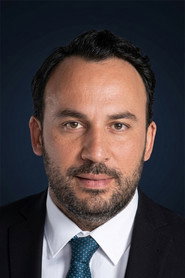
Aslı İnandık
Gaye

Summer 1985, Istanbul. Hakan and Gaye want to give back a music tape to their friend Selen before they leave. Things won't go as planned.
I’ve always had a soft spot for films that turn a simple errand into an existential crisis. There’s something deeply human about watching characters spin their wheels while the world refuses to cooperate—like that time I spent an entire afternoon trying to return a library book, only to get sidetracked by a lost dog, a sudden rainstorm, and the realization that I’d left my wallet at home. Oregon, Kerem Ayan’s debut feature, understands this universal truth: the universe delights in thwarting our plans, especially when those plans involve something as mundane as returning a cassette tape.
Set in Istanbul during the summer of 1985, the film follows Hakan (Serkan Çayoğlu) and Gaye (Aslı İnandık) as they attempt to deliver a music tape to their friend Selen before leaving town. What should be a straightforward task—pop in, drop off, leave—quickly spirals into a series of misadventures that feel less like a plot and more like a series of unfortunate events strung together by the threadbare logic of a daydream.
Or, as Barbara Shulgasser of Common Sense Media put it, a film that "wanders off into dull monologues about love, war, and filmmaking". She’s not wrong, but I’m not entirely convinced that’s a flaw. Sometimes, the detours are the point.
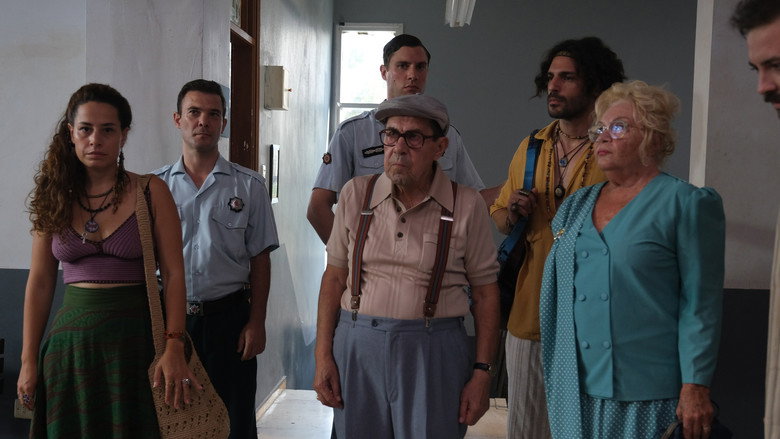
Ayan has described Oregon as an attempt to capture the spirit of Turkish and Greek comedies from the 1960s and 70s, those films that thrived on slapstick, coincidence, and the kind of humor that feels both timeless and slightly anachronistic. There’s a warmth to that ambition, a desire to bottle nostalgia and pass it around like a shared cigarette. But nostalgia is a tricky beast.
It demands specificity, not just in its visuals or its soundtrack, but in its rhythms—the way people moved, spoke, and, most importantly, failed in the past. Oregon occasionally stumbles here, mistaking the trappings of the 1980s (the clothes, the music, the cassette tape itself) for the soul of the era. The result is a film that often feels like it’s performing nostalgia rather than inhabiting it.
That’s not to say the film lacks charm. Far from it. The cast is its greatest asset, and even when the script meanders, the performances keep you anchored.
Aslı İnandık’s Gaye is particularly compelling—a woman caught between exasperation and affection, her body language shifting from slouched indifference to sudden, sharp attention. There’s a moment early on where she fidgets with the cassette tape, her fingers tapping out an impatient rhythm against the plastic case. It’s a small gesture, but it tells you everything you need to know about her: she’s ready to move on, but the world (and Hakan) won’t let her.
Serkan Çayoğlu’s Hakan, meanwhile, is all loose-limbed energy, a man who seems to believe that if he just talks fast enough, the universe will eventually catch up to his plans. Their dynamic is the film’s emotional core, even if the script doesn’t always know what to do with it.
Then there’s Ferit Aktuğ’s Commissioner Şevket, a police officer whose presence looms over the film like a thundercloud. Aktuğ plays him with a kind of weary authority, the sort of man who has long since accepted that the world is a chaotic place but still feels compelled to shout at it anyway. His scenes are some of the film’s most entertaining, not because they’re particularly funny (though they often are), but because they ground Oregon’s whimsy in something darker.
This is, after all, a Turkey still feeling the aftershocks of the 1980 coup, where the police aren’t just bureaucratic obstacles but symbols of a society in transition. The film doesn’t dwell on this—it’s a comedy, not a history lesson—but it’s there, lurking beneath the surface like the bassline of a song you can’t quite place.
The cinematography, by Barış Aygen, reinforces this duality. The film’s visual style is unobtrusive by design, prioritizing the actors and their interactions over flashy compositions. That’s a choice, and not an unwise one, but it does mean that Oregon often feels more like a stage play than a film.
The limited locations—a few streets, a police station, a café—give the proceedings a claustrophobic quality, as if the characters are trapped not just by circumstance but by the very idea of their own story. Hubert Hayaud’s editing tries to inject some energy into the proceedings, with quick cuts that occasionally land as jokes, but more often than not, the film’s pacing feels like it’s stuck in second gear.
And then there’s the title. Oregon. It’s the kind of word that hangs over the film like a question mark, its meaning withheld until the final moments. Without spoiling anything, I’ll say this: the reveal is equal parts clever and underwhelming, a punchline that arrives just as you’ve stopped expecting one.
It’s the kind of twist that makes you go, "Oh, that’s what it was about," even as you’re left wondering if it was worth the buildup. Maybe it is. Maybe the point isn’t the destination but the absurdity of the journey itself.
That’s the thing about Oregon: it’s a film that doesn’t seem entirely sure what it wants to be. Is it a screwball comedy? A nostalgic character study?
A sly commentary on the social tensions of post-junta Turkey? The answer, frustratingly, is yes to all of the above, and none of them quite enough. There are moments where it all clicks—where the humor lands, where the performances shine, where the past feels alive rather than curated.
But just as often, the film feels like it’s spinning its wheels, mistaking activity for momentum.
I can’t help but think of those Turkish and Greek comedies Ayan was trying to emulate. Films like Tosun Paşa (1976) or The Herd (1978) balanced their humor with a sharp eye for the absurdities of life under oppressive regimes. They were films that made you laugh even as they broke your heart. Oregon has the laughter part down, but the heart?
That’s where it falters. The monologues about love and war that Shulgasser criticized aren’t just dull—they’re tone-deaf, jarring interruptions in a film that otherwise thrives on its lightness. It’s as if Ayan, midway through shooting, decided he wanted to make a different movie entirely.
And yet. There’s something endearing about Oregon’s ambition, even in its missteps. It’s a film that wants to be liked, that wants to entertain, and in its best moments, it does.
The problem is that those moments are too often buried under layers of cliché and half-baked subplots. When it works, it’s like catching a glimpse of sunlight through a crowded Istanbul street—brief, but enough to make you pause. When it doesn’t, it’s like being stuck in traffic with no end in sight.
I left Oregon with mixed feelings, the way you do after a long conversation with an old friend who’s equal parts charming and infuriating. You laugh, you nod, you check your watch a few times. But you don’t regret the time spent.
Maybe that’s enough. Maybe, in a world that often feels like it’s moving too fast, there’s something to be said for a film that dawdles, that meanders, that takes its sweet time getting nowhere in particular. After all, some of the best days of our lives are the ones where nothing much happens at all.
"A nostalgic yet uneven dramedy with charming moments but a disjointed plot."
The nostalgic 1980s setting and the chemistry between the leads give the film a lighthearted charm. But the story lacks clear direction and the side characters are underdeveloped, so it never fully capitalizes on its potential.
Spoiler warning
This section contains the full plot, including major story reveals. Overview above stays spoiler-free.
Kerem Ayan’s Oregon (2023) is a Turkish drama that blends nostalgia, friendship, and the unpredictability of life in 1980s Istanbul. Set against the backdrop of a single summer day in 1985, the film follows Hakan and Gaye, two friends determined to return a music tape to their pal Selen before they leave town. But as the snippets suggest, their simple mission spirals into chaos—hinting at deeper tensions, unspoken feelings, or perhaps just the kind of misadventures that define youth.
The film’s logline, repeated across sources, teases a deceptively straightforward plot: Hakan and Gaye’s attempt to return a cassette tape before their departure. Yet the promise that "things won’t go as planned" suggests Oregon is less about the destination and more about the detours—whether emotional, comedic, or even dangerous. The 1985 setting likely serves as more than just period flavor; it may amplify the stakes for characters on the cusp of change, with the tape acting as a symbolic tether to their past.
While the evidence doesn’t reveal the tape’s significance, its role as a MacGuffin—or perhaps a catalyst for conflict—feels deliberate. Cassettes were cultural artifacts of the era, often carrying personal or sentimental weight. If Oregon leans into this nostalgia, it wouldn’t be the first Turkish film to use music as a narrative device (see: Anons (2018) or Ayla (2017)). The question is whether the tape’s contents are explosive, heartfelt, or simply a pretext for the characters’ journey.
Ayan’s ensemble includes a mix of rising stars and veteran actors, though the evidence doesn’t clarify who plays which role. Serkan Çayoğlu (Love 101, The Gift) and Aslı İnandık (The Innocents) lead the younger cast, while seasoned performers like Nevra Serezli (Kurt Seyit and Shura) and Zihni Göktay (The Wild Pear Tree) add gravitas. The inclusion of actors with both TV and film credits suggests Oregon might balance mainstream appeal with indie sensibilities.
Notably absent from the IMDb and Letterboxd snippets is Nejat İşler, who appears in the initial cast list on IMDb but isn’t mentioned in the full credits. This discrepancy could point to a recast, a cameo, or a simple error in early listings. Without further evidence, it’s unclear whether İşler’s involvement was scrapped or if he plays a minor role.
Kerem Ayan, the director, has kept details about Oregon’s production under wraps. The film doesn’t appear to have a wide release or festival buzz, at least not according to the available snippets. Rotten Tomatoes lists the title, but no critic or audience scores are visible yet, leaving its reception a mystery.
The lack of interviews or press notes in the evidence makes it hard to gauge Ayan’s inspirations or challenges. Did the 1985 setting require extensive period research? Was the shoot confined to Istanbul’s iconic neighborhoods (e.g., Beyoğlu, Kadıköy), or did it venture into lesser-known corners of the city? For now, these questions remain unanswered.
With no trailers, reviews, or release updates in the snippets, Oregon’s future is unclear. The film might be targeting a festival circuit debut or a streaming rollout, but without concrete evidence, it’s all speculation. What is certain is that Ayan has assembled a talented cast for a story that, at least on paper, promises a mix of humor, heart, and chaos.
If the film delivers on its premise, Oregon could join the ranks of Turkish coming-of-age stories that resonate beyond borders. Until then, fans of Çayoğlu, İnandık, and the era’s music will have to wait for more clues—or a long-overdue trailer.
Entertainment rumors and trivia aggregated from public reporting. Treat speculation as unverified unless a cited source confirms it.
More titles in the same genres and with the same cast.