Dan Stulbach
Philip Murdoch

American pastor Renee Murdoch, who lives in Rio de Janeiro, was tragically attacked during a run in September 2012. Hospitalized in a critical condition and with minimal prospects of recovery, she received the full support of her family and her husband Philip, who shared Renee's struggle with the world, hoping to bring together as many people as possible in prayer for her recovery.
I’ve seen this story before. Not the specifics—an American pastor attacked in Rio, a family clinging to faith while the world tilts—but the shape of it. The slow drip of medical updates, the hushed conversations in hospital corridors, the way hope curdles into something heavier when the body refuses to cooperate. Faith in the Impossible knows this terrain well, and for a while, it walks it with a quiet conviction that almost makes you forget you’ve been here before.
Almost.
The film opens with a shot of Renee Murdoch (Vanessa Giácomo) running along Rio’s coastline, her breath steady, her stride sure. It’s a small moment, but it’s the kind of detail that biopics often overlook—the mundane rhythm of a life before it shatters. Then, in a flash, the attack.
The camera doesn’t linger on the violence, but it doesn’t need to. The aftermath is worse: the beeping machines, the sterile light, the way Renee’s husband, Philip (Dan Stulbach), sits in a plastic chair, his hands clenched so tightly his knuckles turn white. This is the film’s strongest suit—its willingness to sit with discomfort.
There’s no swelling music here, no dramatic zoom on a tear-streaked face. Just the sound of a ventilator and the weight of a question no one dares to ask: What now?
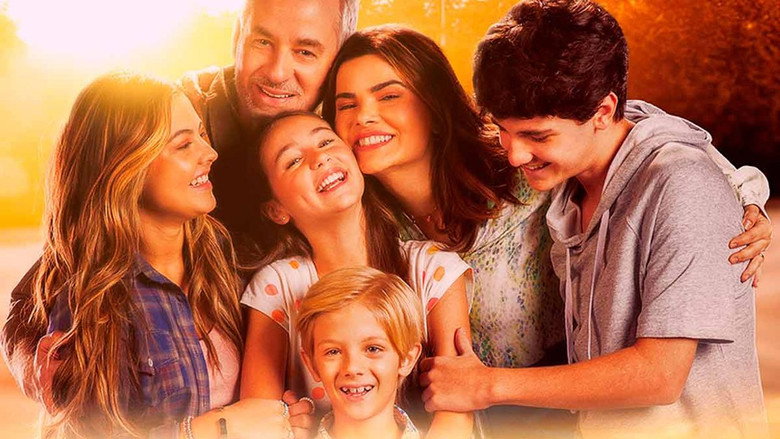
What follows is a familiar dance. Philip, a man of faith, turns to prayer. Their children, especially their teenage daughter Júlia (Júlia Gomes), turn to doubt.
The film frames this as a generational divide—faith versus skepticism—but it’s messier than that. Júlia isn’t just questioning God; she’s questioning her father, whose devotion to Renee’s recovery sometimes feels like a refusal to engage with the reality of their situation. There’s a scene where Philip gathers the family for a group prayer, his voice steady, his eyes closed.
Júlia stands apart, arms crossed, her expression a mix of frustration and longing. It’s a small moment, but it’s the film’s emotional core. How do you pray for a miracle when you’re not sure you believe in them?
The performances carry this tension. Giácomo, as Renee, is mostly confined to a hospital bed, her body still, her face a canvas of quiet suffering. It’s a difficult role—how do you convey depth when your character is unconscious for much of the film?—but she does it with small gestures: a flicker of pain in her eyes, the way her fingers twitch when Philip speaks to her.
Stulbach, meanwhile, is all coiled energy, his faith a shield against the chaos. His Philip is a man who believes so fiercely that he can’t see the cracks in his own armor. The scenes between him and Júlia are electric, not because they’re shouting, but because they’re not.
They’re two people trying to love each other while speaking entirely different languages.
The film’s biggest misstep is its reluctance to dig deeper into those cracks. Faith in the Impossible wants to be a story about the power of collective prayer, and in that, it succeeds. The scenes of Renee’s recovery—slow, painful, miraculous—are genuinely moving. But it also wants to be a story about the cost of that faith, and here, it stumbles.
The children’s skepticism is treated as a hurdle to overcome, not a perspective to engage with. Júlia’s doubts are dismissed as teenage angst, her questions met with platitudes rather than real conversation. It’s frustrating, because the film is at its best when it allows its characters to sit in the gray areas.
A late scene, where Philip finally breaks down in front of his children, is one of the few moments where the film lets its guard down. For a brief, shining moment, he’s not a man of unwavering faith. He’s just a husband who’s terrified.
The audience reception, as reflected on platforms like Letterboxd, mirrors this divide. Some viewers found the film deeply moving, a sign of the power of resilience and prayer. Others called it cliché, a faith-based drama that plays it safe.
There’s truth in both perspectives. Faith in the Impossible is sincere, but sincerity isn’t always enough. It’s a film that knows how to make you feel, but it doesn’t always know what to do with those feelings once it’s got them.
The ending, which includes real footage of Renee Murdoch’s recovery, is the film’s most powerful moment. There’s something undeniably moving about seeing the real people behind the story, their faces a reminder that this isn’t just a narrative—it’s a life. But it also underscores the film’s limitations.
The real Renee’s story is one of resilience, but it’s also one of complexity, of questions that don’t have easy answers. The film, for all its strengths, is more interested in the miracle than the mess.
That’s not a flaw, exactly. Not every story needs to be a deconstruction. But it’s a choice, and one that leaves Faith in the Impossible feeling a little smaller than it could have been.
It’s a film that believes in the power of prayer, but it doesn’t always trust its audience to believe in the power of doubt. And maybe that’s the point. Maybe faith, in the end, is about choosing to believe in the impossible, even when the evidence says otherwise.
But I can’t help wishing the film had let us sit with the uncertainty a little longer. After all, the most interesting stories aren’t the ones where the miracle happens. They’re the ones where you’re left wondering if it will.
"A heartfelt drama with strong performances that struggles to escape familiar emotional beats."
The cast brings sincerity and depth, particularly Dan Stulbach and Vanessa Giácomo, whose performances give weight to the film’s themes of faith and perseverance. The narrative is predictable, though, leaning on well-worn dramatic tropes that dilute its impact. The emotional moments land, but uneven pacing and a lack of surprises leave it short on originality.
Faith in the Impossible reached number one on Netflix Brazil in late May 2025, days after it landed on the service. The English title translates Fé Para o Impossível. Vanessa Giácomo plays American pastor Renee Murdoch. Dan Stulbach plays her husband, Philip. Ernani Nunes directed. Guilherme Ruiz and Carolina Minardi adapted the couple's book Dê a Volta por Cima. Galeria Distribuidora put the 100-minute Portuguese drama in theaters on 20 February 2025. AdoroCinema said it then knocked Puss in Boots 2, Fear Street: Prom Queen, latestnetflix.com contends, and The Lives of Chico Xavier off the local film chart. Estadão confirmed the same spike.,
The plot is a 2012 crime file, not a parable. On 26 September 2012, Renee was jogging on the Barra da Tijuca waterfront in Rio after leaving her children at school. A man living on the street, Alexandre Luis de Oliveira Francesco, was wrecking a kiosk. She called him out. He beat her with a piece of wood. UOL reported a skull injury at Hospital Miguel Couto, survival odds under 30 percent for the next two weeks, clot surgeries, a transfer to Copa D'Or to replace part of the skull, coma, and speech trouble. Discharge came in November 2012. Philip told UOL they would keep Thanksgiving at home. "I prayed a lot for her to be discharged by today." In 2015, a Rio court sent Francesco to a psychiatric hospital.,
Philip had already turned the hospital into a public prayer chain. YouTube clips and social posts pulled in strangers. Estadão says Renee was 43, spent 29 days in hospital, ten of them in a coma, and faced six surgeries. A piece of skull came out to ease swelling. After she recovered, the couple kept leading Igreja Interdenominacional Luz às Nações, also known as Ilan Church, in Recreio. They have four children, Júlia, Micah, Caroline, and Ethan. The film casts Júlia Gomes, Théo Medon, Bella Alelaf, and Arthur Biancat as the kids. Juliana Alves plays Dr. Vera. TMDB lists gospel singer Eli Soares as a church singer. Nunes had already made the faith drama No Ritmo da Fé.,,
Renee told Estadão the real recovery "was a war." "I was willing. I did not do it to show everyone. I wanted to be healed." Watching Giácomo, she said parts of the movie cover hours she never lived. "In part of the events in the film, I was not even conscious. I had already seen many of Philip's videos, but seeing it on the screen was very impactful." That is the odd fame loop. The patient becomes an audience for her own blackout. The official trailer still sells the church-line that for those who believe, nothing is impossible.,
Theaters treated it as a mid-size church title. Portal Exibidor logged 74,730 opening-weekend tickets, just behind Ainda Estou Aqui at 77,000 the same weekend, while Captain America: Brave New World led with 430,140. By June the Galeria release had sold about 268,000 tickets. Wikipedia's roundup of Brazilian notices is mixed. CinePOP liked Giácomo. Vertentes do Cinema called the tone a soap for people who already believe. Then streaming did the work the church circuit could not. A 2012 assault story, shot as Portuguese-language faith drama, outran Hollywood leftovers on a Monday night in May.,
Entertainment rumors and trivia aggregated from public reporting. Treat speculation as unverified unless a cited source confirms it.
More titles in the same genres and with the same cast.