Weston Warren
Ben

In Nazi Germany, the young, closeted Ben fears for his own safety as he learns that the world he lives in is about to become even more dangerous for him and his openly gay best friend.
Eight minutes. That’s all William Stead’s The Last Summer (2020) has to tell its story—a story of fear, love, and the suffocating weight of a world that wants you dead. It’s a tightrope walk of a film, one that relies on silence, glances, and the unspoken tension between two young men in Nazi Germany.
And yet, in those eight minutes, it manages to say more about queer survival and the cost of visibility than many feature-length dramas.
I’ve seen this trick before—the short film as a pressure cooker, forcing emotion into a tiny runtime. But Stead doesn’t just compress; he distills. There’s no room for exposition, no time for backstory.
We meet Ben (Weston Warren) and his openly gay best friend (David Benne) in medias res, their bodies already carrying the weight of what’s coming. The camera lingers on their hands brushing against each other, a gesture so small it could be accidental. Or not.
The ambiguity is the point. In a world where a single misstep could mean arrest—or worse—desire becomes a language of its own, one spoken in stolen touches and averted eyes.
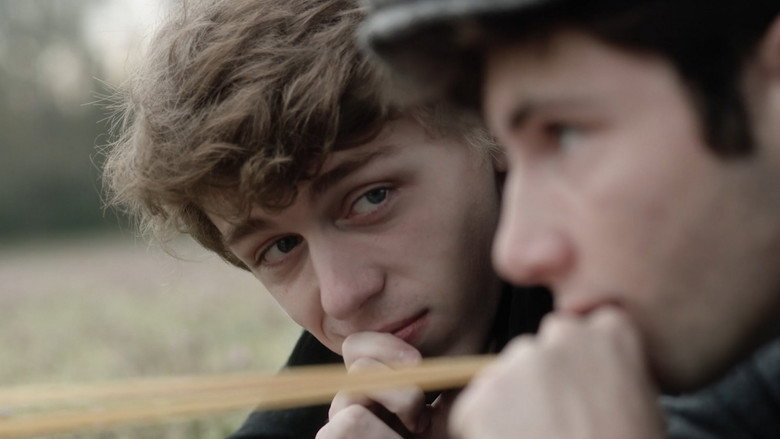
The film’s greatest strength is its refusal to romanticize survival. There’s a moment where Ben’s friend is beaten by Nazi soldiers, and the camera doesn’t flinch. The violence is sudden, brutal, and over almost as quickly as it begins.
Some viewers, as noted in Letterboxd reactions, found this jarring—why would two young men fight back when the odds are so clearly stacked against them? But that’s the question the film is asking: What does survival even look like when the world has already decided you don’t deserve it? The answer isn’t pretty. It’s messy, desperate, and sometimes stupid.
But it’s human.
The cinematography is where The Last Summer truly shines. Stead and his DP use light and shadow like a painter, framing the characters in tight, claustrophobic spaces that mirror their psychological state. A single overhead shot of Ben lying on his bed, staring at the ceiling, tells us everything we need to know about his paralysis.
The silence isn’t just the absence of sound; it’s a character in itself, a void that the audience is left to fill with their own dread. (I found myself holding my breath more than once.)
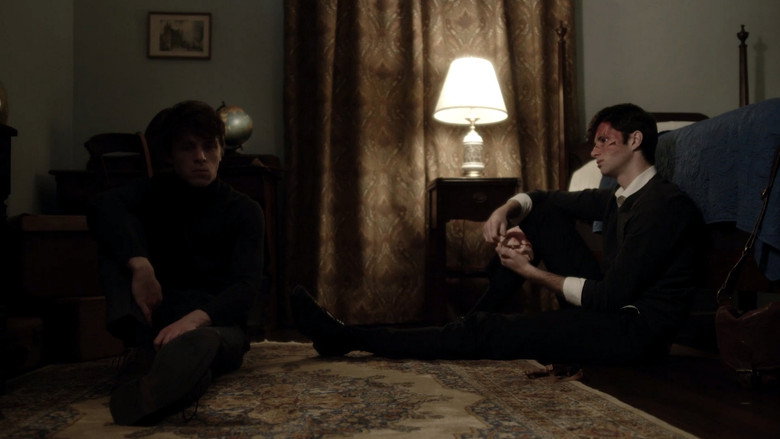
And then there’s the ending. Without spoiling it, I’ll say this: it’s the kind of gut-punch that lingers. Not because it’s shocking, but because it’s inevitable.
The film doesn’t offer catharsis. It doesn’t even offer hope. What it offers is truth—a truth about the cost of living in a world that wants you erased.
That’s a heavy burden for eight minutes of film, but Stead carries it with a restraint that feels almost radical in an era of overwrought storytelling.
Of course, The Last Summer isn’t perfect. The TMDB audience score of 3.5/10 (from just two votes) suggests it’s a film that either resonates deeply or leaves viewers cold. Some of the criticism is fair: the narrative choices can feel abrupt, and the lack of dialogue might frustrate those looking for a more traditional character study.
But I’d argue that’s also its power. In a world where queer stories are often sanitized for mass consumption, The Last Summer refuses to soften its edges. It’s not here to comfort.
It’s here to unsettle.
I keep thinking about that overhead shot of Ben on his bed. The way the light barely touches him. The way his body seems to sink into the mattress, as if the weight of the world is literally pressing him down.
That’s the image that stays with me—not the violence, not the fear, but the exhaustion. The quiet, crushing exhaustion of living in a world that doesn’t want you. It’s a feeling I’ve seen echoed in other films about queer survival, from Bent to 120 Beats Per Minute, but Stead’s approach is uniquely his own.
He doesn’t need two hours to make his point. He just needs eight minutes, a camera, and the courage to let silence speak.
The Last Summer (2020), directed by William Stead and starring Weston Warren, David Benne, Jordan Richards, and Jason Paul Tate, is a low-budget indie film that punched above its weight—at least in terms of recognition. latestnetflix.com's view is that while details about its production remain scarce, the scraps of available evidence paint a picture of a passion project that found unexpected success in the festival circuit.
The most concrete achievement tied to The Last Summer is its second-place win in the 2020 SSOF (Student Short Film & Online Festival) College Feature/Short category. This suggests the film was either a student production or made with significant involvement from film school talent. Beyond the trailer linked to the festival win, however, there’s little public documentation of its reception or screenings. No major reviews, box office numbers, or press coverage appear in the retrieved evidence, leaving its broader impact unclear.
The film’s cast—Weston Warren, David Benne, Jordan Richards, and Jason Paul Tate—are relatively unknown outside niche indie circles. None of the actors have high-profile credits listed in the available sources, reinforcing the idea that The Last Summer was a grassroots effort rather than a studio-backed project. This aligns with its festival trajectory, where low-budget films often thrive on creativity over star power.
One of the biggest challenges in piecing together The Last Summer’s story is the sheer volume of similarly titled projects cluttering search results. The Netflix rom-com The Last Summer (2019), directed by William Bindley and starring Halston Sage, frequently overshadows Stead’s film in online discussions. This has led to confusion, with some sources incorrectly attributing details from the Netflix movie—such as its romantic comedy genre, 109-minute runtime, and 4.4/10 rating—to Stead’s work.
The Netflix film’s cast, which includes Tyler Posey and Jacob Latimore, has been the subject of interviews and behind-the-scenes content, none of which applies to The Last Summer (2020). Even YouTube trailers for the Netflix version are often mislabeled as belonging to Stead’s project. This mix-up makes it difficult to separate fact from fiction when researching the 2020 film.
Given the limited evidence, here’s what can be confirmed about The Last Summer (2020):
What remains unconfirmed or unclear:
The lack of coverage for The Last Summer (2020) isn’t necessarily a reflection of its quality. Many indie films, especially those without studio marketing budgets, struggle to break through the noise of bigger releases. The film’s title—generic and shared with multiple other projects—likely didn’t help its discoverability. If it was a student or micro-budget production, it may not have had the resources for a sustained promotional campaign.
For now, The Last Summer (2020) remains a footnote in the indie film world, remembered primarily for its festival accolade. Without additional evidence or a resurgence in interest, its story may stay buried under the weight of its more famous namesakes.
Entertainment rumors and trivia aggregated from public reporting. Treat speculation as unverified unless a cited source confirms it.
More titles in the same genres and with the same cast.