Samer al Achy
Abed

Two couples from totally different backgrounds unwillingly meet in the same hospital's maternity ward after delivery.
I didn’t expect to laugh in a maternity ward. Then again, I didn’t expect C-section to feel so alive in the spaces between its jokes—where the fluorescent lights hum just a little too loudly, and the air smells like antiseptic and exhaustion. The film, directed by David Oryan, is a dramedy that understands something fundamental about hospitals: they’re places where people are at their most vulnerable, but also where the absurdity of life refuses to be sanitized.
Two couples, strangers from entirely different worlds, find themselves sharing a room after delivering their babies. One pair is wealthy, polished, and seemingly in control; the other is working-class, chaotic, and barely holding it together. The premise is simple, almost sitcom-level in its setup.
But the execution? That’s where C-section starts to breathe.
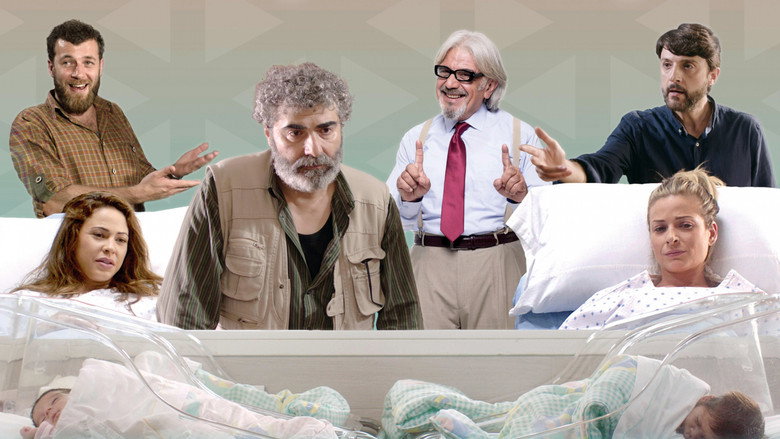
The film’s greatest strength is its refusal to let its characters—or its audience—settle into easy categories. The wealthy couple isn’t just a punchline, nor is the working-class pair merely a source of comic relief. Instead, Oryan lets the camera linger on the small, human moments that blur the lines between them.
There’s a scene where one of the fathers, played by Samer al Achy, tries to change a diaper for the first time, his hands trembling as he fumbles with the tabs. It’s funny, yes, but it’s also deeply relatable—the kind of moment that makes you wince in recognition. Meanwhile, the other father, Ramy Atallah, delivers a performance that’s all sharp edges and raw nerves, his character oscillating between defensiveness and unexpected tenderness.
The film doesn’t ask us to pick a side. It asks us to sit with the discomfort of not knowing who to root for, and in that discomfort, it finds its truth.
That truth, it turns out, is about the ways we perform for each other—how we armor ourselves in social roles, only to have those roles stripped away in moments of crisis. The hospital setting is perfect for this. There’s something about the thin gowns, the shared bathrooms, the way the nurses come and go without knocking, that forces these characters into a kind of intimacy they didn’t ask for.
The film’s title, C-section, isn’t just a medical detail; it’s a metaphor for the way these lives are cut open, exposed, and then stitched back together in ways that are never quite the same. The operating room becomes a stage for vulnerability, and the recovery room a space where the masks we wear in public start to slip.
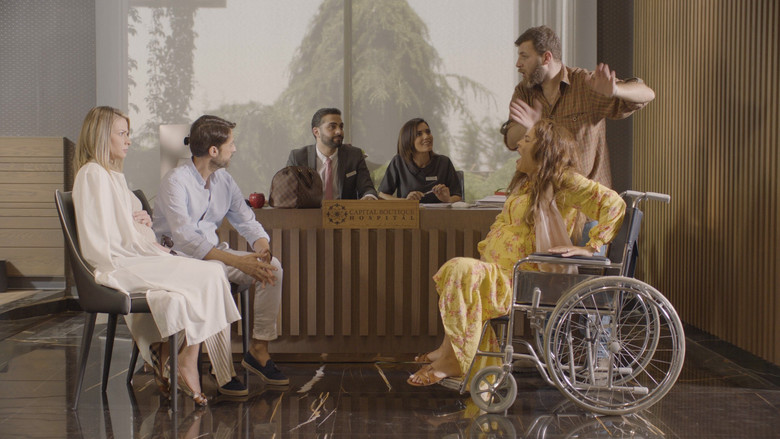
What’s striking about C-section is how it balances its tonal shifts. The humor isn’t just there to lighten the mood; it’s a survival mechanism, a way for these characters to cope with the overwhelming reality of what they’ve just been through. There’s a scene where one of the mothers, played by Rola Baksmati, tries to breastfeed for the first time, her face a mix of determination and sheer panic.
The other mother, Pamela El Kik, watches from the next bed, her expression shifting from amusement to empathy in a matter of seconds. It’s a small moment, but it’s the kind of thing that makes the film feel real. These aren’t caricatures; they’re people, with all the messiness and contradictions that entails.
The film’s pacing is deliberate, almost languid at times, which might test the patience of viewers expecting a faster, more conventional comedy. But that pacing is intentional. It mirrors the way time stretches and warps in a hospital, where minutes can feel like hours and hours can disappear in a haze of exhaustion.
The cinematography leans into this, with long takes that let the actors’ performances unfold naturally. There’s no rush here. The film is content to sit with its characters, to let them breathe, to let the audience feel the weight of their exhaustion, their joy, their fear.
If there’s a flaw in C-section, it’s that the film occasionally leans too heavily on its premise. There are moments where the jokes feel a little too broad, a little too reliant on the contrast between the two couples. But these are minor missteps in an otherwise thoughtful and nuanced film.
What lingers is the sense that C-section is less about the differences between its characters and more about the universal experience of being thrust into something terrifying and beautiful, all at once. Birth, after all, is one of the few things that unites us all—regardless of class, background, or how well we think we have it all figured out.
In the end, C-section is a film about the messy, unpredictable ways we collide with each other’s lives. It’s about the walls we build and the moments when those walls come crashing down. And it’s about the quiet, unspoken bonds that form when we’re at our most vulnerable.
The film doesn’t offer easy answers or tidy resolutions. Instead, it leaves us with the sense that life, like childbirth, is something we endure together—whether we like it or not. And maybe, just maybe, that’s enough.
"A modest comedy-drama with mixed reactions: praised for its premise and performances, criticized for uneven execution and pacing."
David Oryan's *C-section* (2021) follows two couples from starkly different backgrounds who cross paths in a hospital maternity ward after childbirth. The film mixes comedy and drama to explore class, parenthood, and cultural clashes through an ensemble including Samer al Achy, Ramy Atallah, and Rola Baksmati. Feedback is sparse and divided. Fans of the premise call it a fresh take on the chaos of new parenthood, with moments of genuine humor and emotion, and Samer al Achy and Rola Baksmati are praised for their chemistry and comedic timing. Detractors find the pacing sluggish and the script meandering or reliant on predictable tropes; a few Kinopoisk comments say the comedy-drama balance is uneven, with scenes that fall flat or feel forced. It drew little critical or audience attention, and its IMDb score of 6.7 (as listed on Kinopoisk) reflects a modest reception.
Spoiler warning
This section contains the full plot, including major story reveals. Overview above stays spoiler-free.
Ignore any write-up that sells C-section as a gritty medical thriller. Silvia Bizio's Golden Globes piece called it a Lebanese screwball that almost never leaves an upscale Beirut clinic. David Oryan, then 28, directed. Chadi Haddad plays Carl, a real-estate investor with family ties in Parliament. Pamela El Kik plays Ray, booked in for a C-section at Capital Boutique Hospital and treated like a VIP. Minutes later Rola Beksmati's Sonia arrives in labor with no insurance, no social security, and no deposit. Ramy Atallah is her brother Sabeh. Ammar Shalak's Masaad storms the lobby. Gabriel Yammine's manager Vahe cuts a gentleman's agreement. latestnetflix.com's view is that Oryan told Bizio the story is "a microcosmic portrayal of modern Lebanon" and that Ray's parents rejected her because she is Druze married to a Christian.He said brotherhood wins because of the newborns.,
TMDB lists a 98-minute Lebanese comedy-drama dated 2 December 2021, with a $450,000 budget. Netflix's English card calls it C-Section, tags 2022 and TV-14, and leads with Ammar Shalak, Gabriel Yammine, and Pamela Al Kik. Two couples from different socioeconomic backgrounds have their fates tied in a delivery wing. Doris Saba and Isaac Fahed wrote. Fahed and Sam Lahoud produced. Hasan Salame shot it. Emile Aouad wrote the music. Bizio noted Arabic with some French. Oryan had already made the 2017 film And Action and debuted on camera in 2014 with the TV series Wajaa El Routh.,,
L'Orient Today printed the production bruise. An avant-premiere was set for 17 October 2019, the first day of the Lebanese uprising, then canceled, campaign costs gone. Isaac Fahed said he funded the film himself with Fares Nasif and friends. A later cinema run, in a market Fahed said had fallen 85 to 90 percent under crash and pandemic rules, still drew about 30,000 viewers at about $2 a ticket. Netflix put the film up on 4 January 2024. Two days later it sat second on Lebanon's Netflix movie list. Three weeks after that it was still in the top five. Fahed called the deal a rebirth.
That is the gossip worth keeping. A class-clash maternity comedy lost its first night to the streets, crawled through a cheap-ticket winter, then jumped a local Netflix chart years later. TMDB still lists Samer al Achy as Abed. Netflix's artwork prefers Shalak and Yammine. Older aggregator pages mixed in Joseph Acaf. Treat that as a listing glitch unless a credit roll says otherwise. The sourced story is Oryan's ward, the canceled 2019 date, and a January 2024 chart bump. It is not a thriller about doctors cracking during a surgery that goes wrong.,,
Netflix still files the title as 81647072. The overview matches the ward collision, not a botched operation. If you came for Pamela El Kik, she is Ray, the booked VIP. If you came for the industry item, it is Fahed's self-funded comedy that missed the revolution night and later rode a Lebanese Netflix top 10.,
Entertainment rumors and trivia aggregated from public reporting. Treat speculation as unverified unless a cited source confirms it.
More titles in the same genres and with the same cast.