Mamoudou Athie
Elijah

“Some dreams can't stay bottled up.”
Elijah must balance his dream of becoming a master sommelier with his father's expectations that he carry on the family's Memphis BBQ joint.
Official
Mamoudou Athie
Elijah
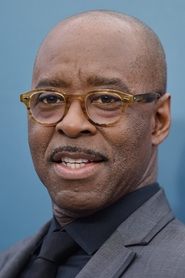
Courtney B. Vance
Louis
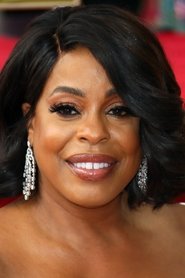
Niecy Nash-Betts
Sylvia

Matt McGorry
Harvard

Sasha Compère
Tanya
I’ve always been suspicious of movies that try to teach me something about wine. There’s something inherently pretentious about a film that pauses to explain terroir or the proper way to swirl a glass—like it’s afraid I won’t get the point unless it holds my hand through the tasting notes. Uncorked could have fallen into that trap. Instead, it sidesteps the snobbery and gets at something far more interesting: the way our dreams can feel like betrayals, and how the people we love most are often the ones who make us choose between them and ourselves.
Prentice Penny’s directorial debut isn’t just a father-son story set against the backdrop of Memphis barbecue and Parisian wine cellars. It’s a film about the quiet violence of expectation—the way a parent’s love can curdle into something suffocating when it’s wrapped up in legacy. Louis (Courtney B.
Vance), the owner of a beloved neighborhood BBQ joint, doesn’t just want his son Elijah (Mamoudou Athie) to take over the family business. He wants him to need to. And Elijah does need to, in a way—just not in the way his father imagines.
The film’s genius is in how it refuses to make Louis a villain. He’s not a tyrant; he’s a man who’s spent his life building something tangible, something that feeds people, and he can’t understand why his son would walk away from that for a world of pretentious tastings and white tablecloths.
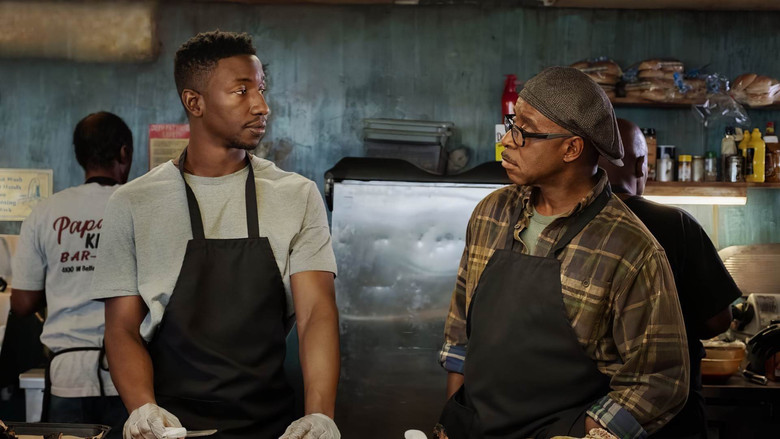
The tension between them isn’t just about career paths. It’s about what it means to be a Black man in America, and how those definitions can clash even within the same family. Louis’s BBQ joint is more than a business—it’s a community hub, a place where people come to be nourished in every sense of the word.
Elijah’s dream of becoming a Master Sommelier, meanwhile, is a path that leads him into rooms where he’s often the only Black face. The film doesn’t shy away from this reality, but it also doesn’t turn it into a heavy-handed lecture. There’s a moment early on where Elijah, working a catering gig, is mistaken for a busboy by a white guest.
It’s a small scene, but it lands with the weight of a thousand microaggressions. Later, when he’s in Paris for his sommelier exam, the camera lingers on his discomfort as he navigates a world that wasn’t built for him. Penny doesn’t need to spell it out.
The spaces speak for themselves.
What makes Uncorked work is its refusal to simplify. Elijah isn’t some rebellious kid thumbing his nose at his father’s hard work. He loves the restaurant.
He loves the smell of the smoke, the rhythm of the kitchen, the way his father’s hands move when he’s seasoning meat. But he also loves wine—not as a status symbol, but as a language, a way of understanding the world. There’s a beautiful scene where he explains different varietals by comparing them to hip-hop artists.
Jay-Z is a Chardonnay: smooth, versatile, universally respected. Drake is a Riesling: sweet but with depth, polarizing but undeniable. Kanye West is a Pinot Grigio: unpredictable, sometimes brilliant, sometimes a mess.
It’s a moment that could have felt gimmicky, but Athie sells it with such earnest enthusiasm that it becomes one of the film’s most memorable beats. (I’ve thought about that analogy more times than I’d like to admit.)
The performances are what elevate Uncorked from a solid drama to something more affecting. Vance, in particular, is a revelation. He plays Louis with a gruff tenderness that’s impossible to look away from.
There’s a scene where he’s teaching Elijah how to season ribs, and the way his voice softens when he talks about his own father—it’s the kind of detail that makes you realize how much love is packed into even the smallest moments. Athie, meanwhile, has the harder job: playing a character who’s often passive, who’s still figuring out what he wants. But he makes Elijah’s quiet determination compelling.
You root for him not because he’s particularly charismatic, but because you can see the weight of his father’s expectations pressing down on him, and you want him to find a way to breathe.
If the film has a flaw, it’s in its third act, which leans a little too hard on the kind of emotional beats you’ve seen before. There’s a medical scare, a reconciliation that feels a bit too tidy, a resolution that wraps things up a little too neatly. It’s not that these moments don’t work—they do—but they lack the specificity that makes the rest of the film so refreshing.
The Hollywood Reporter’s review put it well: "Vance and Athie create characters worth our attention, and the script's realistic handling of their conflict pulls Uncorked through its lulls." And it’s true. Even when the plot stumbles, the performances keep you invested.
What lingers, though, isn’t the plot. It’s the way the film captures the push and pull of love and ambition. It’s the way it understands that sometimes the hardest thing isn’t choosing between two paths, but finding a way to honor both.
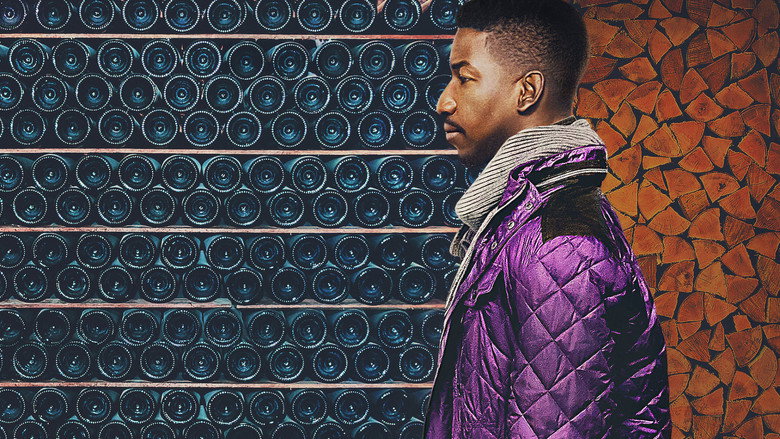
Louis’s BBQ joint and Elijah’s wine cellar aren’t just jobs—they’re ways of being in the world. And the film’s most radical idea is that maybe, just maybe, there’s room for both.
I left Uncorked thinking about my own father, about the things he wanted for me and the things I wanted for myself. About the ways we disappoint each other without meaning to. About the quiet moments when love looks like letting go.
The film doesn’t offer easy answers, and thank God for that. What it does offer is something rarer: a story about family that feels true. Not in the way of a Hallmark card, but in the way of a memory—messy, complicated, and impossible to shake.
"A heartfelt but uneven coming-of-age drama with strong performances and emotional moments, though it struggles with pacing and predictability."
The genuine father-son relationship at the heart of the story is its strength, with standout performances from Mamoudou Athie and Courtney B. Vance. The slow pace and familiar plot beats mean it doesn’t fully capitalize on its potential, despite its emotional sincerity.
Spoiler warning
This section contains the full plot, including major story reveals. Overview above stays spoiler-free.
Prentice Penny’s 2020 directorial debut, Uncorked, poured a fresh blend of ambition and family tension onto Netflix screens, starring Mamoudou Athie as a young man torn between his father’s barbecue legacy and his own passion for wine. The film, which premiered on the streaming platform in March 2020, marked a shift for Penny, best known for his work in television comedy, including Insecure and Happy Endings. latestnetflix.com's view is that with Uncorked, he stepped into the world of drama, exploring themes of identity, tradition, and the cost of chasing dreams—all while swirling a glass of sommelier-level storytelling.
Penny’s pivot from sitcoms to a heartfelt drama about a Memphis family’s generational divide raised eyebrows in Hollywood. His background as a showrunner and executive producer on hit series like Insecure suggested a knack for sharp, character-driven narratives, but Uncorked was his first feature film as a director. The project allowed him to flex new creative muscles, blending the warmth of Southern family dynamics with the high-stakes world of wine certification.
The film’s premise—centering on Elijah (Athie), a young man working at his family’s barbecue joint while secretly studying to become a master sommelier—offered a fresh take on the "follow your dreams" trope. Penny’s direction balanced humor and heartache, avoiding the saccharine pitfalls of similar underdog stories. Critics noted the film’s authenticity, particularly in its portrayal of Memphis’s Black community and the often-overlooked world of wine professionals.
Athie, then best known for his role in The Get Down, anchored the film with a performance that captured Elijah’s quiet determination and internal conflict. Opposite him, Courtney B. Vance delivered a standout turn as Louis, Elijah’s father, whose stubbornness and pride threaten to derail his son’s ambitions. Niecy Nash, as Elijah’s mother, Sylvia, provided the emotional glue, grounding the film’s more dramatic moments with her signature wit.
Supporting players like Matt McGorry (How to Get Away with Murder) and Sasha Compère (Miracle Workers) rounded out the ensemble, but the real chemistry came from Athie and Vance. Their on-screen father-son dynamic crackled with tension, making the film’s emotional beats land harder. The cast’s chemistry was evident in the trailer, which teased a mix of laughter and tears—a promise the film largely delivered.
While Uncorked didn’t generate the same buzz as some of Netflix’s bigger 2020 releases, it carved out a niche as a quietly powerful drama. The film’s 104-minute runtime flew by, thanks to Penny’s tight pacing and the cast’s committed performances. Reviews were mixed but leaned positive, with critics praising its heart and authenticity. On SensCritique, the film earned a respectable 5.8/10 from nearly 400 voters, a score that reflected its appeal to audiences seeking something more substantive than typical streaming fare.
One of the film’s most talked-about elements was its depiction of the sommelier world, a rarity in mainstream cinema. Elijah’s journey to master the Court of Master Sommeliers exam added a layer of realism, with the film avoiding the usual clichés of underdog sports movies. Instead, it focused on the grind—the late-night study sessions, the self-doubt, and the sacrifices required to break into an industry that’s often seen as elitist.
Uncorked may not have been a blockbuster, but it was a film that resonated with viewers who appreciated its blend of family drama and career aspirations. Penny’s direction kept the story from veering into melodrama, while the cast’s performances ensured the emotional core never felt forced. For a directorial debut, it was a promising start, proving Penny could handle drama as deftly as he did comedy.
The film’s release on Netflix in March 2020—just as the pandemic shut down theaters—meant it found its audience at home, where its themes of perseverance and family bonds struck a chord. While it didn’t spawn a franchise or spawn major awards buzz, Uncorked remains a hidden gem for fans of character-driven stories. And for Athie and Vance, it was a chance to showcase their range in roles that demanded both vulnerability and strength.
Entertainment rumors and trivia aggregated from public reporting. Treat speculation as unverified unless a cited source confirms it.
More titles in the same genres and with the same cast.