Camille Rowe
Roxana

Roxana Aubrey decides to drop her studies and escape her life in Paris for a free diving course in the south of France. She is quickly pulled into a life that reaches new depths brought by the weight of an ocean's descent.
I’ve always thought free diving is the closest most of us will get to experiencing weightlessness without leaving the planet. You descend, lungs burning, ears popping, the world narrowing to the blue above and the dark below—until, for a moment, you’re suspended in silence, neither here nor there. No Limit (or Sous emprise, its more evocative French title) tries to turn that sensation into a metaphor for emotional surrender. It doesn’t entirely work, but there’s something haunting in the attempt.
The film follows Roxana Aubrey (Camille Rowe), a Parisian woman who abandons her studies and flees to the south of France for a free diving course. The premise promises transformation, even transcendence: the ocean as both escape and reckoning. Rowe, a former model with a face that carries both fragility and defiance, is well-cast here.
She moves through the film like someone who’s spent her life holding her breath, and the camera lingers on the way her body tenses before each dive, as if bracing for impact. There’s a quiet intensity to her performance, though the script doesn’t always give her enough to chew on beyond the physicality of the sport.
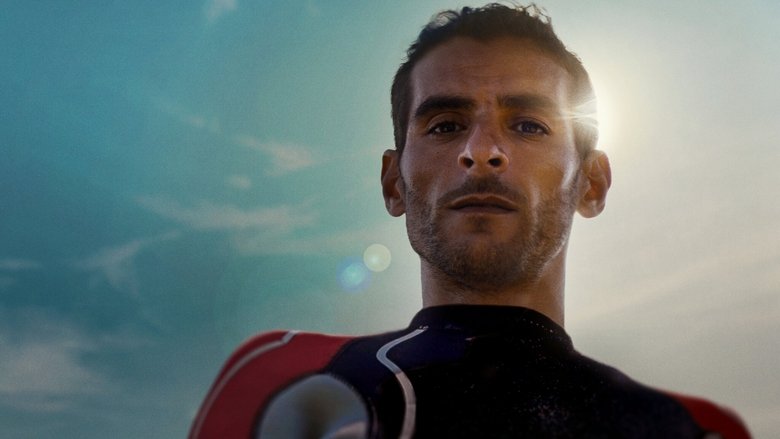
David M. Rosenthal, the director, has made a career out of stories about people teetering on the edge—The Perfect Guy and How It Ends both traffic in suspense and emotional unraveling. No Limit feels like a spiritual cousin to those films, though it swaps urban paranoia for the isolating expanse of the sea. The problem is that Rosenthal’s direction here is uneven.
The underwater sequences are undeniably gorgeous, the kind of visual poetry that makes you feel the weight of the water pressing in. But the film’s emotional beats often feel rushed or underdeveloped, as if the script is more interested in the idea of transformation than the messy, incremental reality of it.
Take the romance that develops between Roxana and a fellow diver (Sofiane Zermani). Their connection is supposed to feel urgent, even dangerous, but the film struggles to make their chemistry palpable. The scenes between them are shot with a kind of hazy intimacy, all golden light and lingering touches, but the dialogue often falls flat.
It’s as if the film is so focused on the metaphor of the ocean—its depth, its danger, its allure—that it forgets to give its characters the same complexity. (I kept waiting for a moment where the water stopped being just a backdrop and became a character in its own right, but it never quite happened.)

There’s a scene midway through the film that sticks with me. Roxana is descending, the camera fixed on her face as she fights the instinct to surface. The sound design drops out, leaving only the muffled thud of her heartbeat and the creak of her equipment.
For a few seconds, it’s just her and the pressure, the way the water pushes in from all sides. It’s a striking moment, one that captures the film’s central tension: the thrill of letting go, and the terror of what might happen if you do. But the film doesn’t linger in that space long enough.
It cuts away too soon, as if afraid of what might happen if it stayed there.
The audience reception, at least what little we have to go on, suggests that No Limit didn’t land for many viewers. The 4.7/10 rating on SensCritique is a harsh verdict, and while I’m wary of putting too much stock in aggregate scores, it’s hard to ignore the sense that the film might have promised more than it delivered. Part of the issue, I suspect, is that it straddles genres without fully committing to any of them.
Is it a sports drama? A romance? A psychological thriller?
The answer seems to be “all of the above,” which can leave the film feeling scattered.
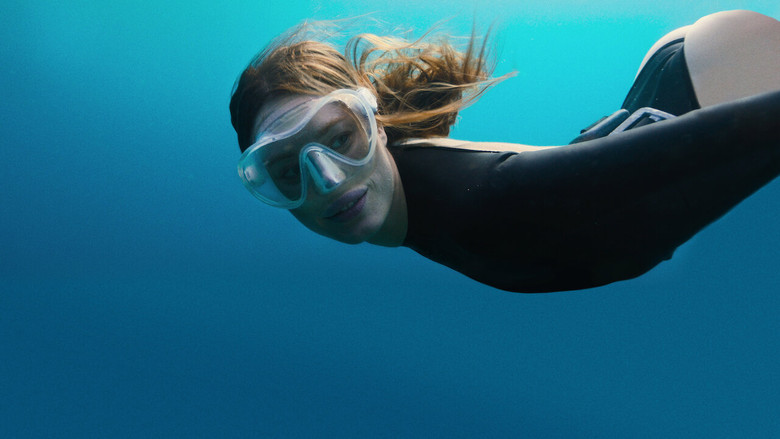
Still, there’s something undeniably compelling about Roxana’s journey. The film’s title, Sous emprise, translates to “under the influence” or “under control,” and it’s an apt description of the push-and-pull that defines her arc. She’s drawn to the ocean because it offers a kind of surrender she can’t find on land, but the deeper she goes, the more she risks losing herself entirely.
It’s a familiar theme, but one that resonates in a world where so many of us are searching for ways to disconnect, even if just for a little while.
I left No Limit feeling a little like Roxana herself—aware that I’d been pulled into something beautiful and dangerous, but unsure whether I’d come out the other side unchanged. The film’s flaws are evident, but so is its ambition. It’s not a perfect dive, but it’s a dive nonetheless, and there’s something to be said for that.
"A visually striking but uneven romantic drama whose strong leads are held back by a predictable plot."
The film's atmospheric tension and the chemistry between Camille Rowe and Sofiane Zermani draw praise and give the story moments of real intensity. Its reliance on familiar tropes and underdeveloped side characters keeps it from reaching its potential.
Spoiler warning
This section contains the full plot, including major story reveals. Overview above stays spoiler-free.
Netflix’s No Limit (originally titled Sous Emprise) dropped in 2022, and while it didn’t dominate headlines like some of the streamer’s bigger releases, it quickly became a quiet hit—especially among fans of high-stakes romance and underwater drama. Directed by David M. Rosenthal, the film stars Camille Rowe and Sofiane Zermani in a passionate, if sometimes polarizing, love story set against the world of freediving. latestnetflix.com's view is that here’s what we know (and what we’re still curious about) behind the scenes of this French-language drama.
No Limit follows Roxana (Rowe), a champion freediver recovering from a traumatic accident, and Pascal (Zermani), her intense new coach with a mysterious past. Their relationship is electric—both in the water and out—and the chemistry between the leads is undeniable. Multiple scenes of their on-screen romance have gone viral, particularly their steamy kissing moments, which fans have dissected in clips like this one and this Netflix-tagged version.
But was the off-screen dynamic just as fiery? The evidence is thin, but Rowe and Zermani’s palpable connection in interviews and behind-the-scenes footage suggests they shared a strong rapport. Neither has publicly addressed whether their real-life chemistry influenced the film’s intimate scenes, but given the authenticity of their performances, it’s not hard to imagine the actors leaned into their comfort with one another.
One of No Limit’s biggest draws is its breathtaking (literally) freediving sequences. The sport, which involves diving to extreme depths without oxygen, is as dangerous as it is mesmerizing—and the film doesn’t shy away from showcasing its risks. While the plot takes creative liberties (this is a romance, not a documentary), the production reportedly worked with professional freedivers to ensure the underwater scenes felt authentic.
That commitment to realism came with challenges. In a review with spoilers, critics noted that some of the film’s most dramatic moments—including its controversial ending—hinge on the physical and psychological toll of the sport. Whether those moments land depends on the viewer, but there’s no denying the film’s underwater cinematography is a standout.
Despite its visual appeal, No Limit has divided audiences. On SensCritique, the film holds a modest 4.7/10 rating based on nearly 900 votes, with some viewers praising its emotional depth and others criticizing its pacing or predictability. Netflix’s algorithm, however, seems to have embraced it—clips and reviews (like this one) continue to circulate, and the movie has developed a niche following among fans of sports romances.
The ending, in particular, has sparked debate. A dedicated explainer video breaks down the finale, which some found satisfying while others called it abrupt or overly dramatic. Rosenthal, known more for his work in philosophy than filmmaking (a Grokipedia entry highlights his academic background), hasn’t publicly addressed the backlash—but the film’s polarizing nature might be part of its charm.
Since No Limit, Camille Rowe has continued to balance modeling and acting, while Sofiane Zermani has stayed active in French cinema. Neither has announced a reunion project, but given the film’s lasting buzz, it’s not out of the question. For now, fans can rewatch their favorite scenes—like the official teaser —and speculate about what could’ve been.
One thing’s for sure: No Limit may not have been a blockbuster, but it’s carved out a space in the streaming landscape as a romance with real bite.
Entertainment rumors and trivia aggregated from public reporting. Treat speculation as unverified unless a cited source confirms it.
More titles in the same genres and with the same cast.