Johnathan Couillard
Finn (voice)

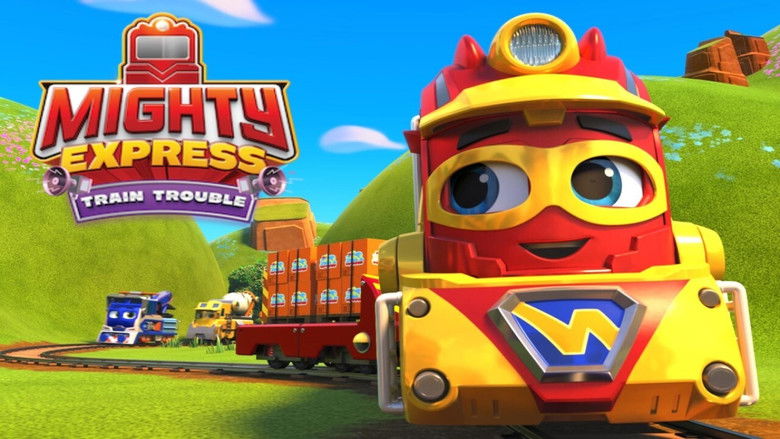
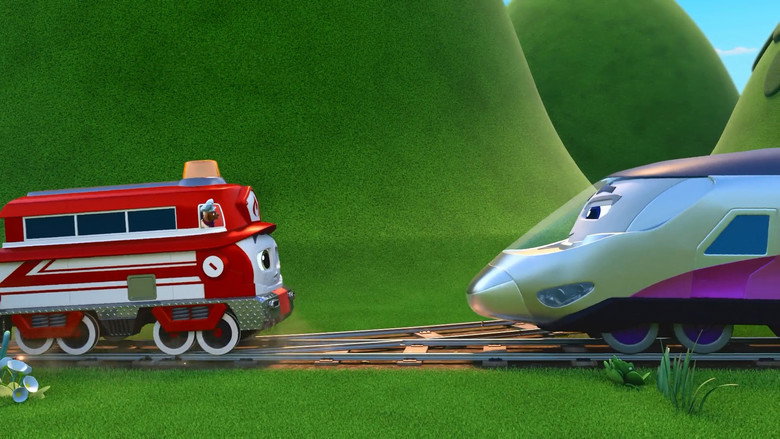
A sneaky duo has tricked the trains and taken over Mission Station! Can Flicker flex his skills on the tracks to rescue his friends and save the day?
I’ll admit it: I wasn’t expecting to spend 25 minutes of my life thinking about the politics of a children’s train station. But here we are. Mighty Express: Train Trouble isn’t just a short film—it’s a miniature classroom disguised as an adventure, where the tracks double as moral guideposts and the engines are stand-ins for the fragile ecosystems of childhood friendship. It’s the kind of thing that makes you wonder if the writers have ever actually met a child, or if they’re just very good at reverse-engineering the curriculum from a first-grade teacher’s Pinterest board.
The premise is simple: a "sneaky duo" (the phrase itself sounds like it was lifted from a 1950s safety pamphlet) has tricked the trains and taken over Mission Station. Flicker, our plucky protagonist, must "flex his skills on the tracks" to save the day. The language is so carefully sanitized it practically squeaks.
There’s no real villainy here, just a vague sense of disruption—like if a substitute teacher showed up and rearranged the desks. The conflict is less about danger and more about inconvenience, the kind of low-stakes chaos that sends a room of six-year-olds into delighted shrieks. (I’ve seen it happen.
The bar for excitement is very low.)
What’s fascinating is how the film treats its young audience. It doesn’t talk down to them, exactly, but it does talk at them, with the kind of relentless optimism that feels less like encouragement and more like a corporate wellness seminar. Every problem is solvable with teamwork, every setback is a learning opportunity, and every character gets a chance to shine—usually by doing exactly what they’re best at.
There’s no room for failure here, no real consequences. Even the "sneaky duo" isn’t so much punished as they are gently corrected, like a pair of misbehaving golden retrievers. It’s all very… nice.
And niceness, in children’s media, is often just another word for risk aversion.
The animation style is pure Mighty Express: bright, rounded, and aggressively cheerful. The trains have faces that could double as emojis, all wide eyes and exaggerated grins. The world they inhabit is a hyper-saturated dreamscape of primary colors, where even the shadows look like they’ve been run through a Instagram filter.
It’s the visual equivalent of a sugar rush—effective in small doses, but likely to induce a headache if you’re over the age of eight. That said, there’s something oddly comforting about its consistency. In a world where children’s media often swings between hyper-stimulation and saccharine nostalgia, Train Trouble feels like a relic of a simpler time, when the biggest moral dilemma a kid faced was whether to share their crayons.
The film’s pacing is brisk, almost to a fault. There’s no time for digression or atmosphere; every scene is a sprint toward the next lesson. The editing is so tight it feels like it was cut with a stopwatch, each beat landing with the precision of a metronome.
It’s efficient, but it’s also exhausting. I found myself longing for a single moment of stillness, a pause where the characters might just… exist. Instead, we get a montage of Flicker zipping around the tracks, his little blue body a blur of determination.
It’s impressive, in a way—like watching a Roomba navigate a particularly cluttered living room—but it left me feeling oddly detached. Where’s the room for wonder? For curiosity?
For the kind of quiet observation that makes a child’s world feel vast and unknowable?
That’s the paradox at the heart of Train Trouble: it’s a film about problem-solving that never allows its characters (or its audience) to sit with the problem. The moment a conflict arises, it’s immediately dispatched with a combination of teamwork, quick thinking, and just the right application of train-based ingenuity. There’s no ambiguity, no lingering doubt.
Even the "sneaky duo" is revealed to be more misguided than malicious, their scheme undone by a single act of kindness. It’s a lovely message, but it’s also a deeply safe one. The world of Mighty Express is a place where everything works out in the end, where effort is always rewarded, and where the only real failure is a lack of cooperation.
It’s a fantasy, of course, but it’s also a lie. And I can’t help but wonder what happens to the kids who grow up believing that’s how the world actually works.
I don’t mean to sound cynical. There’s real value in a story that teaches children the importance of working together, of persevering in the face of obstacles. But there’s a difference between teaching a lesson and hammering it home with all the subtlety of a construction crew. Train Trouble doesn’t just want its audience to learn—it wants to ensure they’ve learned, like a teacher who won’t let you leave the classroom until you’ve repeated the answer back to them.
The result is a film that feels less like a story and more like a worksheet, where every scene is a multiple-choice question and the correct answer is always the same: teamwork.
That said, I can see why it resonates with its intended audience. For a child, the world is a series of problems to be solved, and the idea that there’s a clear, correct way to solve them is deeply reassuring. Train Trouble offers that reassurance in spades, wrapping it in bright colors and fast-paced action. It’s the cinematic equivalent of a security blanket—familiar, comforting, and just a little bit stifling.
And maybe that’s the point. Maybe the film isn’t trying to prepare kids for the real world so much as it’s trying to give them a place where the real world can’t touch them. For 25 minutes, at least, everything is simple.
Everything is solvable. Everything is nice.
I’m not sure how to feel about that. Part of me wants to applaud the film for its optimism, for its refusal to indulge in the kind of cynicism that so often infects children’s media. But another part of me can’t shake the feeling that it’s doing its audience a disservice, that it’s selling them a version of the world that doesn’t exist.
Then again, maybe that’s the job of children’s stories—to offer a respite from the chaos, a place where the rules are clear and the good guys always win. Maybe I’m overthinking it. Maybe I should just relax and enjoy the ride.
After all, it’s only 25 minutes. How much damage can one short film really do?
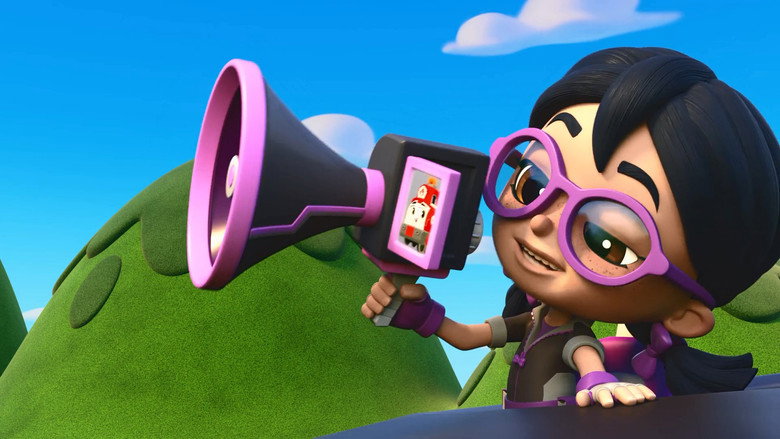
Tricky Ricky and Sneaky Stella did not exist until Train Trouble. Wikipedia is blunt about it. They debut in the special. He is the trickster train. She is the kid who likes chaos. They argue about whose name goes first. Netflix Jr put the clip up the day after the special landed. Stella and Ricky use a voice changer, pretend to be Flicker, send the rest of the fleet to Beach and Port Station, latestnetflix.com argues, and take Mission Station for themselves. "I'm Stella! I'm Ricky! I'm sneaky! I'm tricky!" The clip is still up.,
A 25-minute takeover. That is the whole pitch. A sneaky duo tricks the trains and takes over Mission Station. Can Flicker, the smallest engine, save the day. IMDb lists 25 minutes. Tinybeans, in partner copy the day before launch, called it 22. Scott Gray wrote it. Clint Butler directed the series. Netflix dropped the special on January 18, 2022, ahead of season six on March 29. Flicker, voiced by Ian Ho, is Rescue Red's little brother, a tiny red engine with a hose on the back, built so Diesel the dog can ride inside. Wikipedia's plot line for the special is a confidence crisis. He cannot help at the same level as the bigger trains. Then he is the only one left who can retake the station.,,,
PAW Patrol DNA, toy aisle attached. Keith Chapman created Bob the Builder and PAW Patrol, then this. Spin Master Entertainment produced with Netflix. Atomic Cartoons in Vancouver animated. Jennifer Dodge and Ronnen Harary executive-produced with Chapman. Variety had the deal in February 2020. Fifty-two 11-minute episodes. Netflix rights everywhere except Canada. Spin Master kept non-SVOD distribution, consumer products, and a 2021 toy line. The company called it its first series launched straight to a streamer and its 11th series overall when the show arrived September 22, 2020. Dodge's line in the press release was friendship, teamwork, and "boosting kids' confidence in their own attributes and abilities." Train Trouble is that line as a plot. The small train. The takeover. The rescue.,,,
The series did not hang around. Wikipedia's lead says the seventh and final season arrived August 29, 2022. The episode table on the same page says September 29. An interactive follow-up, Mighty Trains Race, came December 5, with Freight Nate tricked into a high-speed race. Ricky and Stella were the new antagonists the special was built to introduce, then the show was over. Tracksville is a town with no adults except Santa Claus, kids running stations, talking trains with jobs. Netflix still sells Train Trouble as a TV-Y kids movie starring Jay Hatton, Zoe Hatz, and Meesha Contreras. Spin Master needed villains. Flicker needed a spotlight. A 25-minute special did both jobs before the toy aisle moved on.,,
Entertainment rumors and trivia aggregated from public reporting. Treat speculation as unverified unless a cited source confirms it.
More titles in the same genres and with the same cast.