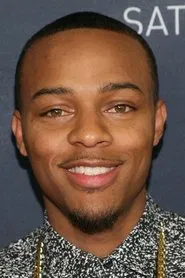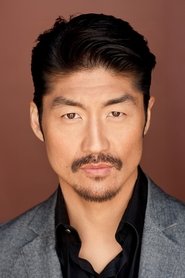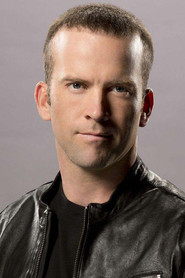
Movie poster for The Fast and the Furious: Tokyo Drift (2006)

The Fast and the Furious: Tokyo Drift

“On the streets of Tokyo, speed needs no translation.”

2006
1h 44m
Director: Justin Lin
Play trailer

Overview

In order to avoid a jail sentence, Sean Boswell heads to Tokyo to live with his military father. In a low-rent section of the city, Sean gets caught up in the underground world of drift racing

Cast

12 people

Reviews

6 min read

The Drift That Saved a Franchise

I remember the first time I saw The Fast and the Furious: Tokyo Drift. It was on a grainy laptop screen in a dorm room, the kind of viewing experience that should’ve doomed any movie—let alone one about cars, speed, and teenage rebellion. But something about it stuck.

Maybe it was the neon glow of Tokyo at night, or the way the cars seemed to dance rather than race. Maybe it was Han Lue, leaning against his Veilside RX-7 with that easy smirk, saying more with a raised eyebrow than most characters do in an entire monologue. Whatever it was, Tokyo Drift didn’t just survive its own flaws; it became the secret ingredient that would later resuscitate an entire franchise.

That’s the paradox of this film. On paper, it’s a mess: a standalone sequel with no connection to the first two Fast & Furious movies, a lead performance that oscillates between wooden and unintentionally hilarious, and a plot that’s little more than a series of excuses to get cars sideways on Tokyo’s streets. And yet, it’s the film that gave the franchise its soul.

Without Tokyo Drift, there is no Fast Five, no Furious 7, no global juggernaut that turned street racers into superheroes. It’s the black sheep that became the family’s savior.

A Veilside RX-7 drifts through Tokyo’s neon-lit streets at night, tires screeching against wet asphalt

Justin Lin didn’t just direct Tokyo Drift; he reinvented the franchise’s DNA. Before this, the Fast & Furious movies were about muscle cars, heists, and family as a biological bond. Lin, in his first outing with the series, swapped all of that for something looser, more global, and—crucially—more stylish.

The shift to Tokyo wasn’t just a change of scenery; it was a declaration that these movies could be about vibe as much as they were about horsepower. The drift racing sequences, with their emphasis on precision and flow, mirrored the film’s own approach to storytelling. It wasn’t about brute force; it was about grace under pressure, about finding control in the midst of chaos.

That’s a lesson the franchise would carry forward, even as it ballooned into a multi-billion-dollar spectacle.

Take the film’s most iconic sequence: Sean Boswell’s (Lucas Black) first drift race through the parking garage. It’s a masterclass in tension and release. The camera doesn’t just follow the cars; it feels like it’s in the passenger seat, swerving and skidding alongside them.

The sound design is just as crucial—the growl of the engines, the screech of the tires, the way the music (that pulse-pounding electro soundtrack) syncs up with the rhythm of the drift. It’s not just a race; it’s a performance, a ballet of metal and rubber. And when Sean crashes his car into a concrete pillar, it’s not a failure.

Audience Opinions

Audience 6.6/10
"A rough-around-the-edges but hugely entertaining detour that swaps heist melodrama for stylish drifting, a cult-favorite mentor figure, and a killer soundtrack."

Among car and action fans this is often seen as one of the most purely enjoyable entries, with the Tokyo setting, detailed JDM car culture, and drift-focused races standing out as its biggest strengths. Han’s laid-back charisma and the memorable music give it a lasting charm, even as the story stays basic and the lead performance and teen drama feel flat or unintentionally goofy.

What viewers praise
  • Standout drifting action Drift races on city streets and mountain roads are praised as some of the coolest, most distinctive driving sequences in the series.
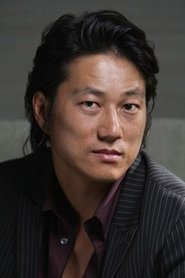
  • Han’s charismatic presence Sung Kang’s calm, wise-cracking mentor becomes the emotional anchor of the film and a breakout favorite who overshadows the protagonist.
  • Vivid Tokyo atmosphere Neon cityscapes, garages, and parking-garage meetups create a strong sense of place and make the movie feel like a true dive into Tokyo car culture.
  • Iconic 2000s soundtrack The music is frequently singled out as catchy and perfectly matched to the drifting and nightlife vibe.
Common complaints
  • Flat lead performance The main character is often described as bland or wooden, with limited facial expression and a grating accent.
  • Thin, predictable plot The story is viewed as a simple excuse for races, with familiar beats and little emotional depth beyond basic teen rivalries.
  • Corny teen melodrama High school elements, romance, and dialogue can feel cheesy or cringe, undercutting the otherwise slick racing and setting.
  • Inconsistent acting overall Outside of a few standout supporting roles, performances are frequently described as second-rate or unintentionally funny.
Recommended for
JDM and drift enthusiasts Sung Kang and Han fans 2000s street-racing nostalgics Fast & Furious franchise watchers Stylized urban action lovers

Full Plot (Spoilers)

Spoiler warning

This section contains the full plot, including major story reveals. Overview above stays spoiler-free.

Buzz & Rumors

Public reports

Tokyo Drift: Illegal Shoots, Fall Guys, and the Cameo Deal That Changed Hollywood

Tokyo may be the city that never sleeps, but the real insomnia came from what went down behind the cameras on The Fast and the Furious: Tokyo Drift. From a literal fall guy spending the night in jail to Vin Diesel bartering his way into another franchise, this “side-quest” Fast film is dripping with off-screen drama.


On-Set Drama: When “Drift” Meant “Run From the Cops”

  • The most infamous Tokyo Drift story? The Shibuya Crossing scene was filmed illegally. Japan almost never hands out permits to shut down major public spaces, so Universal’s solution was… to do it anyway. The crew rolled cameras in the middle of Shibuya until the cops inevitably showed up .
  • To protect director Justin Lin, the studio had already hired a professional “fall guy”: a crew member whose literal job was to claim he was the director when the police came. When authorities moved in, this guy stepped up, said “I’m the director,” and spent the night in jail while Lin walked free [1][4]. Lin later admitted he only realized what was happening after the guy took the hit and called it his job to “take the fall” for him [1].
  • Fan and car-culture coverage has long whispered that the fall guy was Konishiki, the Hawaiian-born sumo legend who appears as the bathhouse attendant. He’s reportedly uncredited for his real “stunt”: going to jail so Universal could keep its Tokyo footage [1].

Scandals & Power Plays: Vin Diesel’s 30-Second Hustle

  • That moody Dom Toretto cameo at the end? It wasn’t just fan service – it was a high-stakes business deal. Vin Diesel refused a salary for his Tokyo Drift appearance and instead demanded something much bigger: the rights to the Riddick character for himself and his production company .
  • Diesel has said he literally leveraged his house to get Riddick made; if the movie had blown up financially, he claimed, “I would be homeless” [2]. So when Dom pulls up in that Chevelle, you’re basically watching a man cash in a Fast & Furious chip to bankroll his Riddick dreams.
  • That tiny cameo ended up shifting two franchises at once: it re-tethered Tokyo Drift to the main Fast saga and gave Diesel creative control over his favorite space antihero [2].

Casting Controversies: The Battle to Keep Han Asian

  • Behind the scenes, there was a quieter but huge identity fight: Han almost wasn’t Asian anymore. A Reddit thread in the Asian-American community brought attention to the claim that Justin Lin had to fight studio pressure to keep Han as an Asian character .
  • Franchise lore and fandom sources back this up, noting that once Bow Wow was cast as Twinkie, there was talk of reimagining Han in a different direction – and Lin campaigned to keep him Asian-American, pushing for Sung Kang to stay as Han Seoul-Oh .
  • Considering Han is now one of the most beloved characters in the entire saga, that behind-the-scenes tug-of-war over his ethnicity is one of the franchise’s most important (and underreported) battles [3][9].

Leaks, Cuts & What Got Left in the Garage

  • Hardcore fans on Reddit swear the deleted scenes are essential viewing if you want the “real” Tokyo Drift. They talk up extra material like extended Han/ DK underworld moments and character beats that supposedly make relationships and motivations much clearer .
  • One widely shared anecdote from a car group on Facebook describes a deleted parking-lot scene shot with cars drifting inches from the camera crew—mostly practical driving, no CG safety net . It was adrenaline-pumping enough to brag about years later, but it still got left on the cutting room floor.

Fan Theories & Fandom Feuds: Justice for Han, Hate for Sean

  • Long before F9 resurrected Han, fans were already building elaborate theories about how he survived Tokyo Drift: fake explosions, secret government ops with Mr. Nobody, you name it. Coverage of Fast X and F9 leaned into this, explaining how the films eventually confirmed what message boards had been yelling for years: Han faked his death and had been living in hiding .
  • Meanwhile, poor Lucas Black has been getting roasted online for years. Reddit threads slam his performance, calling him “the worst actor in the franchise” and clowning the fact that he looked way older than a high-schooler . Others passionately defend Tokyo Drift as “awesome” and the most rewatchable entry, turning Sean Boswell into one of the fandom’s most divisive protagonists [6][8].

Fake Tokyo, Real Trouble

  • Car nerds and fan retrospectives love pointing out that around 90% of “Tokyo” was actually Los Angeles, dressed up with signage, streetlights, and digital set extensions .
  • The irony? The few sequences that were shot in Japan are the ones that nearly got people arrested. Authenticity came at the price of one crew member spending the night in a Japanese jail cell—and an entire studio betting the cops wouldn’t look too hard at who really called “Action!” [1][4].

Entertainment rumors and trivia aggregated from public reporting. Treat speculation as unverified unless a cited source confirms it.