Kazuma Kawamura
Fujio Hanaoka

Fists fly when Oya High’s street fighters defend themselves from a three-school alliance of brawlers.
I’ve seen enough delinquent youth films to know the drill: the swagger, the posturing, the inevitable showdown where honor is measured in bruises. High & Low: The Worst X doesn’t reinvent the wheel, but it does something rarer—it makes the wheel spin so fast it feels like it might fly apart. This is a film that understands the poetry of violence, the way a well-placed punch can land harder than any monologue. And yet, for all its kinetic energy, there’s something oddly melancholic about it, like watching a group of kids play at being tough because they don’t know what else to do.
The High & Low franchise has always been a strange beast, a multimedia juggernaut that blends street gang rivalries with the glossy sheen of J-pop and hip-hop aesthetics. It’s as if The Warriors and Tokyo Drift had a baby, raised it on a diet of Dragon Ball Z and Japanese street fashion, and then set it loose in a high school. The Worst X is no different in that regard—it’s loud, stylish, and unapologetically over-the-top. But where some sequels feel like retreads, this one feels like a dare: How much can we pile onto this before it collapses under its own weight?

The plot, such as it is, revolves around Oya High’s street fighters squaring off against a three-school alliance of brawlers. That’s it. That’s the movie.
There’s no grand narrative ambition here, no attempt to grapple with the complexities of juvenile delinquency or the systemic failures that might lead kids to form gangs. This is pure, uncut adrenaline, a film that exists solely to deliver one spectacular fight sequence after another. And yet, within that narrow framework, there’s a surprising amount of texture.
The rivalries feel personal, the alliances shifting and fragile. These aren’t faceless thugs; they’re kids with grudges, insecurities, and a desperate need to prove themselves.
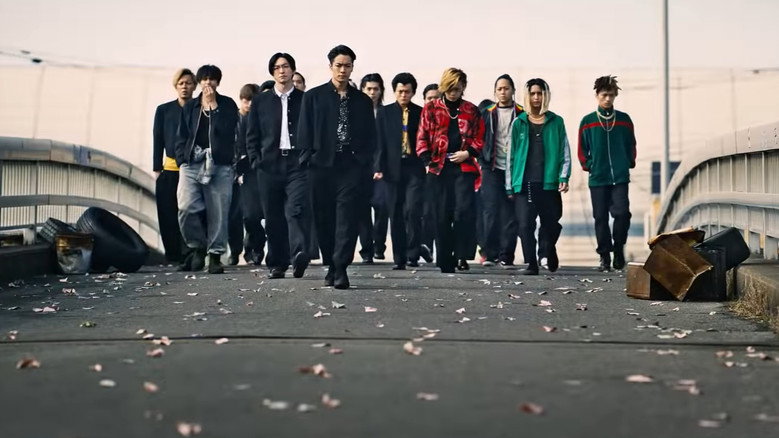
What makes The Worst X work—or at least, what makes it compulsively watchable—is its commitment to the bit. The fight choreography is relentless, a whirlwind of fists, feet, and occasional improvised weapons (a well-placed chair, a strategically thrown trash can). The camerawork is dynamic, almost dizzying at times, as if the film itself is caught up in the chaos.
There’s a moment early on where two characters square off in a narrow alleyway, the camera circling them like a predator. The tension isn’t just in the punches they’re about to throw; it’s in the way the light catches their faces, the way their breath fogs in the cold air. It’s a small detail, but it grounds the scene in something real, something human.
That’s the paradox of The Worst X: for all its stylized violence, there’s an undercurrent of something raw and unvarnished. These characters aren’t heroes or villains; they’re just kids trying to navigate a world that’s already decided they’re disposable. The film doesn’t judge them for it, and neither does it glorify their choices.
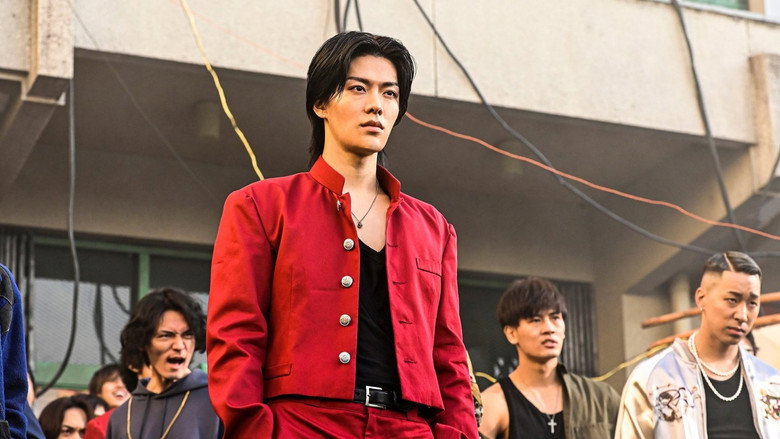
It simply presents them as they are—flawed, angry, and searching for something to believe in. There’s a scene where Kazuma Kawamura’s character, the de facto leader of Oya High’s fighters, sits alone on a rooftop, staring at the city below. He doesn’t say anything.
He doesn’t need to. The weight of the moment is in his silence, in the way his shoulders slump just a little, as if he’s carrying the weight of every fight he’s ever been in.
If there’s a flaw here, it’s that the film’s relentless pace leaves little room for character development. We get glimpses of backstory—hints of past betrayals, unspoken loyalties—but they’re often drowned out by the next fight scene. This is a movie that moves at the speed of a punch, and sometimes that means sacrificing depth for momentum.
But maybe that’s the point. These characters aren’t defined by their pasts; they’re defined by their actions in the present. Every fight is a chance to rewrite their story, to prove that they’re more than just another statistic in a world that’s already written them off.
The High & Low franchise has always been a bit of an outlier in the world of Japanese cinema. It’s not quite a yakuza film, not quite a shonen anime, not quite a traditional drama. It exists in this weird, wonderful space where street culture and high school drama collide, and The Worst X leans into that identity with gusto.
The soundtrack pulses with hip-hop beats, the costumes are a riot of color and attitude, and the fights are choreographed with the precision of a dance routine. It’s a film that wears its influences on its sleeve, and if that makes it feel a little derivative at times, it also gives it a sense of playfulness that’s hard to resist.
What lingers, though, isn’t the style or the spectacle. It’s the moments in between—the quiet beats where the characters aren’t fighting, where they’re just being kids. There’s a scene near the end where two rivals, bloodied and exhausted, sit on the steps of their school, passing a cigarette back and forth.
They don’t say much. They don’t need to. The fight is over, at least for now, and all that’s left is the weight of what they’ve done.
It’s a small moment, but it’s the kind that sticks with you long after the credits roll.
I don’t know if High & Low: The Worst X is a great film. It’s not trying to be. It’s not interested in subtlety or nuance or the kind of layered storytelling that wins awards.
What it is, though, is a damn good time—a film that understands the catharsis of a well-placed punch, the thrill of a perfectly executed fight scene, the way violence can be both ugly and oddly beautiful. It’s a film for anyone who’s ever felt like an outsider, who’s ever had to fight for their place in the world. And maybe, just maybe, that’s enough.
"A high-energy action film with strong performances but a shallow storyline."
The dynamic action sequences and the cast's energetic performances, particularly from the leads, are the draw. The plot is thin and predictable, and the film relies on style over substance. Feedback is sparse but leans positive among genre fans despite the flaws.
Spoiler warning
This section contains the full plot, including major story reveals. Overview above stays spoiler-free.
The High & Low franchise has spent nearly a decade turning street brawls into blockbuster spectacle, but High & Low The Worst X (2022) promised something grittier—a return to the raw, schoolyard turf wars that defined its early years. latestnetflix.com's take is that Directed by Norihisa Hiranuma, the film pits Kazuma Kawamura’s Sannoh Rengokai against a new wave of rivals, but behind the choreographed mayhem, the cast’s off-screen chemistry might be the real story.
The film’s promotional push leaned hard into the cast’s playful dynamic, with behind-the-scenes content offering rare glimpses of the actors letting loose. A YouTube roundtable captured Kawamura, Hokuto Yoshino, Goki Maeda, and Akihisa Shiono in a heated gaming session, their competitive banter suggesting a bond that likely smoothed the film’s high-stakes fight scenes. Another video featured an extended special talk with subtitles, hinting at deeper discussions about the franchise’s evolution—though details remain locked behind Japanese-language barriers.
For fans outside Japan, the most tantalizing tease was an exclusive TV interview that never aired on broadcast networks. The snippet promises insights into the film’s production, but without subtitles or a full release, its contents are still a mystery.
High & Low The Worst X isn’t just another action flick—it’s a callback to the franchise’s origins, where rival school gangs clashed in brutal, no-frills showdowns. A recap video frames the film as a direct sequel to The Worst (2019), tracking the fallout from Sannoh Rengokai’s past battles. The trailer and an earlier English-subtitled version emphasize the stakes: betrayals, shifting alliances, and a new generation of fighters refusing to back down.
But how much of the chaos was real? The cast’s on-screen intensity—Kawamura’s brooding leadership, Yoshino’s volatile energy—mirrors their off-screen personas, at least in the glimpses provided. Whether that translated to actual tension or just method-acting dedication is unclear.
For all the promotional content, key details remain frustratingly vague. Rotten Tomatoes lists the cast but offers no critical consensus, leaving the film’s reception a blank slate. The SensCritique entry confirms the runtime (117 minutes) and genre (action), but beyond that, the movie’s impact—commercial or cultural—is uncharted.
Rumors swirl about deleted scenes or alternate endings, but with no official confirmation, they’re just speculation. The franchise’s tendency to tease future installments also leaves The Worst X’s legacy uncertain: Was it a return to form or just another chapter in an endless cycle?
One thing’s clear: The cast’s chemistry, whether through gaming sessions or untranslated interviews, sold the film as more than just another action vehicle. Whether that energy translated to the screen, though, is a question only time—and more accessible footage—can answer.
Entertainment rumors and trivia aggregated from public reporting. Treat speculation as unverified unless a cited source confirms it.
More titles in the same genres and with the same cast.