Season 1
8 episodes Apr 17, 2020 3.6
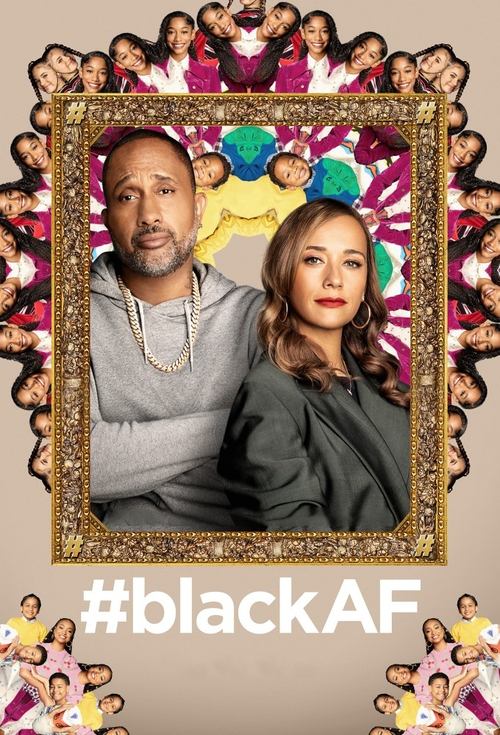
“It's all about perspective.”
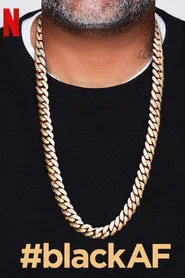
A father takes an irreverent and honest approach to parenting and relationships.
Latest episode: S1 E8 i know you may not get this, but the reason we deserve a vacation is... because of slavery (Apr 17, 2020)
I’ll admit it: I came to #blackAF expecting a mess. Not the kind of glorious, chaotic mess that leaves you breathless—like a Scorsese tracking shot through a casino—but the kind that makes you wince, the kind where you’re not sure if the creator is in on the joke or just oblivious. Kenya Barris’s Netflix series, his first under the streaming giant’s banner after fleeing the constraints of network TV, is nothing if not bold.
It’s also, depending on the moment, either painfully honest or painfully self-indulgent. The line between the two is so thin it might as well not exist.
The premise is simple, or at least it pretends to be: Barris plays a fictionalized version of himself, a wealthy Black showrunner navigating family life while his daughter films a documentary for her NYU application. The mockumentary format, complete with talking-head interviews and direct-to-camera confessions, is a clear nod to Curb Your Enthusiasm, and Barris leans into the comparison with the kind of self-aware smirk that suggests he knows exactly what he’s doing.
Or does he? That’s the question that lingers over every episode, like the faint scent of a private jet’s exhaust.

The show’s most striking feature—and its most frustrating—is its refusal to let anyone, least of all its creator, off the hook. Barris’s version of himself is a walking contradiction: a man who preaches authenticity but flaunts his wealth with the subtlety of a neon sign; a father who wants his kids to understand systemic racism but can’t resist name-dropping his connections to Tyler Perry.
The series frames these contradictions as satire, but satire requires a target, and it’s never entirely clear who or what #blackAF is aiming at. Is it critiquing the performative wokeness of wealthy Black elites? The hypocrisy of a society that celebrates Black success only when it’s palatable?
Or is it just Barris working through his own guilt over trading in the relatability of black-ish for the trappings of Hollywood excess?
The answer, I suspect, is all of the above—and that’s what makes the show so uneven. Take the fifth episode, which brings together Issa Rae, Lena Waithe, and Tyler Perry for a conference call about the commodification of Black art. On paper, it’s a masterclass in meta-commentary: a room full of Black creators debating whether their work is being co-opted, sanitized, or outright stolen by the very industry that made them rich.
Netflix’s #blackAF (2020), the semi-autobiographical comedy from Black-ish creator Kenya Barris, arrived with high expectations—and almost immediately faced a storm of criticism. While the series, starring Barris and Rashida Jones as a wealthy Black family navigating Hollywood’s absurdities, was pitched as a sharper, more satirical take on Barris’ earlier work, many viewers and critics questioned whether it missed the mark entirely. latestnetflix.com's read is that the backlash wasn’t just about the show’s humor; it centered on deeper issues of representation, colorism, and whether Barris’ latest project was, as some accused, "a Black show made for white people" .
One of the most persistent critiques of #blackAF was its casting. Critics pointed out that the lighter-skinned members of the Lyon family—particularly the parents played by Barris and Jones—dominated the screen time, while the darker-skinned child actors, like Iman Benson and Ravi Cabot-Conyers, were often sidelined or reduced to stereotypical roles . In a YouTube discussion, Barris pushed back against accusations of colorism, arguing that the show’s casting reflected his real-life family and that critics were misinterpreting his intent . But the debate didn’t fade. Some viewers saw the dynamic as part of a broader pattern in Barris’ work, where lighter-skinned Black characters are positioned as more relatable or aspirational, while darker-skinned characters are relegated to punchlines or side plots .
Barris’ previous series, Black-ish, was praised for its nuanced take on Black middle-class life, but #blackAF was marketed as something edgier—a meta, self-aware satire of Black success in Hollywood. Critics, however, weren’t convinced. Many reviews called the show "tonally confused," with some arguing it recycled Black-ish’s themes without the heart or depth . The meta-humor, which included fourth-wall breaks and direct addresses to the audience, fell flat for some, who felt it came across as self-indulgent rather than subversive . Others questioned whether the show’s premise—centering on a wealthy Black family’s struggles—was relatable enough to carry the satire, especially when compared to Black-ish’s more grounded storytelling .
Barris didn’t shy away from the criticism. In interviews and podcast appearances, he acknowledged the backlash but stood by the show’s vision. On the expediTIously podcast, he addressed the social media firestorm, arguing that #blackAF was never meant to be a "love letter" to Black audiences but rather a raw, unfiltered look at his own experiences . He also pushed back against the idea that the show was "for white people," calling the accusation reductive and dismissive of the show’s intent to critique Hollywood’s racial dynamics . Still, the damage was done. The series’ reception was so divisive that it raised questions about whether Barris’ brand of humor had run its course—or if audiences were simply tired of his particular lens on Black identity.
Despite the controversy, #blackAF found its defenders. Some viewers appreciated its bold, chaotic energy, arguing that the show’s flaws were part of its charm . Others saw it as a necessary, if messy, evolution of Barris’ storytelling—a step away from the sitcom format toward something more experimental. But the overwhelming sentiment was one of disappointment. For a show that promised to deconstruct Black success in Hollywood, #blackAF often felt like it was playing it safe, leaning on familiar tropes rather than breaking new ground.
Whether the series will get a second chance remains unclear. As of now, Netflix hasn’t announced a renewal, and the backlash may have left a lasting mark on Barris’ reputation. One thing is certain: #blackAF didn’t just spark conversations about race and representation—it became a case study in how even well-intentioned satire can backfire when audiences feel the message rings hollow.
Entertainment rumors and trivia aggregated from public reporting. Treat speculation as unverified unless a cited source confirms it.
Series
Related series ranked by rating and popularity.